Month: January 2022

Calcipotriol Speeds Wound Healing, Lessens Itching in Small DEB Trial

Treatment with ointment containing a low dose of calcipotriol — an analog (similar compound) of vitamin D3 — helped to speed wound closure and reduce itching in people with dystrophic epidermolysis bullosa (DEB) in a clinical trial.

“While corroboration of our results by large-scaled studies is pending, our preliminary data suggest that topical low-dose calcipotriol ointment significantly reduces itch, accelerates wound healing, and can be safely implemented into the daily wound care of DEB patients,” the researchers wrote … read more

Likelihood of Hospital Admission Up During Foot Ulcer Episodes

Diabetic foot ulcer episodes are associated with an increased likelihood of all-cause inpatient admissions and death compared with periods after ulcer healing, according to a study published online Jan. 18 in Diabetes Research and Clinical Practice.

Brian J. Petersen, from Podimetrics in Somerville, Massachusetts, and colleagues examined data from the Medicare Limited Data Set from 2013 to 2019 to develop and validate an episode-of-care model for diabetic foot ulceration. Episodes of care were defined by clustering diabetic foot ulcer-related claims such that the longest time interval between consecutive claims in any cluster did not exceed a duration … read more

An electrically charged thin film patch used to promote wound healing

A team of researchers working at the University of Electronic Science and Technology of China has developed an electrically charged thin film patch for promoting faster wound healing. In their paper published in the journal Science Advances, the group describes their patch, how it works, and how well it performed when tested on rats … Humans have been looking for ways to promote faster healing of wounds for thousands of years in order to reduce both the length of time a patient experiences pain and the chances of infection. In this new effort, the researchers created an electrically charged thin film patch … read more

Building a better bandage

With a $2 million grant from NIH, MSU is working to better understand and treat chronic wounds
The National Institutes of Health has awarded Michigan State University’s Morteza Mahmoudi more than $2 million to further his team’s efforts in finding effective treatments for chronic wounds … Chronic wounds are complex injuries affecting millions worldwide that don’t heal on their own and can lead to amputation or even death. Mahmoudi said available bandaging techniques can be costly and are currently unable to overcome all of the challenges that prevent wounds from healing … read more

Non-invasive, tiny indicator changes color if the wound shows early signs of infection

The non-invasive indicator, which is around the same size as one of our fingertips, is the first of its kind. It does not make any contact with the wound but detects the beginnings of infection by sniffing the air above it.

It can be added to already existing bandages and allows infections to be detected without taking off the dressing – something which can inhibit the healing process and increase the likelihood of wound infection … read more

RevitaDerm Wound Care Gel Recalled Over Bacterial Contamination, FDA Warns

Double-check your medicine cabinet: One lot of RevitaDerm, a wound care gel, is being recalled due to bacterial contamination, per a notice posted by the Food and Drug Administration (FDA).

Blaine Labs triggered the voluntary recall after testing revealed that one bottle of RevitaDerm contained Bacillus cereus, a bacteria that could lead to “life-threatening, invasive infections,” per the FDA. No adverse events related to this recall have been reported yet … read more

New Guidelines For Addressing Nutrition Deficits In People With DFUs

Current estimates show that 37.3 million people, or 11.3 percent of the United States population, have diabetes.1 More than one-third of these patients will develop a diabetic foot ulcer (DFU) and recently published guidelines suggest that more than half of these patients have moderate or severe malnutrition.2

Recognizing the dearth of randomized controlled trials that specifically look at nutrition in people with DFUs as well as the challenges with nutrition adherence in this patient population, the authors of the new guidelines have emphasized practical screening and assessment tools, including key tips for physical exams, patient history and lab testing workups. The guidelines also provide an overview of dietary factors and nutrients, ranging from hydration and calorie intake … read more

Medical device-related pressure ulcers and the COVID-19 pandemic: from aetiology to prevention

This article describes the aetiology of medical device-related pressure ulcers (MDRPU) and the vicious cycle that leads to these (typically, hospital-acquired) injuries. In this cycle, the primary, deformation-inflicted cell damage leads to a secondary inflammatory oedema-related damage and then to tertiary ischaemic cell and tissue damage. These three damage factors act cumulatively, and, once the first deformation-inflicted massive cell death initiates in the distorted tissues, each of these factors escalates the cell death and tissue damage further, under and near the applied medical device. The primary pathophysiological factors of the COVID-19 pandemic — including the cytokine storm, hypoxia and hyper-coagulation, which are typical to seriously ill patients who require life-support (skin-contacting) medical devices — can fuel the damage spiral of pressure injury. A continuous positive airway pressure (CPAP) mask is a classic example of a commonly used medical device … read more

Integrating adjunctive therapy into practice: recognising ‘hard-to-heal’ wounds

The problem of delayed wound healing has been highlighted in several publications which has stimulated debate on variance and the need for updated care pathways. This paper demonstrates how adjunctive therapy can be added to the ‘standard care’ model, described in the National Wound Care Strategy Programme’s recommendations for lower limb wounds, to enhance outcomes for patients with ‘hard-to-heal’ lower limb wounds (NWCSP, 2020). A decision-making pathway based on published literature is described which uses wound assessment and observed response to treatment to allow the effective and targeted introduction of adjunctive therapies for ‘hard-to-heal’ wounds. This approach will allow the cost-effective introduction of new and evolving therapies, such as WoundExpress™ (Huntleigh Healthcare), which addresses the underlying problems associated with resistant lower limb oedema and … read more

Acetic Acid and Dakin’s Solution: Is Ancient Medicine Appropriate in Modern Times?

A study showed that in wound care there is an overuse of practices that lack evidence and science to support them and an underuse of approaches with evidence. The use of Dakin’s solution and acetic acid are two examples of what that study was referring to. Wound care clinicians, and especially certified wound care clinicians, have a responsibility to provide patients with wound care treatments based on science or clinical evidence. I myself am guilty of promoting practices that didn’t meet those criteria back in the early days of my career because I largely trusted the clinicians teaching me were doing the right thing. As I gained more knowledge and experience and heard some of my practices challenged by other “experts” in the industry, I began to question things … read more

Tiny dot that shows early signs of infection, invented by NI scientists

A small dot that changes colour if a patient’s wound shows early signs of infection has been invented by scientists at Queen’s University Belfast … The non-invasive indicator does not make any contact with the wound but detects the beginnings of infection by sniffing the air above it – it is the same size as a fingertip … It is the first of its kind and is predicted to bring major benefits to healthcare, especially because it can be added to already existing bandages … read more

Self-Bonded Hydrogel Forms Basis of Flexible Wound Patch

With wounds being a part of everyday life, it is important to evaluate the level of healing of individuals. This can vary due to conditions that slow down healing, such as diabetes and can be categorized into acute and chronic wounds … Acute wounds can take up to a number of months to heal; however, chronic wounds may extend to several years, with continued inflammation being a large issue … Approximately 300,000 people are hospitalized per year in the United States for acute wounds … read more

Ted Davis to Succeed Amy Tseng as President and CEO of TissueTech

TissueTech, Inc., a pioneer in the clinical application of cryopreserved human birth tissue products to treat ocular surface disease and disorders, chronic wounds, and musculoskeletal conditions, has named Ted Davis as the company’s new president and CEO. Davis—a seasoned biologics and orthopedics executive—takes the helm of an emerging company experiencing exponential growth, succeeding TissueTech founder and former CEO Amy Tseng, who retired January 3. Tseng remains a member of the company’s board of directors … TissueTech, Inc. is an emerging biotechnology company and leader in regenerative medicine using human birth tissue. TissueTech’s pioneering amniotic membrane products are processed using its proprietary CRYOTEK® cryopreservation technology, designed to retain the tissue’s structural and functional integrity. Today, TissueTech is breaking new ground with multiple Investigational New Drug clinical trials underway as the company pursues 351 biologics’ approval for products to treat patients’ unmet clinical needs. TissueTech is committed to empowering healthcare professionals with solutions to deliver optimal patient outcomes by fostering innovation through evidence-based science. Since its inception, clinicians have performed over 600,000 human implants with its products and published over 380 peer-reviewed studies supporting TissueTech’s platform technology. Learn more at https://tissuetech.com
read more

Perceptive Solutions Integrates with Epic, Joins Epic App Orchard Marketplace

WoundZoom Digital Wound Management solution now available on Epic’s App Orchard Marketplace


STEVENS POINT, WI – JANUARY 27, 2022 – Perceptive Solutions, Inc., developer of WoundZoom
Digital Wound Management, today announced its integration partnership with Epic and the availability of
WoundZoom in the Epic App Orchard marketplace. The purpose of this partnership is to provide a
seamless exchange of wound care data between WoundZoom and a facility’s Epic EHR system.
Perceptive Solutions joins the Epic App Orchard as a trusted integration partner so our customers can
leverage the benefits of WoundZoom while eliminating additional steps in their workflow. Data captured
using WoundZoom at the bedside, such as precise wound measurements, images, and clinical
assessments automatically sync to patients’ charts, creating a more efficient workflow and a complete
patient record in the EHR.


“Our innovative digital wound management solution enables clinicians to spend more time with patients
through automated charting, wound imaging and elimination of the manual measurement process. We are
excited to provide accessibility of WoundZoom to hundreds of healthcare organizations using EPIC,” said
Mark Lacerte, President of Perceptive Solutions. “The technology integration through Epic’s certification
process enables seamless and efficient data flow from our solution into Epic’s clinical charts. This enables
healthcare facilities to more efficiently share valuable wound care data between both clinical and
administrative team members within their EHR.”


About Perceptive Solutions
Perceptive Solutions modernizes the practice of wound care with technology-enabled systems designed to
increase clinical efficiency, improve care quality, and mitigate risk. Integrating smoothly with your EHR,
WoundZoom utilizes the latest AI and imaging technology to capture accurate wound images and
measurements from your smart device, automatically prompt and document appropriate actions, and
create a continuous, standardized clinical record across shifts, floors, and facilities. For more information,
visit https://perceptivesol.com/


Media Contact
Karen Guzdzial
Director of Marketing
(727) 225 7944
karen.guzdzial@woundzoom.com
Wound Care / Ulcer Debridement March 17, 2022

On March 17, 2022, APMA will host the fourth installment of its Coding Basics Webinar Series, “Wound Care / Ulcer Debridement.” Sarah Abshier, DPM; Mitchel Hilsen, DPM; and Lawrence Santi, DPM, will present.

This content is available to APMA members only. If you are a member, please log in to see the full content.

New Year’s Resolutions In Wound Care: Reflections And Looking Forward

Most of the panelists cite the COVID-19 pandemic as a common thread impacting their wound care practices last year. Kazu Suzuki, DPM, CWS shares that patients deferring care and mental stress on both patients and health care workers were dominant themes. He adds that his hospital system is over capacity and has been for months. Christine Miller, DPM, PhD, FACCWS, CWSP says that although her team routinely faces challenges due to socioeconomic issues, the pandemic led to the extra burden of staffing shortages … read more

Relationships of Changes in Physical Activity and Sedentary Behavior With Changes in Physical Fitness

and Cardiometabolic Risk Profile in Individuals With Type 2 Diabetes: The Italian Diabetes and Exercise Study 2 (IDES_2)
OBJECTIVE
In the Italian Diabetes and Exercise Study_2 (IDES_2), behavioral counseling promoted a sustained increase in physical activity (PA) volume (+3.3 MET h ⋅ week−1), moderate- to vigorous-intensity PA (MVPA) (+6.4 min ⋅ day−1), and light-intensity PA (LPA) (+0.8 h ⋅ day−1) and decrease in sedentary time (SED-time) (−0.8 h ⋅ day−1). Here, we investigated the relationships of changes in PA/SED-time with changes in physical fitness and cardiometabolic risk profile in individuals with type 2 diabetes … read more

Promoting digital, data driven wound care

By: Una Adderley
Una Adderley discusses the importance of data collection and analysis in changing practice and outcomes.
If I were a stick of rock, you would find the word ‘NURSE’ right through me (or maybe ‘community tissue viability nurse’ if there was enough room for all those letters!) So, in 2018, when I came into post as director of the National Wound Care Strategy programme (NWCSP), I saw the issue primarily through a clinical lens. I was not so cloistered that I thought wound care was just a nursing issue, but I did think that it was primarily a clinical challenge. If we could just get the clinical pathways sorted and get everyone who saw people with wounds (GPs, paramedics, podiatrists, surgeons and so on) to work in a more collaborative and coordinated way, we would solve the problem … read more

Promising Natural Products in New Drug Design, Development, and Therapy for Skin Disorders

An Overview of Scientific Evidence and Understanding Their Mechanism of Action
The skin is the largest organ in the human body, composed of the epidermis and the dermis. It provides protection and acts as a barrier against external menaces like allergens, chemicals, systemic toxicity, and infectious organisms. Skin disorders like cancer, dermatitis, psoriasis, wounds, skin aging, acne, and skin infection occur frequently and can impact human life. According to a growing body of evidence, several studies have reported that natural products have the potential for treating skin disorders. Building on this information, this review provides brief information about the action of the most important in vitro and in vivo research on the use of ten selected natural products in inflammatory, neoplastic, and infectious skin disorders and their mechanisms that have been reported to date. The related studies and articles were searched from several databases, including PubMed, Google, Google Scholar, and ScienceDirect. Ten natural products that have been reported widely on skin disorders were reviewed in this study, with most showing anti-inflammatory, antioxidant, anti-microbial, and anti-cancer effects as the main therapeutic actions. Overall, most of the natural products reported in this review can reduce and suppress inflammatory markers, like tumor necrosis factor-alpha (TNF-α), scavenge reactive oxygen species (ROS), induce cancer cell death through apoptosis, and prevent bacteria, fungal, and virus infections indicating their potentials. This review also highlighted the challenges and opportunities of natural products in transdermal/topical delivery systems and their safety considerations for skin disorders. Our findings indicated that natural products might be a low-cost, well-tolerated, and safe treatment for skin diseases … read more

Robert S. Kirsner, MD, PhD,’s Wound Healing Pearls

Robert S. Kirsner, MD, PhD, discusses new and tried-and-true wound healing methods in his presentation at the Maui Derm for Dermatologists meeting.

Robert S. Kirsner, MD, PhD, chairman and Harvey Blank professor in the Dr. Phillip Frost Department of Dermatology and Cutaneous Surgery at the University of Miami Miller School of Medicine in Miami, Florida, shares his pearls for greater efficacy in his presentation at the current Maui Derm for Dermatologists meeting held in Maui, Hawaii. His pearls included: letting evidence guide decisions, debriding the wound edge along with the wound, using microbes to improve healing, and more … read more

Guidelines and standards for comprehensive clinical diagnosis and interventional treatment for diabetic foot in China

Diabetic foot (DF) is one of the most common complications of diabetes and is associated with high morbidity, disability, lethality and low cure-rate. The clinical diagnosis and treatment of DF need to be standardized. The Chinese Diabetic Foot Cell and Interventional Therapy Technology Alliance has released six editions of guidelines and standards for clinical diagnosis and interventional treatment of DF, which filled the gap in the domestic DF treatment standard and played an important role in improving the level of diagnosis and treatment in China. In line with the latest developments in diagnosis and treatment, the Alliance, along with other 89 institutions, developed and issued the new edition based on the sixth edition to help standardize the clinical diagnosis and treatment of DF in China … read more

Covid-19 lockdown appears to have had a positive effect on diabetic foot ulcers

We conducted a prospective, observational, single-center study without modification of care. All patients followed for a DFU in the study center between 15th April 2020 and 11th May 2020 were included. The baseline assessment occurred 4 weeks after the beginning of lockdown and the follow-up visit 4 to 6 weeks after easing of lockdown. The primary analysis was based on the SINBAD classification … read more

Wound care research sponsored by the Department of Defense

Due to the need for more information about Department of Defense sponsored wound healing research, the Wound Healing Foundation initiated the writing of this article. It briefly describes the Vision, Mission and Goals of the Department of Defense Strategic Medical Research Plan. It also describes the current objectives of Department of Defense research funding and where to access this information in detail. The grant cycle, the timing of request for proposals and some of the specifics of their requirements are also mentioned. A brief discussion of budgeting and overhead is also included … read more

Role of Ultrathin Skin Graft in Early Healing of Diabetic Foot Ulcers

A Randomized Controlled Trial in Comparison With Conventional Methods
Diabetic foot ulcers (DFUs) are a global burden on health care systems. Despite the availability of various treatment modalities, many DFUs do not heal. Nonhealing wounds can lead to various complications, which add to significant morbidity in terms of the degree of moisture retained in the dressing, pain, foul order, and restriction of daily activities. A different treatment modality that can promote the wound healing process earlier (and is cost-effective, easy to use, and readily available) may be necessary to consider. Objective. The purpose of the current study was to demonstrate the efficacy of ultrathin skin grafting (UTSG) in the early healing of DFUs in terms of cost-effectiveness, reduced total number of hospital visits, and final wound outcome (ie, limb salvage rate). Materials and Methods. A randomized controlled trial was conducted in which 52 patients were treated with either UTSG … read more

The International Alliance Of Wound Care Scholarship Foundation® Announces inaugural scholarship recipients

Three rising wound care clinicians receive up to $1,500 each
KOKOMO, Ind., Jan. 25, 2022 /PRNewswire/ — The International Alliance of Wound Care Scholarship Foundation® has awarded inaugural scholarships to three recipients to commence their scholarship award program! … These scholarships are awarded to health care professionals for advanced wound care education and certification. This aids IAWCSF® in its purpose to help reduce the U.S. and global burden of wounds and associated costs by creating a larger number of providers who are educated specifically in treating wound care issues. After a thorough evaluation and assessment by the IAWCSF® Scholarship Review Board, three scholarship recipients were selected as follows … read more


The International Alliance of Wound Care Scholarship Foundation®

RECELL® System Data to be Presented at 44th Annual John A. Boswick Burn & Wound Care Symposium

AVITA Medical, Inc. (NASDAQ: RCEL, ASX: AVH), a regenerative medicine company that is developing and commercializing a technology platform that enables point-of-care autologous skin restoration for multiple unmet needs, announced today that six abstracts highlighting the clinical benefits of the RECELL® Autologous Cell Harvesting Device (RECELL® System) have been accepted at the 44th Annual John A. Boswick Burn & Wound Care Symposium. The international conference will be held in Maui, Hawaii, January 22-27, and covers the latest advancements in burn care, wound healing, and infection control … read more

DME for Partial Foot Amputations

The last issue of the year for Podiatry Management is typically dedicated to diabetes. Consistent with that, this article will expand on this issue’s article on PFA (partial foot amputation) written by Jeanette Smith … Devices typically used for patients with PFA range from stuffing a block of materials (toilet tissue, paper towels, rags, etc.) into the toe box of the shoe to a sophisticated hybrid lower extremity prosthetic prescribed by a physician. This article will provide some basic information on why it is important to provide the proper device … read more

Medtronic Recalls HawkOne Directional Atherectomy System

Medtronic has recalled 95,110 HawkOne Directional Atherectomy Systems because of the risk of the guidewire within the catheter moving downward or prolapsing during use, which may damage the tip of the catheter … The US Food and Drug Administration (FDA) has identified this as a Class I recall, the most serious type, because of the potential for serious injury or death … The HawkOne Directional Atherectomy system … read more

StrataGRT–A Breakthrough in Treatment on Chronic and Hard-to-Treat Wounds | video

Transcript: Hello, my name is Dr Matthew Regulski. I’m the medical director for the wound Institute of ocean County, New Jersey, and senior partner at Ocean County Foot & Ankle Surgical Associates … I want to bring to your attention today about a new fast filming, forming silicone that I think has made significant progress in the treatment of both chronic and acute wounds. I’ve been in practice for 17 years and I treat chronic wounds of all types. This has made a substantial impact on the treatment of very hard-to-heal chronic wounds … watch

Wound Management in Post-Acute Care: The Patient Journey

Friday, February 18, 2022 | 9:00AM – 4:20PM EST
Our seminar is both virtual and immersive. With a focus on applying tomorrow what you learn today, this unique experience enables you to participate in your own learning through exploration of case scenarios and interactive exercises … Effective wound prevention and management in the post-acute care setting is essential to reducing unnecessary hospital readmissions and improving patient outcomes … register

The Courage to Do the Right Thing

I was introduced to this problem early in my career. More than two decades ago, I was an Associate Professor at the University of Texas Health Science Center, Houston … Wound Center was the first of its kind (at least, that I know of) to perform “point of care” electronic documentation (in the room with the patient), using a system that internally calculated the physician’s billed level of service and collected discrete data about patients and their wounds … CMS proposed a facility billing system based on wound SIZE. That proposed system was never adopted because during a meeting with CMS, Intellicure President and CEO, David Walker, used Intellicure data from thousands of patient visits to demonstrate that, if implemented, 99% of wound center visits would be billed at the lowest level of … read more

Ouch! Assessing and Managing Acute and Chronic Wound Pain

Pain has been a prevalent health care challenge in the United States for some time, with data from the Centers for Disease Control and Prevention showing that approximately 16% of men and 20% of women experience pain on most days or even every day.1 As health care providers, we understand that unrelieved pain and suffering have direct results on the healing cascade and impair both physical and mental health. The topic of pain is almost always addressed in the health care setting, with pain even at one time being recognized as the “fifth vital sign.” … read more

Development of a prediction model for foot ulcer recurrence in people with diabetes using …

easy-to-obtain clinical variables
We used data from a prospective analysis of 304 people with foot ulcer history who had 18-month follow-up for ulcer outcome. Demographic, disease-related and organization-of-care variables were included as potential predictors. Two logistic regression prediction models were created: model 1 for all recurrent foot ulcers (n=126 events) and model 2 for recurrent plantar foot ulcers (n=70 events). We used 10-fold cross-validation, each including five multiple imputation sets for internal validation. Performance was assessed in terms of discrimination using area under the receiver operating characteristic curve (AUC) (0–1, 1=perfect discrimination), and calibration with the Brier Score (0–1, 0=complete concordance predicted vs observed values) and calibration graphs … read more

Aedicell Expands Availability of Advanced Wound Therapies to US Patients

ROCHESTER, N.Y., Jan. 24, 2022 /PRNewswire/ — To provide a growing number of patients with advanced regenerative wound therapies, Aedicell secured a Group Purchasing Agreement with Premier, Inc. making its skin substitute product Dermavest® available nationally to Premier alliance members. To accommodate the expected demand, Aedicell announces plans for a new production facility located in Cape May County, NJ, in addition to its American Association of Tissue Banks certified facility in Rochester, NY.

Premier, Inc. is a leading healthcare improvement company, uniting an alliance of more than 4,400 U.S. hospitals and health systems and approximately 225,000 other providers and organizations to transform healthcare.

“We’re here to transform the lives of people needing skin substitutes by transforming human tissue into therapies,” said Aedicell CEO Ted Burke. “This Premier Agreement will make our clinically proven therapies with enhanced patient outcomes available to more people at a lower cost, and our new facility in New Jersey will enable us to meet the expected demand for our products.” … read more

COVID-19 Proning Teams Benefit From Wound Care Specialist Nurse

The inclusion of a certified wound and skin care nurse on a multiprofessional prone-positioning team significantly reduces the odds of pressure injuries developing in patients hospitalized with severe COVID-19, according to a study published in the January issue of the American Journal of Critical Care … Connie Johnson, R.N., from Penn Medicine Princeton Health in Plainsboro, New Jersey, and colleagues evaluated the association between including a certified wound and skin care nurse on a multiprofessional pronation team and the prevention of pressure injuries … read more

Targeted nanoparticle delivery provides boost for diabetes transplant

Delivering immunosuppressant treatment via targeted nanoparticles could open the door to a long-lasting cure for type 1 diabetes. Transplanting insulin-producing cells is a promising approach to treat the disease; however, it is plagued by issues of immune rejection. In a new study, published January 17 in Nature Nanotechnology, mice treated with a reengineered therapy could tolerate a transplant for much longer with fewer side effects … For the 1.6 million people in the U.S. living with type 1 diabetes, keeping the body’s blood sugar levels within the right window at all times can be an ongoing challenge … read more

Have a slow healing wound? You need to be eating more protein.

Frustrated with a chronic wound that refuses to close? Or stay closed? It’s time you cashed in on the power of protein … Your body is programmed to heal, over and over again. Even in the face of diabetes and artery/vein diseases … So how can you speed up the body’s natural healing process? By listening to what your body is asking for. And when you have a wound, your body is craving protein … Healing the body with food isn’t about using “natural” foods on an open wound. Raw honey, apple cider vinegar, tea bags, coconut oil, and “miracle” food don’t belong on your wound. They post a huge risk of infection and moisture imbalance, which will slow healing … read more

Higher rates of all-cause mortality and resource utilization during episodes-of-care for diabetic foot ulceration

Researchers aimed at ascertaining if higher all-cause rates of mortality and resource utilization are recorded during periods of diabetic foot ulceration. In addition, an episode-of-care model for diabetic foot ulceration has been developed and validated.

  • The Medicare Limited Data Set between 2013 and 2019 was analyzed for retrieval of data for this study.
  • Episodes-of-care were defined by clustering diabetic foot ulcer linked claims such that the longest time interval between consecutive claims in any cluster did not extend beyond a duration which was adjusted to match two characteristics of foot ulcer

read more

New organic dressing invented in Oman could help wounds heal faster

A new bandage-type dressing for wounds, which has been made from plants, could be used to help them heal faster, a researcher in Oman has discovered … Saied Vakilian, a researcher at the Laboratory for Stem Cell and Regenerative Medicine at the Natural and Medical Sciences Research Centre at the University of Nizwa, led a team that used compounds made from two medicinal plants to help wounds heal faster … “This winning project aimed to evaluate a bioactive multilayer wound dressing based on chitosan and alginate,” said Vakilian … “To enhance healing potential, dracaena cinnabari and aloe vera were loaded as separate layers into the scaffold. The bare and bioactive multilayered scaffolds were fabricated by an iterative layering freeze-drying technique.” … read more

Medical Innovation And The Fight Against Amputation

Many specialists unite with one goal: preventing amputation. When podiatrists encounter patients that may lose a leg from peripheral arterial disease (PAD), vascular treatment is an urgent need. But, the question may arise: “Why doesn’t the vascular community seem to agree on how to best intervene?” … A July 2015 research paper compared the primary and secondary outcomes of angioplasty versus open vascular surgery.1 The research found both treatments equally effective in amputation prevention, improving the quality of life and life expectancy of patients with critical limb ischemia (CLI), but that endovascular treatment offered additional benefits of lower cost, lower complication rates, and easier recoveries. The study also showed a lower 30-day mortality rate for angioplasty. The article summary stated, “Based on these results it is suggested that angioplasty should be considered as the first choice for feasible CLI patients.” … read more

Response to: Remote Diabetic Foot Temperature Monitoring for Early Detection of Diabetic Foot Ulcers

A Cost-Effectiveness Analysis
We read with pleasure the recent article in your journal on the cost-effectiveness of remote diabetic foot temperature monitoring by Brooks et al.1 Diabetic foot ulcers pose a major healthcare burden, and insight into cost-effectiveness of treatments in this field is scarce, especially in preventing foot ulcers.2 Studies with original data are clearly preferred to inform clinicians, researchers and policy-makers on the potential cost-savings and health gains of preventative interventions. But modelling analyses such as by Brooks et al can provide relevant insights … For modelling analyses to be meaningful, assumptions must be based on both published evidence and clinical reasoning, and must be reasonable and logical. For a cost-effectiveness analysis on remote foot temperature monitoring, two assumptions are key … read more

BHU scientists find cure for chronic wounds. Here’s how they managed it

The team led by Prof Gopal Nath of the department of Microbiology said that wounds that took months and years to heal, could now be cured in days or months
A team of scientists from the Banaras Hindu University (BHU) have found a cure for those suffering from chronic wounds, particularly with diabetic foot ulcers. The team led by Prof Gopal Nath of the department of Microbiology, Institute of Medical Sciences, said that wounds that took months and years to heal, could now be cured in days or months. The findings of study have been published in the National Centre for Biotechnology Information, National Institutes of Health, US … read more

How TWC and Wound Clinics Will Evolve in 2022

Wound care continues to evolve as care expands beyond the wound clinic. As we move to 2022, Today’s Wound Clinic Clinical Editor Caroline E. Fife, MD, FAAFP, CWS, FUHM, and Managing Editor Brian McCurdy discuss meeting the challenges and how TWC will continue evolving in its digital format … watch video

Effectiveness of negative pressure wound therapy with instillation and dwelling after stoma closure

a retrospective and propensity score matching analysis
The use of temporary diverting stoma has become more common in low colorectal anastomosis to reduce anastomotic complications. Surgical site infection (SSI) at the stoma closure site has been one of the most frequent postoperative complications. The aim of this study was to compare the short-term outcomes between conventional primary suture closure and negative pressure wound therapy with instillation and dwelling (NPWTi-d) therapy following purse-string suturing, using propensity score matching analysis. We retrospectively evaluated the medical records of 107 patients who underwent stoma closure between January 2016 and October 2020. The primary outcome was the proportion of SSI. The secondary outcome was the day of postoperative length of stay. Propensity score matching with one-to-one match was performed for reducing treatment selection bias … read more

Survey on Wound Hygiene

An article in the Journal of Wound Care surveyed participants on awareness, implementation, barriers, and outcomes of wound hygiene.

Data from a survey created to better understand wound care awareness, implementation, barriers, and outcomes was recently published in the Journal of Wound Care. The survey, which was created by the Journal of Wound Care projects team with consultation from ConvaTech, was 26 questions long and featured a variety of multiple and open-ended questions. It was sent out by email and online, being open for a little over 12 weeks. Nonprobability sampling was used and authors of the survey reviewed the outputs to help analyze the data with the support of a medical writer … read more

Case Study – Diabetic Foot Abscess and Sepsis: Amputation or Limb Salvage?

A 48-year-old Type II insulin dependent diabetic male presented in the acute care setting with sepsis due to an abscess of the right foot involving bone and deep soft tissue structures of the midfoot. The wound and associated sepsis made limb loss and/or mortality a pressing concern. Options were primary limb amputation versus an attempt at limb salvage … In addition to his diabetes, past medical history included chronic kidney disease stage 3, sleep apnea with continuous positive airway pressure dependence, peripheral neuropathy, hyperlipidemia, hypertension, hypothyroid, morbid obesity, Moya disease, and secondary renal hyperparathyroidism … read more

EXPLAINED: Barrier Products

Barrier products, such as skin barrier films, are designed to protect the skin by minimising its exposure to excessive moisture and irritants. These may be topical preparations (available in a spray, foam applicator or wipe format) that can be applied to the skin without stinging, and dry quickly to create a breathable and transparent film. They provide a protective water-repellent barrier against irritants and harmful bodily substances, such as urine and faeces … Barrier films will not affect dressing application and are simple for both healthcare providers and patients/carers to use. Sterile products are particularly useful as they can be used on both intact and injured skin and are recommended for use in patients with a high risk of infection … read more

Wound Care Evidence Summit 2022

The Summit will provide a critically needed multi-disciplinary meeting for payers, government agency policymakers, prominent researchers, wound care medical specialty societies, patient and clinical associations, wound care clinics and manufacturers to address the shared goals of:

  • Addressing the current state of wound care research and clinical trial design
  • Exploring solutions to address the limitations in the wound care evidence-base
  • Communicating with payer medical directors on the development of coverage policies and the use of clinical practice guidelines in coverage decisionmaking
  • Defining “next steps” to actualize solutions
  • Participating in a uniquely intimate gathering of leading decisionmakers

read more

How Are Wound Clinics Coping With Omicron?

At wound clinics, physicians and staff have dealt with a lot over the past two years while the pandemic has raged. First, they were in the trenches as COVID-19 arose and hospitals were swamped, with many patients on ventilators. Even after many were vaccinated, the Delta variant caused another surge. Now, the Omicron variant is spreading quickly, with physicians facing an even more contagious version of the disease … “It still feels like the hits just keep on coming and we are not out of it yet,” says Caroline E. Fife, MD, FAAFP, CWS, FUHM. “Omicron is spreading so fast it’s mind blowing.” … The transmissibility of Omicron is a concern, as evidenced by what experts are seeing in data, according to Dr. Fife … read more

A Human Fibroblast-Derived Growth Factor Preparation in the Management of a Chronic Surgical Wound

in a Diabetic Patient: A Case Report
The surgical treatment of choice for ischaemic heart disease is Coronary Artery Bypass Grafting (CABG). The Great Saphenous Vein (GSV) is the most frequently used conduit for CABG, and the technique for harvesting the GSV entails a long open skin incision, usually comprising the entire leg. The vast proportion of patients experience leg wounds as opposed to sternal wounds. The rate of great saphenous vein harvest site infections (GSVHSI) is reported to be between 1% and 24%. Risk factors associated with GSVHSI include peripheral vascular disease, diabetes mellitus, smoking, obesity, and chronic renal failure. It is well a recognized fact that one of the most significant challenges to wound healing is infection, leading to a poor prognosis and increased morbidity.4 Hence, although rare, complications arising from the great saphenous vein harvest site may require surgical debridement leading to a delay in recovery and may negatively impact the patient … read more

Scientists Find Cure For Diabetic Foot Ulcers

Cure For Diabetic Foot Ulcers: People with diabetes, often struggle with diabetic foot ulcers, but not anymore. A team of scientists from the Banaras Hindu University (BHU) have found a cure. The findings of the study were published in the National Centre for Biotechnology Information, National Institutes of Health, US. The team led by Prof Gopal Nath of the department of Microbiology, Institute of Medical Sciences, said that wounds that took months and years to heal, could now be cured in days or months … read more

Nanoparticles Improve Immunosuppression, Could Boost Diabetes Treatment

Islet transplantation has emerged over the past few decades as a potential cure for type 1 diabetes. However, transplantation efforts have faced setbacks as the immune system continues to eventually reject new islets. Current immunosuppressive drugs offer inadequate protection for transplanted cells and tissues and are plagued by undesirable side effects … read more

Diabetic Foot Ulcer (DFU) Biofilm Infection and Recurrence (DFU Biofilm)

Diabetic foot ulcers (DFU) are one of the most common reasons for hospitalization of diabetic patients and frequently results in amputation of lower limbs. Of the one million people who undergo non-traumatic leg amputations annually worldwide, 75% are performed on people who have type 2 diabetes (T2DM). The risk of death at 10 years for a diabetic with DFU is twice as high as the risk for a patient without a DFU. The rate of amputation in patients with DFU is 38.4%4. Infection is a common (>50%) complication of DFU. Emerging evidence underscores the significant risk that biofilm infection poses to the non-healing DFU. Biofilms are estimated to account for 60% of chronic wound infections. In the biofilm form, bacteria are in a dormant metabolic state. Thus, standard clinical techniques like the colony forming unit (CFU) assay to detect infection may not detect biofilm infection. Thus, biofilm infection may be viewed as a silent maleficent threat in wound care … read more

The healing of bilateral chronic VLUs using medical grade honey in an end of life patient with polymorbidity

Palliative care provides holistic, person-centred care by managing symptoms, preventing suffering by treating pain and other problems, and providing physical, psychosocial and spiritual support (Chaplin, 2004; Grocott and Gray, 2010; Dale and Emmons, 2014). Palliative wound care should focus upon relieving wound-related suffering and improving the quality of life of patients and their families when facing life-threatening illness (Grocott and Gray, 2010; Dale and Emmons, 2014). Patients requiring palliative wound care can present with any type of wound, particularly those common in older people, such as venous leg ulcers (VLUs), pressure ulcers, diabetic foot ulcers and malignant wounds … read more

New Clinical Study Finds MolecuLight i:X® Point-of-Care Imaging Improved Sensitivity

of Detecting Bacterial Burden in Surgical Site Wounds by 11-Fold

Authors Suggest that Fluorescence Imaging of Bacterial Burden is Positioned to Change
Contemporary Paradigms of Post-Surgical Wound Management

TORONTOJan. 18, 2022 /PRNewswire/ – MolecuLight Inc., the leader in point-of-care fluorescence imaging for real-time detection of wounds containing elevated bacterial loads, announced the publication of  “Uncovering the high prevalence of bacterial burden in surgical site wounds with point-of-care fluorescence imaging1 in International Wound Journal. The publication reports on the results of an analysis of 58 imaged and biopsied surgical site wounds from the 350-patient multi-centre FLAAG (fluorescence imaging assessment and guidance) clinical trial2.

Key findings of the study include:

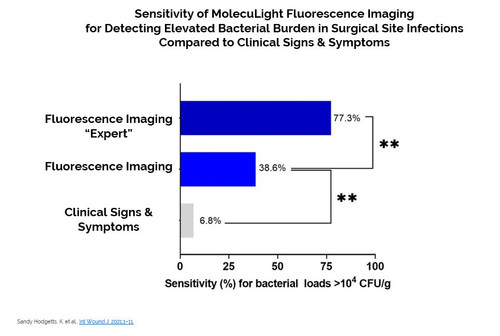
  • 76% of surgical sites that reach the stage of referral to a wound specialist had clinically significant bacterial loads (104 to 109 CFU/g), however only 6.8% exhibited symptoms of infection, resulting in delayed infection management.
  • Point-of-care fluorescence imaging (using the MolecuLight i:X device) for detecting high bacterial loads improved sensitivity by 5.7-fold compared to clinical signs and symptoms alone.
  • Clinician experience with fluorescence imaging and interpretation (>200 imaging sessions) increased sensitivity of fluorescence imaging to 11.3-fold higher than clinical signs and symptoms alone, and accuracy to 2.6-fold higher.

The incidence of surgical wound complications, including surgical site infections (“SSI”), continue to rise and the development of an SSI is associated with a marked increase in morbidity, a 2-to 11-fold increase in mortality rate, and prolonged hospital stays3. Approximately 2-5% of surgical wounds in the US develop an SSI7-10 at an annual cost of up to $10 billion4-7. This includes extended hospital stays, readmissions, and more resources required to manage complications.

“While early identification and management of high bacterial burden is critical for the prevention of surgical site infections, this study shows that pathogenic bacterial burden is present in most (>75%) surgical wounds that are referred to a wound specialist, but is largely asymptomatic and therefore goes undetected, delaying bacterial management strategies”, says lead author Associate Professor Sandy-Hodgetts, Centre for Molecular Medicine & Innovative Therapeutics, Murdoch University & Senior Research Fellow, School of Biomedical Sciences, University of Western Australia and the Founder and inaugural President of the International Surgical Wound Complications Advisory Panel (ISWCAP). “Due to its ability to quickly and reliably detect bacterial burden at the point-of-care, fluorescence imaging using the MolecuLight device is positioned to change contemporary paradigms of post-surgical wound management”.

These findings are part of an important initiative by the International Surgical Wound Complications Advisory Panel (ISWCAP) to study surgical site infections on a global scale and highlight the need for more objective diagnostic techniques to support the early and accurate detection of clinically concerning bacterial burden in surgical wounds. The authors note that this is the first study reporting the use of an advanced diagnostic device for the visualisation and diagnosis of bacterial burden in surgical wounds.

“MolecuLight fluorescence imaging technology allows clinicians to see into the wound. The point-of-care imaging device enables clinicians to detect and manage elevated levels of bacteria to inform our decision-making,” says Dr. Thomas Serena, the publication’s contributing author, Founder and Medical Director of The SerenaGroup®, and Vice President of ISWCAP.  “Management of bacterial burden should always begin with wound hygiene strategies (e.g., cleansing, debridement), and only escalate to antibiotics when essential.”

References:

Sandy Hodgetts, K. et al., Int Wound J. 2021;1–11

2 L. Le, Advances in Wound Care, 25 Sep 2020

3Hatch MD et al. J Shoulder Elbow Surg. 2017;26(3):472-477

4 Badia JM, et al. J Hosp Infect. 2017;96(1):1-15

5 McLaws ML et al. J Hosp Infect. 2003;53(4):259-267

6 Sullivan E et al. Surg Infect (Larchmt). 2017;18(4):451-454

Ban KA et al. J Am Coll Surg. 2017;224(1):59-74

8 Berrios-Torres SI et al. JAMA Surg. 2017;152(8):784-791

9 Institute CPS. Canadian Surgical Site Infection Prevention Audit. 2016

10 Si D et al. BMC Infect Dis. 2014;14:318


About MolecuLight Inc.

MolecuLight Inc. is a privately-owned medical imaging company that has developed and is commercializing its proprietary fluorescent imaging platform technology in multiple clinical markets. MolecuLight’s suite of commercially released devices, including the MolecuLight i: and DX™ fluorescence imaging systems and their accessories, provide point-of-care handheld imaging devices for the global wound care market for the real-time detection of wounds containing elevated bacterial burden (when used with clinical signs and symptoms) and for digital wound measurement. The company is also commercializing its unique fluorescence imaging platform technology for other markets with globally relevant, unmet needs including food safety, consumer cosmetics and other key industrial markets.

Coverage, Payment, and the Impact of Advocacy

Decisions about which wound care products and services are (or are not) covered under Medicare are made at the national level by the CMS or regionally by Medicare contractors that each make local coverage determinations (LCDs) for the parts of the country they cover. The impact of these policies is significant. If something is not covered by Medicare, you cannot be reimbursed for it. As a result, many clinical treatment decisions are guided by Medicare coverage decisions rather than best clinical practices … read more

Utilizing Disposable, Mechanical NPWT Devices to Aid Wound Management at Home: Cost Savings Considerations

In this clinical case presentation, Dr. Napolitano describes 3 cases using mechanically powered, disposable negative pressure wound therapy. The cases covered in this presentation include an open wound after hematoma excision, Charcot foot deformity presenting with a diabetic foot ulcer, and an open wound after ankle fusion surgery. Data from this poster were presented at the SAWC Fall in Las Vegas, Nevada (October 29-31, 2021) … read more

Nutrition Interventions in Adults with Diabetic Foot Ulcers

  • Diabetic foot ulcers (DFU) are chronic wounds in the foot or feet associated with neuropathy and/or peripheral artery disease (PAD) of the lower limb in patients with diabetes mellitus.
  • Reports from the Centers for Disease Control and Prevention show that in the United States there are nearly one in four adults living with diabetes, which indicates that a large number of Americans are at risk of DFU.
  • DFUs will develop in up to 34% of patients with diabetes at some time in their lives, and of those, approximately 15%–25% will require an amputation.
  • Moderate or severe malnutrition has been identified in over half of patients with DFU, and malnutrition in DFU is correlated with increased lower-extremity amputation.

read more

Necrotizing Soft Tissue Infection of the Forearms in a Patient Using Intravenous Heroin

Case Report of Advanced Wound Management Improving Dressing Tolerance and Expediting Skin Graft
Necrotizing soft tissue infection (NSTI) is rare and characterized by rapid onset and spread of inflammation and necrosis. The infection starts within the fascia but can rapidly progress to include musculature, subcutaneous fat, and overlying skin. Its presentation is considered a surgical emergency. Persons who use intravenous or subcutaneous opioids are at higher risk of NSTIs. PURPOSE: The purpose of this case report is to describe the positive clinical outcome after consulting with wound specialists and using a dressing regimen to expedite more rapid wound healing, shortened time to skin graft, and improved pain tolerance in a patient with a history of intravenous and subcutaneous heroin use. CASE REPORT: The patient presented with an NSTI that required extensive debridement of the bilateral upper extremities. The acute surgical wound service was consulted. A dressing regimen consisting of hypochlorous acid–preserved wound cleansing, followed by carboxymethylcellulose fiber with 1.2% ionic silver covered by hydrocellular foam… read more

Diabetic Foot Surgery: An Overview

Procedures have assumed an increasingly important role in patient care
During their lifetime, up to 30% of people with diabetes will develop a foot ulcer. Diabetes-related foot ulcers and lower extremity amputations result in a major burden for patients, their family, and the healthcare system. Interest in this complex and challenging specialty has been growing and, in recent decades, there has been acceptance of a shift towards operative correction of diabetic foot deformities. Surgical management of diabetic foot deformities has now become an integral part of the overall care … read more

Maceration Mitigation: Recognition, Prevention, and Management of Overhydrated Wounds

Maceration is a common clinical complication that poses challenges in chronic wound treatment.1 Excessive moisture can be trapped on the wound surface, especially when occlusive dressings are overused or when nonbreathable cover dressings are applied for extended periods. Maceration as part of the broader umbrella of moisture-associated skin damage (MASD) occurs as a cascade of events that stem from an impaired microclimate and increased humidity on the wound’s surface. The increased moisture level causes overhydration and the stratum corneum to swell, resulting in decreased tensile strength of this epidermal layer … read more

ESVS publishes 2022 guidelines on management of chronic venous disease of the lower limb

The European Society for Vascular Surgery (ESVS) has released 2022 clinical practice guidelines on the management of chronic venous disease (CVD) of the lower limb to update its 2015 recommendations. The document, authored by Marianne G De Maeseneer (Erasmus Medical Centre, Rotterdam, The Netherlands) and colleagues, was published online ahead of print in the European Journal of Vascular and Endovascular Surgery (EJVES) … read more

New method may help make immunomodulation more effective in individuals with Type 1 diabetes

Pancreatic islets control insulin production when blood sugar levels change, and in Type 1 diabetes, the body’s immune system attacks and destroys such insulin-producing cells. Islet transplantation has emerged over the past few decades as a potential cure for Type 1 diabetes. With healthy transplanted islets, Type 1 diabetes patients may no longer need insulin injections, but transplantation efforts have faced setbacks as the immune system continues to eventually reject new islets… “At my past program, I worked on wound healing for diabetic foot ulcers, which are a complication of Type 1 diabetes,” Burke said. “As someone who’s 26, I never really want to get there, so I felt like a better strategy would be to focus on how we can treat diabetes now in a more succinct way that mimics the natural occurrences of the pancreas in a non-diabetic person.” … read more

India uses 4D bioprinting for diabetic foot ulcer management

Indian pharmaceutical firm Alkem Laboratories has announced to launch a unique patented technology for the treatment of Diabetic Foot Ulcer (DFU). The solution would be based on disruptive 4D Bioprinting technology, which would be used to treat deep, non-healing chronic wounds and is expected to be launched in the Indian market in the latter half of 2022 post regulatory approval … This advanced technology for DFU management has a high scope of preventing amputations in diabetic patients. This technology will be available at affordable rates to Indian patients at a time when there is no definitive treatment for DFU in India … read more


LinkedIn:
Alkem Laboratories

LimFlow System a ‘cost-effective and high-value alternative’ to traditional therapies

Percutaneous Deep Vein Arterialisation (pDVA) with the LimFlow System offers a cost-effective and high-value alternative to traditional therapies or amputation, according to a recent study published in the Journal of Critical Limb Ischemia … Peter Schneider, professor of surgery at the University of California (San Francisco, USA) and co-author of the published article, said: “The cost-effectiveness analysis builds on recently published 12-month data from the PROMISE I study by showing that pDVA with the LimFlow System can be a high-value therapy alternative to the status quo for no-option CLTI patients … “This research highlights the health economic benefits of reducing amputations and the need to offer patients a better alternative worldwide.” … read more


LinkedIn:
LimFlow SA

Healogics Launches Healing Can’t Wait Program For 2022

JACKSONVILLE, Fla., Jan. 13, 2022 /PRNewswire/ — Healogics®, the nation’s leading provider of world-class wound care, is announcing their “Healing Can’t Wait” program for the millions of people struggling with a non-healing wound. Chronic wounds affect seven million Americans, limiting their quality of life, as well as life expectancy … With the 2022 Healing Can’t Wait program, Healogics looks to address the significant increase in amputations observed in recent years due to the impact of COVID-19 on patient treatment schedules. It is critical that patients understand the urgency and importance of treatment. Through the 2022 Healing Can’t Wait program and resources, Healogics Wound Care Centers will focus on educating the underserved chronic wound population … “Treatment delays and the staggering increase in amputations drive us to work even harder to improve awareness and access to advanced wound care. Any untreated wound is at risk for complications such as infection, hospitalization or amputation,” explains David Bassin, Chief Executive Officer of Healogics. “This is why the Healogics Healing Can’t Wait program is so critical.” … People living with diabetes, heart disease or peripheral artery disease (PAD) are at an even greater risk for health complications that stem from an untreated wound … read more


LinkedIn:
Healogics, Inc.

Intensive glycemic control may prevent diabetic foot ulcers

medwireNews: Early intensive glycemic control may reduce the long-term risk for foot ulcers in people with type 1 diabetes, suggest data from the Diabetes Control and Complications Trial (DCCT) and Epidemiology of Diabetes Interventions and Complications (EDIC) study … The DCCT included 1408 people with type 1 diabetes who completed an average of 6.5 years of intensive (target glycated hemoglobin [HbA1c] <6.05% [42.6 mmol/mol]) or conventional (no specific glycemic target) diabetes treatment and subsequently underwent 23 years of follow-up in the EDIC study … During this period, 195 participants developed at least one diabetic foot ulcer (48 people had multiple events) and 36 needed lower extremity amputation … read more

Cryotherapy Treatment of Cutaneous Kaposi Sarcoma in a Patient With B-Cell Chronic Lymphocytic Leukemia

A Case Report and Short Review of the Literature
Kaposi sarcoma (KS) is a low-grade mesenchymal tumor involving the blood and the lymphatic vessels that primarily effaces the skin and is mediated by human herpesvirus-8 (HHV-8) in more than 90% of patients. There are 4 distinct types of KS. Compared with the classic and AIDS-related variants, chronic lymphocytic leukemia (CLL) associated with KS is a relatively rare clinical condition; thus, only a few cases have been reported. Case Report. This report presents a case study of an 87-year-old patient with B-cell CLL and cutaneous KS managed with cryotherapy, along with a short review of the literature. Conclusions. Considering that the method is relatively simple and with few adverse effects, cryotherapy may represent a simple and safe treatment method for cutaneous KS. However, more studies should be conducted … read more

Silver in Wound Care: Clinical Outcomes | webinar

Thursday, January 27, 2022

Health care professionals should consider silver nanoparticle dressings to decrease healing times and improve the quality of life of their patients.

Registrants attending this session will learn:

  • The history of silver usage
  • The problem of antimicrobial resistance
  • Indications and contraindications for the use of medicinal silver
  • Variations of medical silver in dressings and their clinical outcomes

read more

Technology in Wound Care | webinar

On Wednesday, January 19 at 8:00 PM ET, AAWC will host “Technology in Wound Care,” a webinar presented by Olamide Alabi, MD, RPVI, FACS. Dr. Alabi is an Assistant Professor of Surgery, Division of Vascular Surgery and Endovascular Therapy, Department of Surgery, Emory University School of Medicine. She was also the keynote speaker at our 2021 Pressure Ulcer Summit.

register

Kathleen D. Schaum, MS, Named World Expert in Reimbursement Health Insurance

Congratulations to TWC’s own Kathleen D. Schaum, MS, who recently received recognition as an Expertscape World Expert in Reimbursement Health Insurance.

Expertscape tweeted the news on Dec. 12 as part of International Universal Health Coverage Day. Expertscape ranks and lists the world’s top experts in Clinical and Research Medicine and calls itself “the objective, current, global resource for patients and referring physicians.” … read more

All Edema Is Lymphedema: Progressing Lymphedema and Wound Management to an Integrated Model of Care

Chronic edema affects millions of people in the United States and worldwide. Edema can result from a variety of diseases, trauma, medications, and other contributing factors; however, all edema is related to lymphatic fluid dysregulation. Additionally, lymphatic impairment and integumentary dysfunction are interrelated, leading to complex clinical presentations that require an integrated medical model of care to maximize outcomes. PURPOSE: This narrative review article will highlight the current evidence that details lymphatic physiology, fluid regulation by the endothelial glycocalyx layer, and the interconnectedness of the vascular and integumentary systems leading to a paradigm shift in our understanding of edema, lymphedema, and chronic wounds. Traditional pedagogy remains siloed with respect to the body systems, whereas current evidence indicates a certain interdependence, particularly between and among the venous, lymphatic, and integumentary systems … read more


LinkedIn:
Wound Management & Prevention

Biofilm-Innate Immune Interface: Contribution to Chronic Wound Formation

Delayed wound healing can cause significant issues for immobile and ageing individuals as well as those living with co-morbid conditions such as diabetes, cardiovascular disease, and cancer. These delays increase a patient’s risk for infection and, in severe cases, can result in the formation of chronic, non-healing ulcers (e.g., diabetic foot ulcers, surgical site infections, pressure ulcers and venous leg ulcers). Chronic wounds are very difficult and expensive to treat and there is an urgent need to develop more effective therapeutics that restore healing processes. Sustained innate immune activation and inflammation are common features observed across most chronic wound types. However, the factors driving this activation remain incompletely understood. Emerging evidence suggests that the composition and structure of the wound microbiome may play a central role in driving this dysregulated activation but the cellular and molecular mechanisms underlying these processes require further investigation. In this review, we will discuss the current literature on: 1) how bacterial populations and biofilms contribute to chronic wound formation … read more

Maceration Mitigation: Recognition, Prevention, and Management of Overhydrated Wounds

Maceration is a common clinical complication that poses challenges in chronic wound treatment.1 Excessive moisture can be trapped on the wound surface, especially when occlusive dressings are overused or when nonbreathable cover dressings are applied for extended periods. Maceration as part of the broader umbrella of moisture-associated skin damage (MASD) occurs as a cascade of events that stem from an impaired microclimate and … read more


LinkedIn:
Alex M. Aningalan
WoundSource

Limb Loss… Who Is Really to Blame?

The Patient? The Physician? The System?—Part 1
The discipline of limb preservation and salvage has spawned extraordinary innovations in both scientific and clinical applications, offering new hope for those seeking the benefits of the burgeoning state-of-the-art lower extremity amputation prevention platforms. Wound treatment complexes are flourishing as well as access to them; research studies abound; extensive data is amassed; myriad public relations campaigns stimulate public awareness; training programs … read more

Optimising wound care through patient engagement

Patient engagement is a crucial and timely topic, both in terms of wound healing (and, in some cases, symptom management), and in improving individuals’ experiences of the process. This document aims to provide clear guidance in listening and engaging with individuals, and thus optimising the care experience for all key stakeholders, of which the patient is the most important. The document was developed with input from both healthcare professionals and individuals using healthcare services Kathleen D. Schaum … read more


LinkedIn:
Wounds International

Have You Revised Your EHR Screens/Templates and Charging System?

At the 2021 SAWC Fall a team (medical director, program director, and clinical nurse manager) from a hospital owned outpatient wound/ulcer management provider-based department (PBD) asked many questions after my main session reimbursement presentation and during my interactive reimbursement session post-conference … When I returned to my office the next week, this same team called me and requested teleconsultation services as soon as possible … As a reimbursement consultant … read more


LinkedIn:
Kathleen D. Schaum
Today’s Wound Clinic

Single cell transcriptomic landscape of diabetic foot ulcers

Diabetic foot ulceration (DFU) is a devastating complication of diabetes whose pathogenesis remains incompletely understood. Here, we profile 174,962 single cells from the foot, forearm, and peripheral blood mononuclear cells using single-cell RNA sequencing. Our analysis shows enrichment of a unique population of fibroblasts overexpressing MMP1, MMP3, MMP11, HIF1A, CHI3L1, and TNFAIP6 and increased M1 macrophage polarization in the DFU patients with healing wounds. Further, analysis of spatially separated samples from the same patient and spatial transcriptomics reveal preferential localization of these healing associated fibroblasts toward the wound bed as compared to the wound edge or unwounded skin … read more

Healthy.io achieves HITRUST CSF® certification for Information Security

BOSTON, Jan. 11, 2022 /PRNewswire/ — Healthy.io, the global leader in transforming the smartphone camera into a medical device, today announced its at-home Minuteful Kidney test and Minuteful for Wound services have earned Certified status for information security by HITRUST, which follows a standardized framework to measure HIPAA compliance … HITRUST CSF Certified status demonstrates that Healthy.io has met key federal and state regulations and industry-defined requirements and is appropriately managing risk. This achievement places Healthy.io in an elite group of organizations worldwide that has earned this certification … Healthy.io’s business case is simple: smartphone-powered technology can help health systems and insurance providers improve patient health, reduce costs across the healthcare system, and improve access to care. Early results are tremendous: In the US, health plans can more than double their current adherence rates.  A recent rollout in the United Kingdom showed that Healthy.io test kits raised test adherence from 0% to 50% among patients who had not done a urine test for kidney disease in the previous year … read more


LinkedIn:
Healthy.io

Is Your Wound Bioburdened? Case 2

• 50-year-old male with morbid obesity visiting the outpatient wound care center for bilateral lower extremity wounds and lymphedema. Click here for a photo.
• The wound on his leg was present for several months and previously treated with broad spectrum oral antibiotics for cellulitis. Click here for photo.
• Pain, odor and erythema detected from wound, prompting the clinician to perform a fluorescence scan. Click here for photo

read more


LinkedIn:
Today’s Wound Clinic

2021 Prime Minister’s prize for improving the repair of human tissue, a beacon for wound research in Australia

The broad purpose of laboratory-based wound research is to obtain a scientific understanding of the mechanistic processes that underpin normal and abnormal wound healing. Translation of this knowledge can lead to the development of new tools, technologies, therapeutics diagnostics and sensors that ultimately will lead to improved wound management and patient care. While this process may seem far removed from the day-to-day challenge of dealing with patients with impaired healing, occasionally we see breakthroughs and achievements that encourage both researchers and clinicians alike … read more

Effective Wound Management For Arterial Ulcers

Lower extremity ulcers are a common occurrence in individuals aged over 60. A combination of risk factors and disease processes in these individuals impact the wound healing stages, which leads to the development of chronic, non-healing ulcers. Arterial ulcers account for 8-10% of all lower extremity ulcers. However, the prevalence might be significantly underreported due to the failure to recognize the etiology of leg ulcers. Wound care specialists need to be aware of the differences between arterial ulcers and other ulcer types to provide effective wound care … read more

Wound Week 2022 – February 24-27, 2022 Philadelphia, PA

Wound Week™ 2022 is an innovative, unparalleled educational opportunity that will feature superior content delivered by multidisciplinary faculty with true clinical expertise. This conference will allow clinician driven training and education in wound care, vascular and hyperbaric medicine. In addition to education and training, this meeting will offer unmatched clinician networking … brochure (PDF)

Can Smartphone Apps Enrich Wound Care?

Access to healthcare has enhanced by leaps and bounds with the arrival of mobile technology The most interesting trends in the healthcare industry now comprise flexible and efficient wound care, among others. Extensive smartphone penetrations, along with cost-effective internet connectivity, have committed to taking wound care to the next level. Today, one can have the greatest of wound care facilities through smartphone apps. Traditionally, the healthcare industry had to offer services at dedicated wound care facilities. This required an appropriately-skilled workforce, maintenance of facilities, and important overheads, which occurred in higher costs for patients. With smartphone apps, many of these difficulties have been overcome … read more

Survey on Wound Hygiene

An article in the Journal of Wound Care surveyed participants on awareness, implementation, barriers, and outcomes of wound hygiene
Data from a survey created to better understand wound care awareness, implementation, barriers, and outcomes was recently published in the Journal of Wound Care. The survey, which was created by the Journal of Wound Care projects team with consultation from ConvaTech, was 26 questions long and featured a variety of multiple and open-ended questions. It was sent out by email and online, being open for a little over 12 weeks. Nonprobability sampling was used and authors of the survey reviewed the outputs to help analyze the data with the support of a medical writer … read more

CPD Accredited 5th International Conference on Wound Care, Tissue Repair and Regenerative Medicine

Paris, France – April 15-16, 2022

This year with the refreshing theme on “Emerging and Innovative Approaches for Wound Healing and Tissue Regeneration”.


Wound Care Congress is all set to bring together the eminent scholars from the wound care and tissue regeneration community presenting the unsurpassed opportunities to present and explore the future wound healing and tissue science medicine.


Witness the gathering the world-leading and renowned academicians, business delegates, principal investigators, nurses, homeopathists, researchers, students to witness the futuristic ideologies put forth by the experts.


This integrative 2-day event deliberates the new strategies, convictions that will impact the process of your professional development. Join us with your research and business tactics which will direct to the optimistic approach to the advancements of the future wound care & tissue regeneration.


Connect with us to Socialize, Interact, Network, and Collaborate at Wound Care Conference 2022.


read more

Embedding Predictive Analytics Into Your Wound Care Workflow | Webinar

This webinar, presented by Matt Berezo, Joshua Budman, Abbey Cooper, and Cathy Thomas Hess will discuss how wound care-specific analytics can impact a practice’s workflow. Specifically, the presenters will discuss several clinical analytics models, how they are validated, and how clinicians can use them to improve their clinical and operational outcomes … register

A systematic review of multidisciplinary teams to reduce major amputations for patients with DFUs

Multiple single-center studies have reported significant reductions in major amputations among patients with diabetic foot ulcers after initiation of multidisciplinary teams. The purpose of this study was to assess the association between multidisciplinary teams (ie, two or more types of clinicians working together) and the risk of major amputation and to compile descriptions of these diverse teams … read more

THE JWC WUWHS AWARDS ARE OPEN FOR ENTRY

The awards are ‘The Olympics of Wound Care’ and will culminate in an evening which will celebrate excellence in practicing research internally. This will be the first celebration of its kind in the UAE, recognising the fantastic work clinicians in the world and across the region have undertaken. There will be fourteen categories covering a range of wild therapy areas.

Nominations are open to individuals, teams, organisations, societies, companies, charities, and government organisations whose work has made a huge impact based on work carried out over the last year.

The deadline has been extended! You have until the 17th of January to enter … read more

Use of a purified reconstituted bilayer matrix in the management of chronic diabetic foot ulcers

improves patient outcomes vs standard of care: Results of a prospective randomized controlled multi-center clinical trial


The prevalence of diabetes in the United States continues to rise, with the disease now affecting 34.2 million, with an estimated additional 84 million at risk of progressing to diabetes in the coming years.1 The lifetime incidence of DFUs among diabetics is 19% to 34%, with recurrent ulceration reported as approximately 40% at 1 year and 60% at 3 years.2 Management is challenging and associated with substantial socio-economic burden approaching $40 billion annually in direct costs.3 Approximately 70% of DFUs resolve with standard wound care therapies. However, the natural healing cascade is arrested in the remaining 30%, which ultimately become chronic wounds.4, 5 Patients with chronic wounds typically suffer loss of function, recurrent infection, and significant morbidity.6 Amputations are reported in up to 20% of cases with an associated mortality of 70% at 5 years post-amputation … read more

New Level-1 Evidence Finds Geistlich Derma-Gide® Closes Significantly More Diabetic Foot Ulcers

in Appreciably Shorter Time and at Lower Costs


Demonstrates Superiority Compared to Standard of Care in Prospective, Randomized Controlled Trial
PRINCETON, N.J.–(BUSINESS WIRE)–The Geistlich Medical business unit of Geistlich Pharma AG, a family owned, Swiss-based global leader in regenerative solutions, is proud to announce the results from their clinical study of the Geistlich Derma-Gide® Advanced Wound Matrix. The study, “Use of a Purified Reconstituted Bilayer Matrix (PRBM) in the Management of Chronic Diabetic Foot Ulcers Improves Patient Outcomes vs Standard of Care – Results of a Prospective Randomized Controlled Multi-Center Clinical Trial,” was peer-reviewed and published in the International Wound Journal – Wiley Online Library … The paper was authored by David G. Armstrong, DPM, MD, PhD; Dennis P. Orgill, MD, PhD; Robert D. Galiano, MD; Paul M. Glat, MD; Jarrod P. Kaufman, MD; Marissa J. Carter, MA, PhD; Lawrence A. DiDomenico, DPM; and Charles M. Zelen, DPM, FACFAS. The paper is now available in the Wiley Online Library at https://onlinelibrary.wiley.com/doi/full/10.1111/iwj.13715 … In a 40-patient, prospective, randomized, controlled multicenter clinical trial comparing a purified reconstituted bilayer matrix (PRBM, Geistlich Derma-Gide) vs. Standard of Care (SOC – collagen alginate dressing), Geistlich Derma-Gide was found to be superior relative to healing rates and time to wound closure … read more

Moisture-Associated Skin Damage | A Historic Step Forward

Every WOC nurse is aware of how often we encounter patients with conditions that are prevalent and clinically relevant but their management falls outside of available guidelines that provide direction for the care of we provide. As a result, we sometimes find ourselves managing disorders supported by scant evidence regarding epidemiology, etiology, pathophysiology, prevention, and treatment. Fortunately, WOC nurses and there are allies, along with the WOCN Society and its official journal, have a rich history of purposely drawing attention to these disorders, supporting and epidemiologic and clinical research expanding our knowledge of these conditions, and influencing public policies regulating care of these conditions … read more

What is the practice and understanding of podiatrists towards patient-centred consultations regarding diabetic foot care?

Background: Patient education is an integral part of diabetes management, yet research shows that increased knowledge alone does not translate into behaviour change. Behaviour change techniques (BCTs) have the potential to increase foot self-care and reduce the incidence of diabetic foot disease. Aims: The aim of this study was to explore the practice and understanding of podiatrists towards patient-centred support versus prescriptive instruction in consultations regarding diabetic foot care. Methods: The study was a cross-sectional design with a web-based questionnaire distributed to members of the College of Podiatry in the UK. Descriptive statistics, conceptual content analysis and the Pearson product-moment correlation coefficient were used to analyse the data. Results: Most respondents reported using BCTs in their consultations “often” or “very often” and that they “strongly agree” or “agree” that their consultations were patient-led … read more

Physician Coaching Explained

Did I choose the right path? How can I accomplish my professional goals? Do I have any career options outside of clinical practice? How can I decrease stress? I’m sure many reading this blog have asked one or more of these questions of themselves. The work we do as physicians is unique, and often many do not completely “get it,” except fellow physicians. So, whether one desires to be happier or advance in their current professional path, or seeks an entirely different trajectory, physician coaching could be a vital tool to pursue … Coaching has no definitive definition, but the concepts it entails are empowering. Thinking, listening, and verbalizing … read more

Skin Manifestations with COVID-19

The Purple Skin and Toes that you are seeing may not be Deep Tissue Pressure Injury
Many reports are occurring concerning areas of purpuric/purple skin and purple toe lesions in patients diagnosed with COVID-19 (SARS-CoV-2). Wound care providers are being asked if these skin lesions are forms of Deep Tissue Pressure Injury and/or “skin failure”. Early reports of COVID-19 related skin changes included rashes, acral areas of erythema with vesicles or pustules (pseudo-chilblain), other vesicular eruptions, urticarial lesions, maculopapular eruptions, and livedo or necrosis.1-4 The pattern and presentation of skin manifestations with COVID-19 is more than rashes … read more (PDF)

No Surprises Act – What it Means for Your Practice

Bob Jasak, VP of Coverage and Payment Policy with Hart Health Strategies will present on the recently implemented No Surprises Act and address recently released rules related to it and what it means for your practice.

This content is available to APMA members only. If you are a member, please log in to see the full content

Periwound health: new definition, new recommendations

I’m delighted to have been invited to present the best practice recommendations on the Prevention and Management of Periwound Skin Complications at this year’s Wounds UK conference (LeBlanc et al, 2020). These recommendations were devised by the International Skin Tear Advisory Panel (ISTAP) based on existing evidence and reviewed externally by 14 health professionals from seven different countries including Canada, UK, Brazil, Republic of Ireland, Switzerland, South Africa, and Indonesia. Consensus statements, of which there are 13, had to reach a level of 80% agreement to be included. The statements are summarised and discussed here for information … read more (PDF)

Custom-Molded Offloading Footwear Effectively Prevents Recurrence and Amputation …

and Lowers Mortality Rates in High-Risk Diabetic Foot Patients: A Multicenter, Prospective Observational Study
Recurrence of high-risk diabetic feet, after wound, healing is a common challenge among diabetic patients. Continuous use of an offloading device significantly prevents recurrence of high-risk diabetic feet, although patient adherence is imperative to ensuring this therapy’s clinical efficacy. In this study, we explored clinical outcomes of patients with a high-risk diabetic foot who had been prescribed with custom-molded offloading footwear under different adherence conditions … read more

Scientists map skin cells that contribute to diabetic foot ulcers

Diabetic foot ulcerations—open sores or wounds that refuse to heal—are a devastating complication affecting more than 15 percent of people with diabetes and resulting in more than 70,000 lower extremity amputations per year in the United States alone. Notably, more than half of patients undergoing amputations due to diabetic foot ulcerations are expected to die within five years—a mortality rate higher than most cancers. Yet, the biological processes at work in diabetic foot ulcerations are poorly understood … read more

Wound Care Research & the Imperative for Funding

Though wound care is a robust evidence-driven field with a broad variety of treatments for chronic wounds that have been proven safe and effective, more research must be done to determine how to best optimize healing for painful, life-threatening wounds. With the anticipated rise in chronic wounds, the Federal government needs to provide more funding for wound care research so patients can get back on their feet, literally, as quickly as possible. The longer a patient suffers from a chronic wound, the more likely they are to contract potentially fatal infections … read more

Molecular Biomarkers of Oxygen Therapy in Patients with Diabetic Foot Ulcers

Alisha R. Oropallo 1,*, Thomas E. Serena 2, David G. Armstrong 3 and Mark Q. Niederauer 4
1 Comprehensive Wound Healing Center and Hyperbarics, Department of Vascular Surgery, Zucker School of Medicine Hofstra/Northwell, Hempstead, NY 11549, USA
2 Serena Group Research Foundation, Cambridge, MA 02140, USA; serena@serenagroups.com
3 Limb Preservation Program, Department of Surgery, Keck School of Medicine of University of Southern California, Los Angeles, CA 90033, USA; armstrong@usa.net
4 EO2 Concepts, San Antonio, TX 78249, USA; m.niederauer@eo2.com
* Correspondence: aoropallo@northwell.edu; Tel.: +1-516-233-3780


Hyperbaric oxygen therapy (HBOT) and topical oxygen therapy (TOT) including continuous diffuse oxygen therapy (CDOT) are often utilized to enhance wound healing in patients with diabetic foot ulcerations. High pressure pure oxygen assists in the oxygenation of hypoxic wounds to increase perfusion. Although oxygen therapy provides wound healing benefits to some patients with diabetic foot ulcers, it is currently performed from clinical examination and imaging. Data suggest that oxygen therapy promotes wound healing via angiogenesis, the creation of new blood vessels. Molecular biomarkers relating to tissue inflammation, repair, and healing have been identified. Predictive biomarkers can be used to identify patients who will most likely benefit from this specialized treatment. In diabetic foot ulcerations, specifically, certain biomarkers have been linked to factors involving angiogenesis and inflammation, two crucial aspects of wound healing. In this review, the mechanism of how oxygen works in wound healing on a physiological basis, such as cell metabolism and growth factor signaling transduction is detailed. Additionally, observable clinical … read more

Diabetes-Related Amputations Kept at Bay During Pandemic in Canada

Shift to virtual care and prioritization of certain procedures key, researchers say
Despite delays in screening and care during the COVID-19 pandemic, there wasn’t a spike in diabetes-related foot amputations, a Canadian study found … In an analysis of nearly 1.5 million adults with diabetes living in Ontario, rates for nearly all diabetes-related services took quite a nosedive in 2020, noted Charles de Mestral, MDCM, PhD, of St. Michael’s Hospital in Toronto, and colleagues … For starters, comprehensive in-person diabetes care assessment immediately dropped down from March to May, averaging only 28% of the 2019 level, they reported in JAMA Network Open … read more

Battling ‘the Pandemic within the Pandemic’

RedDress Addresses Wound Care Challenges in the COVID-19 Pandemic

Ponte Vedra Beach, FL, Jan. 05, 2022 (GLOBE NEWSWIRE) — Patients suffering with non-healing wounds continue to experience challenges accessing treatment two years after the onset of the COVID-19 pandemic … As new variants of COVID-19 emerge, wound care providers across the United States are reporting a more than 50 percent increase in the severity of wounds. If left unaddressed, these non-healing wounds can have severe consequences including infection, sepsis, amputation, and even death. RedDress is battling this compounding issue researchers have dubbed “the pandemic within the pandemic” utilizing cutting-edge technology … read more

Anastassia Johnson Tapped as Senior Manager at The Wound Pros

LOS ANGELES, Jan. 6, 2022 /PRNewswire/ — The Wound Pros (https://thewoundpros.com/) today announced Anastassia Johnson as a Senior Manager at the company. The Wound Pros specializes in the treatment and management of chronic non-healing wounds at long-term care facilities. It also partners with facilities to provide advanced wound care dressings for acute and chronic wounds as well as education for staff … Anastassia Johnson joined The Wound Pros in December 2020. She holds a Diploma and an Associate of Science Degree in Computer Systems Technology and a Bachelor of Science Degree in Information and Communication Technology. As senior manager at The Wound Pros, she brings over a decade of experience in project management, administration, customer support, quality assurance, training, and analytical decision-making … read more

Can we go from scarface to scarless?

Researchers examined skin regeneration over two years in various body parts of the adult newt, Cynops pyrrhogaster. Their wounds were very quickly healed over several days without prolonged inflammation. Because of this rapid healing, granulation/dermal fibrosis, and therefore scarring, did not occur. The skin was able to fully regenerate. These findings provide evidence that this newt species may be an ideal model system to study and prevent scar formation in human skin … read more

Newly developed injectable, adhesive surgical gel to prevent scar tissue

Up to 90% of patients who undergo open abdominal or pelvic surgery develop postoperative adhesions, or scar tissue. Minimally invasive laparoscopic surgical approaches can reduce the severity of the adhesions, but the scar tissue still forms. The cellular response to injury—even intentional injury, such as surgery to repair a problem—results in a cascade of molecules pouring to the site to heal the tissue. But the molecules, working quickly to close the wound, often go too far and bind the wound to nearby healthy tissue. Depending on the location, the resulting scar tissue can cause chronic pain, bowel obstruction and even death … read more

Wound Dehiscence After Achilles Tendon Trauma and Repair

Treatment With Ultraportable Negative Pressure Wound Therapy and Compression Therapy
Achilles tendon rupture is a common injury requiring surgical repair. Re-ruptures, infections, delayed wound healing, and hematomas have been reported postoperatively. Objective. This case series described the use of ultraportable negative pressure wound therapy (NPWT) and compression bandaging following postoperative dehiscence of Achilles tendon repair. Materials and Methods. Retrospective records were reviewed to identify patients who underwent wound management for Achilles tendon dehiscence between January 2014 and January 2018. Patient demographics, wound size at first and last visit, number of visits, and previous treatment data were extracted. Wound management included wound irrigation, surgical debridement, and application of silver dressings, as needed. Therapy was transitioned to ultraportable NPWT with twice-weekly dressing changes. When possible, patients with an ankle-brachial index greater than 0.8 received multilayer, multicomponent compression … read more

Mechanical Negative Pressure Wound Therapy: Real-World Effectiveness in Challenging Patient Presentations

When used for wound management, negative pressure wound therapy (NPWT) delivers subatmospheric pressure at the wound site, exerting multiple beneficial effects, including microstrain, macrostrain, edema management, granulation tissue formation, drainage management, and wound stabilization. Comparative effectiveness research has demonstrated similar wound healing and adverse event outcomes between traditional NPWT (tNPWT) and mechanical NPWT (mNPWT). Therefore, considerations for patient selection for mNPWT vs tNPWT are in alignment with current recommendations, including therapeutic goals, wound-related factors, patient satisfaction, quality of life, care setting, economic-related factors, and product design. Case Reports. The 3 complex patient cases in the present report describe the routine use of mNPWT between December 18, 2020, and June 7, 2021 … read more

Reflections on the Extraordinary Life of Norma N. Gill-Thompson, ET

In June 1986, I was a relatively new certified enterostomal therapy (ET) nurse. I was standing in line for an industry-sponsored lunch at my first International Association of Enterostomal Therapy (now the Wound, Ostomy, and Continence Nurses Society) meeting at Caesar’s Palace in Las Vegas, NV, when someone around me said, “Look, there’s Norma Gill!” Sure enough, she was a few spots ahead of me in line. I got so excited—it felt like I was in the presence of Florence Nightingale! I went over and introduced myself as a new ET nurse, saying how honored I was to meet her. In her down-home, humble way, she threw her arm around my shoulder and said, “Honey, come sit next to me at lunch.” So began my long and special relationship with this extraordinary pioneer of ET/wound ostomy continence … read more

INTERNATIONAL ALLIANCE OF WOUND CARE SCHOLARSHIP FOUNDATION AND HEALIANT …

Announces partnership to award wound care scholarships
The International Alliance of Wound Care Scholarship Foundation® is proud to announce a partnership with Healiant Training Solutions™ to bring hundreds of wound care scholarships to the nurse community. It is the purpose of IAWCSF® to provide financial aid in the form of scholarships to those individuals pursuing an education and certification in wound care. Healiant Training Solutions™ will match up to 100 scholarships that will be donated by sponsors from the wound care product community to be awarded to deserving healthcare providers. Accordingly, the funds will be used specifically for advanced education and subsequent certification in wound care. Our passion is wound care and our mission is to help decrease the rising costs and loss of limbs and life throughout the world. We cannot accomplish this without the help from benefactors such has Healiant. “Partnering with Healiant Training Solutions is just the beginning of what is to come for the future of wound care education and certification,” said Angela Weathersby, Ph.D., Executive Director of IAWCSF … read more

DIAGNOSTIC ACCURACY OF POINT-OF-CARE FLUORESCENCE IMAGING FOR THE DETECTION OF ….

bacterial burden in wounds

This excellent work from Le and coworkers strongly suggests that using a point of care diagnostic device (Moleculight) can identify elevated bacterial load and influence medical decision making … High bacterial load contributes to chronicity of wounds and is diagnosed based on assessment of clinical signs and symptoms (CSS) of infection, but these characteristics are poor predictors of bacterial burden. Point-of-care fluorescence imaging (FL) can improve identification of wounds with high bacterial burden (>104 CFU/g). FL detects bacteria, whether planktonic or in biofilm, but does not distinguish between the two … read more


The Role of Internal Offloading and Rotational Flap Closure of Charcot Arthropathy-Related Midfoot Ulcers

The patient with Charcot foot is seldom studied for their body’s ability to heal an open diabetic foot ulcer. These patients are usually excluded from all prospective randomized trials. Over a 5-year period, patients with Charcot arthropathy (CA) have been shown to have a 63% chance of developing a CA foot ulcer (CAFU), and those with a foot ulcer have a 37% mortality within the same timeframe.¹ To the authors’ knowledge, a correlation between healing a CAFU and mortality reduction has not been indicated. It is well-known that healing such ulcers improves quality of life and reduces the chance of hospitalization. The primary modality to heal such an ulcer is maintaining or creating a plantar grade foot.1 In a retrospective study of 106 patients with CAFU, Schmidt and Holmes² reported that 44% of the patients’ ulcers had healed, 11% had received a minor amputation, and only 9% had undergone major amputation … read more

Paracrine to Present at Biotech Showcase™ 2022

Paracrine, Inc. announced today that it is presenting virtually at the Biotech Showcase™ 2022 conference with an online presentation which is now accessible. This year, registered attendees to Biotech Showcase can access Paracrine’s recorded company presentation on-demand.

Paracrine is an emerging biotechnology company developing a first-in-class, device-based, autologous cell therapy. Paracrine’s cell therapy platform bears the promise of cost-effectively addressing common, underlying pathology of several debilitating chronic diseases due to its unique multi-prong mechanisms of action. The company has an FDA approved IDE for the pivotal ASCEND Trial in patients with non-healing diabetic foot ulcers, the STAR II pivotal trial IDE is currently under review at FDA for hand dysfunction due to scleroderma and an IDE is being prepared for submission later this year for the ATHENA III trial in patients with chronic heart failure … read more

Safe and effective wound healing preparation reaches Clinical Phase II

APO-2 (Aposec) is a secretome-based trial preparation derived from stressed peripheral blood mononuclear cells. APO-2 was shown to be safe and effective in a multinational Phase I study in patients with diabetic foot ulcers (non-healing foot ulcers). The Data Safety Monitoring Board has therefore recommended continuation into a Phase II clinical trial. This represents a major success for the wound healing preparation developed at MedUni Vienna … read more

The Disconnect with Diabetic Foot Ulcers | Video

During the last 10 years, the United States FDA has approved only a few new treatments for diabetic foot ulcer (DFU). Amarex’s Kazem Kazempour, PhD, believes careful study design is required to demonstrate efficacy of new wound healing treatments. In this video, Kazempour explains the disconnect between the FDA’s definition of wound healing and the reality of DFUs … watch

New Technology in Identifying Wound Infections Helping to Deprescribe Antibiotics with Martha Kelso

In this podcast, Amy Stewart, MSN, RN, DNS-MT, QCP-MT, RAC-MT, RAC-MTA, vice president of education and certification strategy for AAPACN (American Association of Post-Acute Care Nursing) and Martha Kelso, RN, LNC, HBOT, CEO of Wound Care Plus, a mobile wound care provider, discuss new point-of-care technology (MolecuLight i:X) to help identify wound infections and the impact this has on deprescribing antibiotics

Adding Wound Care Specialist to Proning Team Reduces Pressure Injury Risks

Newswise — The addition of a certified wound and skin care nurse to a multiprofessional prone-positioning team at Penn Medicine Princeton Health significantly reduced the odds of patients with COVID-19 developing pressure injuries, according to a study published in American Journal of Critical Care … The development of healthcare-associated pressure injuries is a significant complication of placing patients prone, and prolonged prone positioning for patients with acute respiratory distress syndrome (ARDS) is associated with higher rates of new pressure injuries, specifically on the face, cheekbones and thorax and over bony prominences … Although many studies have reported the development of pressure injuries in patients with ARDS who are placed prone for prolonged periods, “Pressure Injury Outcomes of a Prone-Positioning Protocol in Patients with COVID and ARDS” is one of the first to explore specific treatment-related strategies for preventing pressure injuries … read more

Prioritizing Diabetic Foot Care During Pandemic Pays Off

The COVID-19 pandemic was not associated with increased limb loss among people with diabetes in Ontario, Canada, new research suggests.

The findings, which contrast with those from several other locales worldwide, were published online January 5 in JAMA Network Open by Charles de Mestral, MDCM, PhD, of the Li Ka Shing Knowledge Institute of St. Michael’s Hospital, Toronto, Ontario, and colleagues.

Despite limited in-person visits with physicians, hospital avoidance, and non-emergency surgical procedure restrictions, excess leg amputations were not seen among people with diabetes during the first 11 months of the COVID-19 pandemic. The authors postulate several reasons for this, including prioritization of foot care … read more

UK MP highlights efforts to improve care landscape for lower limb wound patients

This country is facing a crisis in vascular disease made worse by the effects of the COVID-19 pandemic. However, there is a potential answer in the recommendations of the National Wound Care Strategy Programme, being implemented in places like Hull University Teaching Hospitals Trust, but for it to succeed it needs the full commitment and backing of government … read more

Foot Sparing Amputations in Diabetics

These techniques can save limbs and lives.
The recent global SarsCoV-2 (COVID-19) pandemic significantly disrupted the delivery of healthcare across many disciplines and the effect of the pandemic has had an especially detrimental effect on people with diabetes-related foot complications, resulting in more amputations. Major level lower extremity amputation is one of the most feared complications of diabetes. One study found that patients with diabetes and lower extremity complications were more in fear of major amputation than death.1 In many cases, major level amputations can result in loss of function, decline in quality of life, and even death … read more

Hope for Health and Healing in 2022

One year ago, this page contained a message of hope and a wish that 2021 would bring an increased appreciation for the science we desperately need.1 That wish remains as heartfelt now as it was then because the end of this pandemic remains elusive and because the millions of health care providers who have worked behind a mask to provide care deserve all the help they can get. When we think about science, our minds usually ponder new technologies, medications, or expansive, expensive, or complicated treatments or interventions. However, some of the most critical and enduring innovations to help us help patients are neither high-tech nor fancy and expensive … read more

Welcome to APWH: The Academy of Physicians in Wound Healing

APWH, the Academy of Physicians in Wound Healing, originally formed in 2011 specifically for physicians (MD,DO,DPM) now includes advanced practice providers (Nurse Practitioners-NP and Physician Assistants-PA). The organization provides information and support in three subject areas: clinical and operations-focused education, compensation advocacy, and legislative action on healthcare issues. Additionally, the organization provides this information specifically to and for the benefit of providers that are responsible for diagnosis and management of patient care which defines the demographic of our membership … read more

3D Printed Skin? Potential New Treatment For Chronic Wounds

Wounds come in many shapes and sizes. Some are small and heal quickly, causing few problems. Others are larger and slower to heal. Deep wounds that take especially long to go through the normal healing process, called chronic wounds, are of particular concern; these have a tendency to reopen and are often accompanied by infection and, eventually, scarring. Add to this the fact that chronic wounds are difficult to treat with currently available therapies, and you end up with a serious healthcare challenge … read more

Combined Regenerative Approach for a Complex Lower Extremity Wound: A Case Report

More than 400 million patients worldwide are affected by diabetes; over their lifetime, at least 25% will develop foot ulcers that often result in high rates of nonhealing wounds and amputation. The authors present the case of a 43-year-old female patient with multiple comorbidities who presented with a large (8 cm x 4 cm), noninfected, hindfoot plantar ulcer that extended down to the bone and calcaneus. Over 2 weeks, the patient was successfully treated using a combination of an acellular dermal matrix, nanofat grafting, and negative pressure wound therapy, lessening the effects of the ulcer on the patient’s quality of life and achieving limb salvage … read more

The Scientist: Robert Kirsner, MD, PhD

Dr. Kirsner is Chairman and the endowed Harvey Blank Professor in the Dr. Phillip Frost Dermatology in the Department of Dermatology and Cutaneous Surgery at the University of Miami Miller School of Medicine. He is Chief of Dermatology at the University of Miami Hospital and Clinics and Jackson Memorial Hospital and directs the University of Miami Hospital Wound Center. Dr. Kirsner received his undergraduate degree from Texas A&M University, his medical degree from the University of Miami and a PhD in epidemiology from the University of Miami, after he completed his clinical training. His clinical training included internal medicine, a clinical and research fellowship in wound healing and dermatology at the University of Miami … listen

Retrospective Analysis Using Viable Placental Membrane Allografts in Chronic Wounds

Introduction. Viable placental membrane (vPM) has been shown to decrease time to healing, adverse wound events, and wound-related infections. Wound research exclusion criteria commonly exclude wound types other than diabetic foot ulcers and venous leg ulcers (VLUs), comorbidities including peripheral arterial disease (PAD) and uncontrolled diabetes mellitus (DM), and wounds with exposed bone or tendon. Objective. This retrospective research study evaluated the clinical use and outcomes of the vPM with living mesenchymal stem cells used in chronic wound management in the community hospital outpatient department setting with the goal of comparing real-world use and outcomes of the product with use and outcomes described in the chronic wound literature … read more

Silver in Wound Care: Clinical Outcomes | Webinar

Since as early as ancient (1850 BCE) Egypt, silver has been used in wound care owing to its antimicrobial properties. Although its popularity dwindled in 1928 with the discovery of penicillin, medicinal silver has recaptured wound care professionals’ attention with the rise of antimicrobial-resistant microbes. In modern dressings, the incorporation of silver nanoparticles decreases the risk of infection while allowing the dressing to continue the facilitation of a moist wound bed environment. In nanoparticle form, silver deconstructs the cell membrane of microbes, passes into their cell body, and causes internal damage … Register

All Edema Is Lymphedema: Progressing Lymphedema and Wound Management to an Integrated Model of Care

Chronic edema affects millions of people in the United States and worldwide. Edema can result from a variety of diseases, trauma, medications, and other contributing factors; however, all edema is related to lymphatic fluid dysregulation. Additionally, lymphatic impairment and integumentary dysfunction are interrelated, leading to complex clinical presentations that require an integrated medical model of care to maximize outcomes. PURPOSE: This narrative review article will highlight the current evidence that details lymphatic physiology, fluid regulation by the endothelial glycocalyx layer, and the interconnectedness of the vascular and integumentary systems leading to a paradigm shift in our understanding of edema, lymphedema, and chronic wounds. Traditional pedagogy remains siloed with respect to the body systems, whereas current evidence indicates a certain interdependence, particularly between and among the venous, lymphatic, and integumentary systems … read more

Is Weight Loss or Physical Activity More Important for Preventing Type 2 Diabetes?

Ever since the US Diabetes Prevention Program (DPP) multicenter trial was completed nearly two decades ago (1), we have known that it is possible to prevent, or at least delay, prediabetes (an insulin–resistant state) from progressing into full-blown type 2 diabetes. Why? Diabetes risk was reduced by 58% in the “intensive lifestyle“ (ILS) participant group and by 31% in the metformin (an oral glucose-lowering medication) participants compared to no intervention (“placebo“ group). For 60 years or older participants, lifestyle changes worked much better to prevent diabetes than taking metformin … read more

Moisture Management in Neonatal Pressure Injury Prevention: A Survey

Neonates are widely known as a vulnerable patient population—especially critically ill and premature infants. This vulnerability has limited clinicians’ knowledge of moisture management products in the neonatal population that prevent pressure injuries. Recently, a survey of neonatal nurses from across the United States was conducted to find out what is being used for moisture management … This study was designed as a cross-sectional survey with a convenience sample of neonatal intensive care unit (NICU) nurses. A survey link was distributed electronically through websites, listservs, discussion boards, and newsletters to the National Association of Neonatal Nurses (NANN), the Academy of Neonatal Nurses (AAN), and WoundSource. There were 252 NICU nurses who completed the survey … read more

Cost-Effectiveness Analysis for the Treatment of Diabetic Foot Ulcer in France

Platelet-Rich Plasma vs Standard of Care
Introduction: Diabetic chronic foot ulcers (DFU) lead to pain, reduced quality of life and represent a severe economic burden for patients and health systems. The clinical results of PRP effectiveness in the treatment of DFU are promising; on the other hand, the costs associated with treating DFUs with PRP are higher than those using standard therapy. Therefore, this study aims to determine the cost-effectiveness of platelet-rich plasma (PRP) therapy compared to standard therapy from the French healthcare system perspective.
Methods: A cost-effectiveness analysis (CEA) was performed using a decision Markov model with a cohort of patients with chronic DFU (duration of > 3 weeks) with high orthopaedic risk and with ulcers graded 3A according to University of Texas classification … read more

Chronic Wounds: Innovations in Diagnostics and Therapeutics

A major global health issue is the existence of chronic wounds. Appropriate diagnosis and treatment is essential to promote wound healing and prevent further complications. Traditional methods for treatment and diagnosis of chronic wounds have shown to be of limited effectiveness. Therefore, there is a need for the development of diagnostic and therapeutic innovations in chronic wound care.

Objective: This mini-review aims to provide insight in the current knowledge of the wound healing process and the deficiencies encountered in chronic wounds, which provides a basis for the development of innovations in chronic wound care. Furthermore, promising diagnostic and therapeutic innovations will be highlighted … read more

Wound hygiene survey: awareness, implementation, barriers and outcomes

In light of the COVID-19 pandemic, which has resulted in changes to caseload management, access to training and education, and other additional pressures, a survey was developed to understand current awareness and implementation of the wound hygiene concept into practice one year on from its dissemination. Barriers to implementation and outcomes were also surveyed … read more

Prevalence of and Factors Associated with Diabetic Retinopathy in Patients with Diabetes Mellitus

at Siriraj Hospital – Thailand’s Largest National Tertiary Referral Center
Diabetic retinopathy (DR) is one of the most common chronic complications of diabetes mellitus (DM). DR is characterized by gradually progressive alterations in the retinal microvasculature, leading to areas of retinal non-perfusion, increased vascular permeability, and pathologic intraocular proliferation of retinal vessels. The complications are associated with macular edema, and uncontrolled neovascularization, termed proliferative diabetic retinopathy (PDR), resulting in severe and permanent vision loss if not treated in a timely and appropriate manner. DR is the leading cause of blindness among working-aged adults worldwide. However, with appropriate medical and ophthalmologic care, more than 90% of vision loss from PDR can be prevented.1 Unfortunately, in many cases, presenting symptoms may go unnoticed or unheeded and the damage caused by the disease becomes irreparable … By 2045, it is estimated that approximately 700 million people worldwide will have diabetes2 and that approximately 103 millions of those will have DR … read more

Theories of Skin Aging and Wound Care

Theories of Aging

One theory of aging is the free radical theory and mitochondrial DNA damage. Mitochondria are organelles within cells that are responsible for respiration, which promotes energy production using oxygen and simple sugars to produce adenosine triphosphate, the article explains. The DNA is located in a place with little protection and cannot repair itself which can lead to aging skin. The free radicals are atoms or molecules containing unpaired electrons that initiate a damaging chain reaction resulting in DNA crosslinking that leads to aging and may contribute to cancer genesis, the article continues … read more

Expanding horizons to upskill wound practice and research

With our horizons limited by Covid-related travel restrictions, it is more important than ever to experience and learn about our multicultural world through reading about wound-related research and practice in other jurisdictions and countries. Two such articles provide this important international insight and are included in this issue of the journal. The first by Obilor and colleagues describes the assessment of nurses’ knowledge, attitude and competence in wound assessment in a tertiary healthcare facility in southwest Nigeria. Here they found that many of the nurses surveyed were lacking in wound assessment competence, suggesting an important continuing need for education and skills development. The second internationally focused paper, by Yigit and Tas, describes the demography and injuries related to chemical burns in the southeastern Anatolia region of Turkey. The burn centre at the core of this study serves 10 million people in Diyarbakir and the surrounding 300km and is the only centre with an intensive care unit in southeast Turkey, a very different experience from what we would see in an Australian context … read more

AAN Updates Painful Diabetic Neuropathy Guidance

Four medication classes have been shown to help, plus topical and other treatments Gabapentinoids, serotonin norepinephrine reuptake inhibitors (SNRIs), tricyclic antidepressants, and sodium channel blockers were more likely than placebo to improve diabetic neuropathy pain, according to a new practice guideline from the American Academy of Neurology (AAN). Those classes typically had comparable effect sizes…

Therapy Delayed is Therapy Denied: A Case Report of Melanoma Misdiagnosed as Diabetic Foot Ulcer

Malignant melanoma is a deadly form of skin cancer, and prompt diagnosis is a key factor in providing adequate, life-saving therapy. A 75-year-old man, with long-standing type 2 diabetes mellitus, presented with a 2- to 3-year history of right heel ulcer. He had received various therapies for a diagnosis of diabetic foot ulcer, to no avail. Physical examination showed a black, fungating ulcerated lesion on his right heel, with minimal bleeding. No inguinal lymphadenopathy was palpated. A biopsy was done, which revealed BRAF-negative malignant melanoma, with a vertical growth phase, Breslow 3.1 mm, ulceration, 11 mitoses/mm2, Clark level IV, no lymphatic or vascular invasion observed. Right inguinal lymph node sampling suggested no involvement, but PET-CT suggested pulmonary, right inguinal lymph node and bone involvement. The patient was referred to the oncologists. Written informed consent for publication was given by the patient. Diabetic foot ulcers are a frequently encountered, but serious complication of diabetes mellitus. Delayed healing is often seen, despite adequate therapy. The differential diagnosis of diabetic foot ulcers is vast and includes neoplasia. When a foot ulcer fails to heal, other differential diagnoses must be considered, in order for the patient to receive adequate therapy. Here specialist consultations, including dermatology consultations, could improve chances of delivering the right therapy promptly. This is a factor underlying the emphasis on a multidisciplinary approach to foot ulcer therapy. Our presentation – reported according to the CARE guidelines – also illustrates the fact that failure to reach a timely diagnosis may deny the patient the opportunity to receive adequate treatment … read more

Advances in Skin & Wound Care | January 2022 – Volume 35 – Issue 1

EDITORIAL


Ready, Set, Go

Advances in Skin & Wound Care. 35(1):7, January 2022.


PAYMENT STRATEGIES


PRACTICE REFLECTIONS


PRACTICE POINTS


Xerosis in Older Adults

Dalgleish, Lizanne; Campbell, Jill

Advances in Skin & Wound Care. 35(1):62-63, January 2022.

BIDE-NADEP-PWGDF collaborates with Ferozsons Laboratories to end avoidable foot amputations

The Country wide health initiative “Fast Track Pathway” was launched at a simple but dignified ceremony held at a local Hotel in Lahore on Dec 20, 2021 … An MOU signing ceremony was held between BIDE and Ferozsons Laboratories Limited for the implementation of this project … Addressing the ceremony, the Project Director, Dr ZahidMiyan, from Baqai Institute of Diabetology and Endocrinology, told that; Foot involvement is one of the major and devastating complications of diabetes. It is estimated that approximately 3,000,000 people with diabetes in Pakistan have foot ulcers while approximately 300,000 people loose their limbs to diabetes, every year, he told further … The huge burden of diabetic foot and the high frequency of avoidable amputations strongly necessitate consolidated and unified efforts. Dr Zahid highly appreciated the leading role of Prof Abdul Basit, the Director of BIDE, who always emphasized on nationwide improvement in diabetic foot care. In that context the “Fast Track pathway” has been launched in Pakistan, Dr Zahid declared … read more

International Alliance of Wound Care Scholarship Foundation® & Healiant™️

to award hundreds of Wound Care Scholarships
Healiant Training Solutions™ and IAWCSF® partner to make 100+ scholarships available to clinicians who desire to become wound care trained and certified.

TAMPA, FL, UNITED STATES, December 21, 2021 /EINPresswire.com/ — Healiant Training Solutions™ and the International Alliance of Wound Care Scholarship Foundation® (IAWCSF®) come together to make scholarships available to passionate clinicians who desire to become wound care trained and certified. Healiant Training Solutions™ will match up to 100 scholarships that will be donated by sponsors from the wound care product community to be awarded to deserving healthcare providers … read more