The team is led by Muthu Wijesundara, principal research scientist and head of the Division of Biomedical Technologies at the University of Texas at Arlington Research Institute (UTARI). Their dual-layer insole apparatus for diabetic foot lesion prevention is based on technology developed in partnership with the University of North Texas Health Science Center.
Due to numbness in their legs and feet, people with diabetes are often unable to detect and respond to stress-related pain by adjusting their foot loading. This can result in repeated stress to high-pressure foot regions such as the heel or toes, and can worsen blisters, sores and ulcers to the point of severe tissue loss, amputation and even life-threatening infection … read more
Research findings from two studies demonstrate the antimicrobial effectiveness of STIMULAN® and genex®, when mixed with antibiotics
KEELE, England, April 12, 2022 /PRNewswire/ — Biocomposites, an international medical devices company that engineers, manufactures and markets world leading products for use in infection management in bone and soft tissue, today announces the acceptance of two posters at the 32nd European Congress of Clinical Microbiology & Infectious Diseases (ECCMID) being held in Lisbon, Portugal on 23-26 April 2022. The company’s in-vitro research findings demonstrate the antimicrobial effectiveness of both STIMULAN® and genex® when mixed with antibiotics.
The first abstract demonstrates that STIMULAN® beads containing vancomycin and gentamicin were able to inhibit bacterial growth, when applied to tissue taken from diabetic foot infections, with zone of inhibition diameters ranging from 12-40mm.
The second abstract demonstrates the ability of genex® when mixed with combinations of vancomycin/gentamicin and vancomycin/tobramycin to prevent the formation of bacterial biofilms by MRSA, S. epidermidis and P. aeruginosa for up to 7 days on orthopaedic implant materials.
Both studies were co-authored by Julie Fletcher from the University of Exeter whom Biocomposites first funded in 2017 through the Daphne Jackson Trust, the UK’s leading organisation and independent registered charity dedicated to realising the potential of returners to research careers following a career break.
Dr Julie Fletcher, Research Fellow, The University of Exeter, said: “This research highlights the potential to use STIMULAN to achieve high local concentrations of antibiotic within poorly vascularised tissue to inhibit bacterial growth at a wound site, with the possibility of facilitating clearance of bacterial infection and improving wound outcomes. The genex research shows the potential to use genex as a carrier of antibiotics to prevent the formation of bacterial biofilm for up to 7 days on orthopaedic implants.”
Michael Harris, Chief Executive Officer of Biocomposites, added: “By presenting this new data at this important annual congress, we are pleased to further support the vital research being carried out by leading scientists. STIMULAN and genex are valuable tools for a surgeon and together help over 65,000 patients every year.”
STIMULAN® is the only calcium matrix antibiotic carrier approved to treat bacterial infection in surrounding soft tissue in Canada and for use in bone and soft tissue in EU, UK, and Saudi Arabia. STIMULAN® offers surgeons the flexibility to apply broad spectrum ‘off-the-shelf’ antibiotics at concentrations that will support their patient-specific treatment plans – dramatically improving patient outcomes and redefining standard of care.
genex is a biphasic composite of exceptional purity that is specifically formulated to balance osteoconductive scaffold strength and persistence in the body to enable the optimal remodelling of bone architecture.
About Biocomposites
Biocomposites is an international medical device company that engineers, manufactures and markets world leading products for use in infection management in bone and soft tissue. Based in Keele, UK, it has global operations across Europe, USA, Canada, China and India. Biocomposites is a world leader in the development of innovative calcium compounds for surgical use. Its products target a broad spectrum of infection risks across a variety of specialties, including musculoskeletal infection, orthopaedics, trauma, spine, foot and ankle and podiatry. Biocomposites products are now used in over 120,000 procedures per annum and sold in more than 40 countries around the world. Please visit biocomposites.com to learn more.
Blakley Sproles, DMSc, MPAM, PA-C | Thomas Colletti, DHSc, PA-C, DFAAPA | Michael R. Cook, MD, FAAFP | David G. Cox, DPM | Jenna Rolfs, DMSc, MPAS, PA-C
Wounds that fail to proceed through the normal phases of healing in an orderly and timely manner are classified as chronic wounds.1 Chronic nonhealing wounds affect a significant part of the patient population, impairing quality of life while also increasing patient morbidity and mortality. In the United States, chronic wounds affect more than 6 million people. This number is expected to increase secondary to the aging patient population, which has a high prevalence of comorbidities such as diabetes mellitus, neuropathy, and peripheral arterial disease that make patients prone to chronic wounds … read more
WoundZoom Digital Wound Management and MatrixCare provide seamless wound care communication for customers
STEVENS POINT, Wis., April 26, 2022 (GLOBE NEWSWIRE) — Perceptive Solutions, Inc., developer of WoundZoom Digital Wound Management, today announced its integration partnership with MatrixCare. The purpose of this partnership is to provide a seamless exchange of wound care data between WoundZoom and MatrixCare Customers’ EHR system.
As trusted integration partner with MatrixCare so Perceptive post-acute customers can leverage the benefits of WoundZoom while eliminating additional steps in their workflow. Data captured using WoundZoom at the bedside, such as precise wound measurements, images, and clinical assessments automatically sync to patients’ charts, creating a more efficient workflow and a complete patient record in the EHR.
“We are excited to add MatrixCare as a strategic EHR partner, the partnership will enable seamless and efficient data flow from our WoundZoom product platform into MatrixCare clinical charts. This enables healthcare facilities to more efficiently share valuable wound care data between both clinical and administrative team members within their EHR,” said Mark Lacerte, President of Perceptive Solutions. “Our innovative digital wound management solution enables clinicians to spend more time with patients through automated charting, wound imaging and elimination of the manual measurement process. We are excited to provide accessibility of WoundZoom to post-acute MatrixCare customers.”
About Perceptive Solutions
Perceptive Solutions modernizes the practice of wound care with technology-enabled systems designed to increase clinical efficiency, improve care quality, and mitigate risk. Integrating smoothly with your EHR, WoundZoom utilizes the latest AI and imaging technology to capture accurate wound images and measurements from your smart device, automatically prompt and document appropriate actions, and create a continuous, standardized clinical record across shifts, floors, and facilities. For more information, visit https://perceptivesol.com.
Media Contact
Karen Guzdzial
Director of Marketing
(727) 225 7944 karen.guzdzial@woundzoom.com
Roberta J. Worthington, Justin J. Richards, and Christian Melander
Bacterial biofilms are defined as a surface attached community of bacteria embedded in a matrix of extracellular polymeric substances that they have produced. When in the biofilm state, bacteria are more resistant to antibiotics and the host immune response than are their planktonic counterparts. Biofilms are increasingly recognized as being significant in human disease, accounting for 80% of bacterial infections in the body and diseases associated with bacterial biofilms include: lung infections of cystic fibrosis, colitis, urethritis, conjunctivitis, otitis, endocarditis and periodontitis. Additionally, biofilm infections of indwelling medical devices are of particular concern, as once the device is colonized infection is virtually impossible to eradicate … read more
Aims The aim of our study was to estimate the overall rate of first hospitalizations for diabetic foot (DF) regardless of the out- come in amputations, as well as the mortality rate with their determinants in the period 2012–2016 in Piedmont Region in Italy. Methods The study included all the subjects registered in the Regional Diabetes Registry and alive as at January 1, 2012. DF cases were identified by record linkage with the regional hospital discharge database. Incident cases of diabetic foot were followed up for mortality … read more
According to the United States (U.S.) Department of Health and Human Services, the Hispanic/Latino ethnic group includes any person of Cuban, Mexican, Puerto Rican, South or Central American, or other Spanish culture or origin, regardless of race. In the U.S., states with the largest Hispanic populations are California, Texas, Florida, New York, Arizona, Illinois, New Jersey, Colorado, Georgia, New Mexico … Patient education materials in Spanish are paramount to wound care and hyperbaric services looking to offer the highest standards of clinical practice, and can help clinicians save time while engaging patients … read more
In animal tests, the synthetic material works as well as the best wound-care technology
A new synthetic foam works just as well as the leading gold-standard biological materials in closing up chronic wounds in animal tests, but should cost 75% less (Sci. Transl. Med. 2022, DOI: 10.1126/scitranslmed.abm6586). The biodegradable material soothes inflammation and is also an antioxidant. It could bring down the cost of treating chronic wounds, which affect around 4.5 million people in the United States alone … Diabetes, obesity and vascular disease all predispose people to wounds that don’t heal on their own, says Craig Duvall, a bioengineer at Vanderbilt University who led the new work. Chronic wounds, he says, “can be painful, susceptible to infection, and can lead to amputations.”
… read more
A topical gel that contains birch bark extract as the active ingredient — Filsuvez (Oleogel-S10) — has been recommended for approval for the treatment of skin wounds in patients with epidermolysis bullosa (EB) by the European Medicines Agency’s (EMA’s) Committee for Medicinal Products for Human Use … “The benefit of Filsuvez is its ability to promote healing of EB partial thickness wounds,” the EMA said in an announcement on April 22. “It is thought to work by modulating inflammatory mediators and stimulating keratinocyte differentiation and migration, thereby promoting wound health and closure,” the statement adds … read more
necrotizing fasciitis at a diabetic foot center in China
Diabetic foot ulcer is one of the major complications for patients with diabetes, and has become an important cause of non-traumatic amputation. Necrotizing fasciitis is a life-threatening soft-tissue infection involving the fascia and subcutaneous tissue. When diabetic foot ulcers are complicated by necrotizing fasciitis (DNF), this increases the risk for amputation and mortality, making DNF treatment more complicated, and eventually leading to amputation and mortality. However, studies on pathogenic bacteria’s distribution and drug sensitivity in DNF patients remain lacking. This study investigated the distribution and susceptibility of pathogenic bacteria in DNF patients, and provided empirical antibacterial guidance for the clinic … read more
We are delighted that Luxmi Dhoonmoon, co-chair of the Wounds UK Best Practice Statement ‘Addressing skin tone bias in wound care: assessing signs and symptoms in people with dark skin tones’, has been short-listed for The National BAME Health and Care Awards, promoting BAME excellence in healthcare. Luxmi has been nominated as a ‘Health and Wellbeing Advocate’, for her work on the Best Practice Statement and embedding skin tone awareness and assessment into practice.
Pressure injuries (PIs) typically are the result of unrelieved pressure, shear, or force. In an inpatient or hospital setting, interventions are put into place to prevent pressure injuries based on evidence and patient risk. However, PIs still develop in some patients despite interventions. Experts agree that most PIs are in fact avoidable; however, some patients may experience unavoidable skin breakdown at end of life (EoL).1 Kennedy terminal ulcers (KTUs), skin changes at life’s end (SCALE), and Trombley-Brennan terminal tissue injuries (TB-TTIs) are some of the common terms used to describe unavoidable skin changes at EoL.1 A notable feature of these terminal ulcers is their sudden and rapid development on body locations that may be free from pressure, shear, or trauma and in the presence of PI prevention interventions. In contrast to terminal PIs, standard PIs typically develop … read more
As the world emerges slowly from its physical distancing, we cannot help but express our joy that once again skin and wound care colleagues can meet in person. Virtual platforms have provided the opportunity to maintain contact over the past few years, but nothing compares to seeing and interacting with each other in person. Some early celebration connections began with the fabulous American Professional Wound Care Association Wound Week 2022 program in Philadelphia in February. Several members of the Advances in Skin & Wound Care publishing team were able to attend. Stay tuned for information about Wound Week 2023. The world of skin and wound care came together again when the long anticipated and twice-postponed 6th World Union of Wound Healing Societies (WUWHS) Congress was held in Abu Dhabi in March … read more
Managing and treating wounds can feel like an uphill battle. Having the right resources, at the right time, for the right patient can make a difference. During this webinar, we will explore the evidence-based T.I.M.E principles of wound bed preparation framework, its applicability in treating and managing wounds, and how a portfolio supported by T.I.M.E can support your wound care practice.
Objectives:
Addressing the complex environment of wound care
Review the T.I.M.E principles of wound bed preparation
Finding effective and efficient paths to help prevent delays in wound healing
We (EWMA) are pleased to announce that the 33rd Conference of the EWMA will take place 3-5 May 2023 in Milan, Italy.
The conference will feature high quality sessions & presentations, numerous workshops and e-poster presentations as well as a large industry exhibition where you can meet various companies within wound care.
IMPORTANT DATES
Conference dates
3-5 May 2023
Registration opens
September 2022
Abstract submission opens
September 2022
Abstract submission deadline
1 December 2022, 23.59 CET
PURPOSE:
The purpose of this study was to analyze the influence of a diabetic foot ulcer on all-cause and cardiovascular disease (CVD) mortality.
DESIGN:
Retrospective case-control study.
SUBJECTS AND SETTING OUTPATIENTS:
Eighty-eight patients with new-onset diabetic foot ulceration (DFU) were paired with 176 patients without DFU (controls). The study setting was the Department of Endocrinology, Sun Yat-sen Memorial Hospital, located in Guangzhou, China.
METHODS:
Cause-specific mortality was recorded during a median follow-up duration of 6.20 years up to 1 March 2016. Records review dates were from January 1, 2004, to December 31, 2010.
To characterise the distribution, classification, and quantity of foamy macrophages (FMs) in tuberculous wound tissue and the relationship between FM and delayed healing of tuberculous wounds. Morphological studies were performed to explore the distribution of FM and Mycobacterium tuberculosis (Mtb) in tuberculous wounds, with acute and chronic wounds included for comparison. Phorbol-12-myristate-13-acetate stimulation-differentiated THP-1 cells were treated with Mtb to induce their differentiation into FM with oxidised low-density lipoprotein treatment serving as a control. Relative cytokine levels were determined by quantitative PCR and Western blotting. Varied co-culture combinations of Mtb, THP-1, FM, and fibroblasts were performed, and proliferation, migration, ability to contract collagen gel, and protein levels of the chemokines in the supernatants of the fibroblasts were assessed … read more (requires purchase)
• A 94-year-old male, active and in overall good health, with chronic venous leg insufficiency and hypertension.
• Treated regularly in our clinic for bilateral venous leg ulcers with good wound hygiene, absorptive dressings and compression bandaging.
• On one of these visits the patient complained of an area of discomfort on a callus located on the medial aspect of his right second toe including the interdigital area between toes 1 and 2.
a new class of molecules for treating biofilm infections
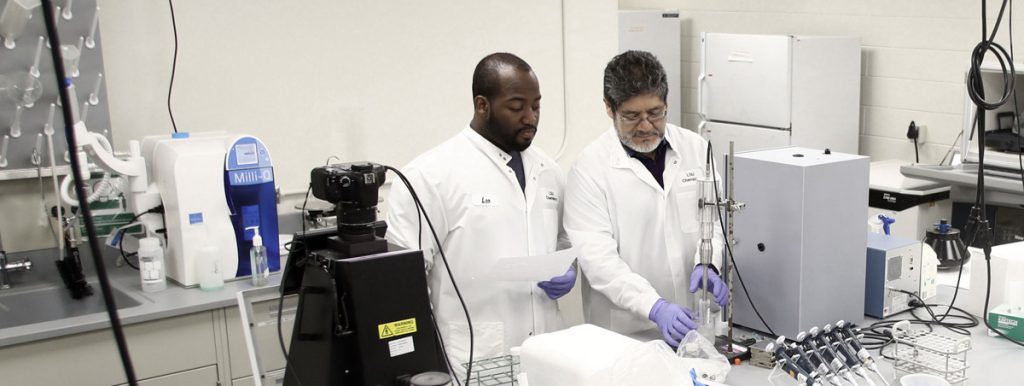
LSU Chemistry graduate student Leo Fontenot (left) conducting research under the guidance of Professor Mario Rivera (right).
BATON ROUGE- Chronic skin wounds are a growing global concern amongst aging populations and patients with severe burns and underlying health conditions such as diabetes. Commonly seen in healthcare environments and long-term care facilities, patients with chronic skin wounds suffer from persistent pain and potentially life-threatening infections.
Effective treatments for these wounds are often challenged by a biofilm, a community of bacterial cells entrenched in a self-produced matrix of extracellular DNA, proteins, and sugar molecules. Bacterial cells in biofilms are tolerant to the body’s immune response and most commercial antibiotics that normally kill free living, or planktonic, bacterial cells.
The antibiotic recalcitrance of biofilm bacteria is further complicated in biofilm infections with multidrug resistant, or MDR, bacteria. Therefore, successful treatment of MDR bacterial biofilm-associated infections require alternative treatment strategies.
LSU Professor and William A. Pryor Chair in Chemistry Mario Rivera recently received a five-year $3.69 million National Institutes of Health, or NIH, R01 grant to develop a new strategy to kill biofilm-embedded cells and combat biofilm infections caused by MDR bacteria, Pseudomonas aeruginosa and Acinetobacter baumannii.
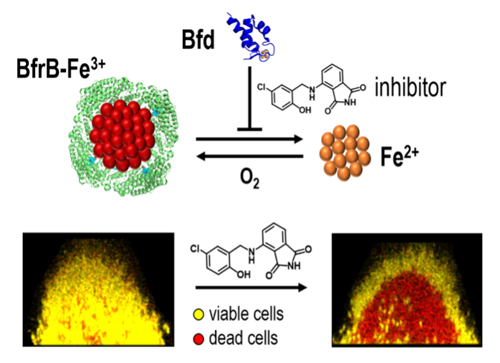
Small molecule inhibitors of the BfrB-Bfd complex disrupt bacterial iron homeostasis and kill biofilm embedded bacterial cells. [Source: https://pubs.acs.org/doi/10.1021/acsinfecdis.0c00669. Further permission related to the material excerpted should be directed to the ACS.]
The new antibiofilm approach involves a new target that would disrupt the bacterial iron homeostasis, or the balanced state of intracellular iron, in the biofilm. Iron, an essential metal for all living organisms, is a crucial nutrient for the growth and survival of most bacterial species. Rivera’s research team aims at disrupting bacterial iron homeostasis by inhibiting a specific protein-protein interaction.
Bacterioferritin, or BfrB, is a spherical and hollow protein that can store thousands of iron atoms in its interior. Rivera and colleagues demonstrated that the mobilization of iron stored in BfrB is an essential process in bacterial cells, which requires BfrB to form a complex with Bfd. The scientists aim to disrupt the BfrB-Bfd protein-protein interaction.
They also discovered proof-of-concept small molecules that can inhibit the BfrB-Bfd complex and cause an irreversible accumulation of unusable iron in BfrB, which leads to iron deficiency, metabolic stress, and bacterial cell death in the biofilm. The proposed work supported by the new grant is directed at optimizing the proof-of-concept inhibitors of the BfrB-Bfd complex into drug lead molecules, that is, powerful inhibitors that kill bacterial cells in biofilms but also have desirable drug-like properties.
The funded research project involves a talented, multidisciplinary team of drug discovery collaborators from LSU and other institutions, including:
Dr. Allen Reitz (co-PI), Fox Chase Chemical Diversity Center
If the proposed strategy proves successful, validation of the novel antibiotic target would lead to the development of an entirely new class of antibiotics for the treatment of biofilm-associated infections. To learn more about the Rivera research group and their work on iron homeostasis in bacteria as a potential target for antibiotic development, visit their group page.
Media Contact:
Gretchen Schneider
LSU Chemistry
gschne2@lsu.edu
Wound Cleanser Versus 0.9% Saline Solution as Instillation for Negative-Pressure Wound Therapy in Severe and Infected Wounds
Kathy E. Gallagher, Emily C. Alberto, Peter J. Mallow, Michel H. Hermans, Luis Cardenas
Negative-pressure wound therapy (NPWT) with instillation and dwell time is an accepted adjunct therapy for infected wounds. A study was conducted to assess whether the use of hypochlorous acid preserved wound cleanser (HAPWOC) (Vashe, Urgo Medical North America, Fort Worth, TX, USA) as the irrigant would reduce the cost of care in comparison to 0.9% saline (NaCl).
“There is an increased understanding that while many types of chronic wounds, including diabetic foot ulcers, are polymicrobial in nature, traditional culture methods might underrepresent the vast diversity of chronic wound microbiomes, including fungal populations,” explained Lindsay Kalan, PhD, an assistant professor, Departments of Medical Microbiology and Immunology and Medicine, Division of Infectious Disease, University of Wisconsin–Madison … read more
The normal wound healing process involves a complex series of four overlapping but distinct steps. During the initial steps, platelets from the blood control bleeding by signaling the formation of a protein matrix plug; they also generate molecules that will constrict blood vessels and mobilize other types of cells to the site. These additional cells kill pathogens in the wound area and trigger wound healing and blood vessel formation. In later steps, the protein matrix, blood vessel growth and connections are even further developed, and skin and other surface cells begin to migrate to the site. Together, the skin and protein matrix form granulation tissue to repair and close the wound … read more
Porous, resorbable biomaterials can serve as temporary scaffolds that support cell infiltration, tissue formation, and remodeling of nonhealing skin wounds. Synthetic biomaterials are less expensive to manufacture than biologic dressings and can achieve a broader range of physiochemical properties, but opportunities remain to tailor these materials for ideal host immune and regenerative responses. Polyesters are a well-established class of synthetic biomaterials; however, acidic degradation products released by their hydrolysis can cause poorly controlled autocatalytic degradation. Here, we systemically explored reactive oxygen species (ROS)–degradable polythioketal (PTK) urethane (UR) foams with varied hydrophilicity for skin wound healing … read more
Driven by a team of multidisciplinary course directors and led by Jihad A. Mustapha, MD, a pioneer in the field of interventional cardiology, AMP provides an unrivaled experience for endovascular and vascular specialists to gain knowledge on the latest advances in revascularization and explore groundbreaking techniques that will improve the future for CLI patients. The unequaled CLI education paired with the paramount interaction among faculty and attendees makes AMP an impactful, inspiring experience that you cannot miss … register
Michael Hiles – Senior Vice President and CSO, Cook Biotech
This free-to-attend CPD webinar has been organised by British Journal of Hospital Medicine, supported by an unrestricted educational grant from Cook Biotech, Inc, West Lafayette, IN, USA.
This session will focus on the fundamental role that the extracellular matrix (ECM) plays in the tissue healing process, including the importance of understanding the biomechanics of ECM in tissue regeneration and the implications for developing new therapeutic strategies in wound healing.
*** This webinar is CPD certified and all attendees will receive a personalised CPD certificate sent by email after the session.***
Stephen “Andy” Rohrer, MSN, RN, APRN, AGACNP-BC, FNP-BC, CWS
Seemingly at the mercy of “the C-suite,” many of us have come to loathe hearing the sound of “important shoes” walking down the hall, which means an administrator is lurking. Indeed, profitability and viability have always been elusive to this group of individuals. Historically, they have defined the value of the wound center in terms of the volume of hyperbaric oxygen therapy (HBOT) treatments but HBOT services are at a 14-year low, based on Medicare claims data. Referrals to radiology, laboratory, surgery, cardiology, vascular medicine, durable medical equipment, and infusion services are always missing on monthly reports. Many of us fairly look on with resentment as those departments benefit from the fruits of our labor. Their productivity is always on the winning side while the needs of our specialty go ignored … read more
Author(s): Dan Ziegler, Massimo Porta, Nikolaos Papanas, Maria Mota, György Jermendy, Elena Beltramo, Aurora Mazzeo, Andrea Caccioppo, Elio Striglia, Victoria Serhiyenko, Alexandr Serhiyenko, László Rosta, Ovidiu Alin Stirban, Zsuzsanna Putz, Ildikó Istenes, Viktor Horváth and Peter Kempler
Microvascular complications are responsible for a major proportion of the burden associated with diabetes contributing to substantial morbidity, mortality, and healthcare burden in people with diabetes. Retinopathy, nephropathy, and neuropathy constitute the leading causes of blindness, end-stage renal disease, and lower-extremity amputations, respectively. Since the efficacy of causal therapies of diabetic microvascular complications is limited, especially in type 2 diabetes, there is an unmet need for adjunct treatments which should be effective despite ongoing hyperglycemia. Experimental studies have indicated that diabetic microvascular complications can be prevented or ameliorated by various biofactors in animal models by interfering with the pathophysiology of the underlying condition. Some of the findings related to biofactors, like α-lipoic acid and benfotiamine, could be translated into the clinical arena and confirmed in clinical trials, especially in those focusing on diabetic polyneuropathy. Given the micronutrient nature of these compounds, their safety profile is excellent. Thus, they have the potential to favorably modify the natural history of the underlying complication, but long-term clinical trials are required to confirm this notion. Ultimately, biofactors should expand our therapeutic armamentarium against these common, debilitating, and even life-threatening sequelae of diabetes … read more
A new study compares the regenerative potential of blood/bone marrow aspirate concentrates obtained from arterial blood, venous blood, and bone marrow aspirate. The study, conducted in rabbits, is reported in the peer-reviewed journal Tissue Engineering Part A … Blood concentrate material such as platelet-rick fibrin (PRF) is used in clinical practice to promote tissue regeneration in the fields of dentistry, orthopedic surgery, and plastic surgery. In the current study, Masako Fujioka-Kobayashi, from The Nippon Dental University, Tokyo, Japan, and colleagues, introduce a new type of solid bone marrow aspirate concentrate (sBMAC) material and show its regenerative potential in both gingival fibroblasts and osteoblasts in vitro compared with that of conventional PRF … read more
Experts from various countries will meet at the International Congress of the discipline organized by the Faculty of Medicine of the Universidad Católica del Norte.
Between April 7 and 9, the International Congress of Medicine and Hyperbaric Oxygen Therapy will be held, Coquimbo 2022. The event will be online and completely free. It will have the presence of internationally renowned exhibitors in the discipline from the United States, Spain, Argentina, Italy, Sweden, Brazil, Poland, Mexico and Chile.
Professionals from different health disciplines from all over Chile and the world can participate. To access, they only need to register in advance on the website www.hyperbariccongress2022.com
One of the novelties will be the presentation of the advances in studies on the projections of this type of treatment in patients who have suffered from Covid-19. In addition, during these days researchers will present on hyperbaric oxygen therapy as a complementary treatment for wounds and tissue regeneration and oncology, among other pathologies … read more
Compression therapy is highly recommended for the resolution of lower extremity edema and the healing of venous leg ulceration, yet this therapy is associated with low levels of patient compliance. Recent data show a strategically engineered system may allow high compliance. The UrgoK2 Dual Compression System accomplishes compliance without a compromise of therapeutic efficacy not only in patients who have standard venous reflux but also in those who have more diverse, complicating factors. The speakers will discuss how the key principles of consistent application, continuous pressure, and comfort associated with this dual compression system drive both patient compliance and therapeutic benefits … read more
In this video, Monique Abner, MD, CWSP, discusses her session, “Great Debates and Updates in Wound Healing,” at SAWC Spring 2022 and how offloading is used to manage diabetic foot ulcers … watch
Hi, I’m Dr. Windy Cole. I am the director of Wound Care Research at Kent State University College of Pediatric Medicine. And I’m here to talk a little bit about my presentation, Energy First Harnessing the Power of Pulsed Acoustic Cellular Expression … PACE therapy, otherwise known as pulsed acoustic cellular expression is the use of biphasic high energy acoustic shockwave, very similar to lithotripsy or ESWT extracorporal shockwave therapy you might be familiar with in the field of medicine … read more
Donna Morrow, WCC DWC OMS RN, Wound Nurse Manager at Nizhoni Health
Wound care has changed a lot over the years, as a result of technological advancements and has now become an ever-expanding field in which people are certified. When I first started working in wound care, people who treated bruises in hospitals were deemed the wound experts. However, it is a precise science today; you must follow protocols and get certifications for ostomy, diabetic wounds, and even primary wound care. More nurses in the field are becoming certified to deliver better patient care, which I think is a massive transformation … Technology has revolutionized wound nursing. Before, we used to travel miles across the state to see patients, make recommendations, and build a treatment protocol. Now, with technology, nurses in the field can receive a photo of the wound to get a clear picture of the condition of the injury. Such visibility into the wound provides critical information about the measures of the injury and types of tissues affected. This can save a lot of time for nurses, enabling them to see upwards of 20 patients rather than just 2 to 3 patients per day … read more
As a reimbursement strategy and education consultant, this author always attempts to explain the reimbursement “who?” “what?” and “why?” in an easy-to-understand manner. Because readers have submitted many questions about the diverse types of HCPCS codes recently assigned to cellular- and/or tissue-based products (CTPs) for skin wounds [outdated term “skin substitute”], this article will address the “who?” and “what?” However, the article will not address the “why?” because the Centers for Medicare & Medicaid Services (CMS) have not explained “why” they assigned diverse types of HCPCS codes to the CTPs … read more
Wound Week™ 2022 is an innovative, unparalleled educational opportunity that will feature superior content delivered by multidisciplinary faculty with true clinical expertise. This conference will allow clinician driven training and education in wound care, vascular and hyperbaric medicine. In addition to education and training, this meeting will offer unmatched clinician networking.
The American Professional Wound Care Association (APWCA) is the Host Society for Wound Week™ 2022. The Education Planning Committee (EPC), under the leadership of the APWCA provided input to create the agenda and determine the content for the preconference and main conference sessions. The EPC also suggested content experts that could be selected to serve as faculty … read more
Holly Kirkland-Kyhn, PhD, FNP, GNP, CWCN, FAANP
Working at a 620-bed academic and level 1 trauma center is exhilarating and challenging for wound specialists. We engage in multiple projects to provide the best care for our patients, who range in age from 22 weeks’ gestation neonates to centenarians. We have an interdisciplinary team working to assess and provide the best interventions to prevent pressure injuries, treat wounds, and provide education. This interdisciplinary team consists of a nurse practitioner (NP) as director of wound care, a plastic surgeon, a physical/ occupational therapist, a dietician, 5 wound-certified nurses, and 2 analysts … read more
Regenative Labs, the established leader in the connective tissue allograft space, today launched AmnioText™ Dual-Layer Patch for wounds. AmnioText is the company’s first product to offer private practices, hospitals and wound care centers a sterile, dehydrated amniotic membrane allograft to cover and protect a patient’s wounded tissues. The Regenative Labs current suite of products are regulated by the FDA under 21 CFR part 1271 section 361, are minimally manipulated and for homologous use only.
“As we continue our pioneering innovation at Regenative Labs, we’re proud to open yet another new market to serve patients with the introduction of AmnioText, a wound covering technology,” said Tyler C. Barrett, CEO of Regenative Labs. “Amniotic tissue has been used clinically for more than 100 years and we are excited to continue to expand our 361 product offerings. Our new AmnioText patch helps fill the gap in the national shortage of options in this space and meet high demand for these types of products.”
AmnioText features include:
dual layering with the ability to place the patch on either side facing the wound
stores at room temperature (no cryopreservation required)
readily adheres to the wound surface and stays put when placed
maintains shape when placed on a moist wound bed
terminally sterilized
5-year shelf life
The non-embryonic tissues undergo extensive medical, social screening and blood testing prior to Regenative Labs use. Only tissue cleared after this stringent screening regimen is processed and re-tested under standards established by the FDA’s requirements. AmnioText is listed on RedBook and Medispan and holds a HCPCS code (Q4247) from the Centers for Medicare & Medicaid Services (CMS) as a 361 HCT/P.
AmnioText is available in sizes ranging from 1cm x 1cm to 10cm x 10cm for immediate ordering, shipping and delivery. Visit https://regenativelabs.com/ for details, call 800-891-3452 or email info@RegenativeLabs.com.
Regenative Labs launched a national research program in spring of 2020 to study connective tissue allografts and, in August 2020, announced it had received approval from CMS to cover a new innovation, ProText™, making it the first connective tissue allograft to be assigned a Q code (Q4246) approved for application directly to a defect using a syringe.
About Regenative Labs
Located in Pensacola Fla., Regenative Labs is an FDA registered and inspected tissue bank that has become the leader in human cell and tissue allograft space. Regenative Labs has launched several research initiatives in order to collect data from scientists, physicians, hospitals and surgery centers in order to improve patient outcomes. Formed by veteran industry professionals familiar with the daily challenges of innovations in healthcare, the company provides effective, non-addictive, non-invasive options for patients. Regenative Labs has a laser-focused, expert product research and development team which follows FDA guidelines for minimal manipulation and homologous use. Learn more at http://regenativelabs.com.
Expert Panelists: Christi Cavaliere, MD, Venita Chandra, MD, FACS, Daniel Eiferman, MD, MBA, FACS, Jeffrey E. Janis, MD, FACS, Jarrod P. Kaufman MD, FACS, Hayato Kurihara, MD, FACS, FEBS, Martin I. Newman, MD, FACS
This issue I am tackling a new topic for On the Spot: wound care. This topic, which transcends all surgical specialties, is new territory for me. I’d like to thank Christi Cavaliere, MD, for helping me understand some of the current practices and debates in this field. So is wound care practice, as one panelist phrased it, “more style than science”? Is hyperbaric oxygen therapy all it’s cracked up to be? And is wound care really the “Wild Wild West” of patient care? Read on to see what some of the experts think!
… read more
Findings also confirm platform’s capabilities for wound and skin clinical trials
PITTSBURGH, April 18, 2022 /PRNewswire/ — Net Health, a leading provider of software and analytics for medical specialties, announced the recent publication of a study reviewing the use of artificial intelligence (AI)-enabled mobile wound care applications developed by Net Health. The study showed that these applications provide better documentation, are easy to use, engage patients, and drive improvements in wound measurement and management.
Conducted by Australian New South Wales (NSW) Health Service, the study looked at the performance of Net Health’s Tissue Analytics’ wound imaging and analysis platform in multiple sites, including a senior care ward, colorectal ward, an outpatient dermatology clinic, and primary care physicians’ offices.
In addition to highlighting the platform’s value in clinical settings, the findings provide helpful insights for researchers looking to conduct decentralized and hybrid clinical trials involving wounds, skin lesions, and visible skin conditions in a post-pandemic world.
Statistically Significant Findings
The study was published in the International Wound Journal. The e-clinical platform was tested on 124 patients with 184 wounds compared with the standard care group, consisting of 166 patients with 243 wounds. Results showed several statistically significant outcomes related to use of the platform, including the completeness of documentation based on the number of dressing changes compared to standard care, pain, size, exudate, and odor (p < 0.001). These findings demonstrate the positive impact of the platform in terms of usability, patient adherence, and the photographic evidence of clinical endpoints.
As described in the publication, ten of the 13 participating physicians and nurses responded to a survey, and strongly agreed that the platform had value, and provided benefits to communication. The patients who were interviewed unanimously commented that the platform provided benefits to their wound healing and communication with clinicians.
Highlights Value for Clinical Research
Besides showcasing the value of mobile wound analysis in clinical settings, the findings will fuel interest in the Tissue Analytics platform for wound and skin care clinical research. Findings from the study that relate to clinical trials include the ability of the mobile wound analysis platform to: 1) empower patients to take more active roles in their care; 2) increase accuracy of wound measurements; and 3) ensure greater consistency in care and participant satisfaction.
Study results also suggest the value of the platform to retain study participants. Per interviews, patient-participants said they were “strongly” satisfied by the telehealth capability of the platform. Moreover, the study’s authors noted that using the app saved patients time and cost, especially for travel, a key factor in encouraging participants to remain in a study.
“We’re very excited by the findings in this study,” said Keith Tode, Vice President of Clinical Research for Tissue Analytics. “Study sponsors are looking for tools that are simple to use, engage patients, allow for virtual wound care visits and consultations, and provide real-time and real-world insights into the participant experience. This study shows that mobile wound platforms can offer the features today’s clinicians and researchers want and need. Looking ahead, we see many benefits to this approach for clinical trials for wound care, dermatology, endocrinology and other skin conditions.”
About Net Health
Net Health’s mission is to harness data for human health. Net Health solutions are trusted in over 23,000 facilities across the continuum of care. Our EHR software enables caregivers and their organizations to engage effectively with patients, streamline documentation, staff efficiently, secure maximum appropriate reimbursement and maintain regulatory compliance. Our unique approach to analytics seamlessly presents insights in clinical and operational workflows to improve care and business performance. Net Health is a portfolio company of The Carlyle Group, Level Equity and Silversmith Capital Partners. www.nethealth.com.
John W Frew – Staff Specialist Dermatologist, Liverpool Hospital, Sydney, NSW, Australia
This edition of WPR presents manuscripts from the dermatology field pertaining to conditions such as Pyoderma gangrenousm, Necrobiosis lipoidica and Hidradenitis suppurativa. Each of these conditions are characterised by aberrations in cutaneous healing relevant to the mechanistic understanding of chronic wounds, and in which ongoing translational research is identifying mechanistic pathways and novel therapeutic targets – some of which have already reached the clinic.
While the nuances of molecular pathways may seem irrelevant to the practising clinician, the identification and implementation of novel therapies for inflammatory skin disease and wounds can only be achieved through the translation (and validation) of molecular and immunological discoveries in the clinical setting … read more
MedStar Georgetown University Hospital’s Diabetic Limb Salvage Conference is providing compelling content for the 2022 conference in a virtual format. This annual conference focuses on a multidisciplinary team approach that provides each member of the healthcare team with the education and resources needed to heal wounds and prevent amputations. It features a prominent international faculty that promotes the importance of a multispecialty approach in limb salvage. The course is designed for healthcare practitioners of all specialties and promotes an evidence based approach with emphasis on take-home points, techniques, and functional outcomes. The meeting format will include didactic lectures and specialty symposia for the purpose of providing an interactive learning experience. Here’s what you can look forward … read more Brochure
and the Role of Negative Pressure Wound Therapy: A Retrospective, Single-center Study
Ahmed A Sorour, Levester Kirksey, Vishnu Ambur, James Bena
Surgical site infection (SSI) of groin incisions after vascular surgery is a significant source of morbidity and is associated with high rates of readmission and reoperation, as well as longer hospital length of stay. The patient-reported health care experiences are diminished for those in whom SSI complications occur. Previous studies have analyzed patients undergoing all types of surgery requiring groin incision. The role of closed incision negative pressure therapy (CiNPT) as an adjunct to the primarily closed femoral incision after vascular surgery is unclear … read more
To describe results of a study evaluating a Projected Augmented Reality (P-AR) system for its potential to enhance nursing education about pressure injuries … he sample comprised nursing students and faculty at a school of nursing in a large, Midwestern public university. A total of 32 participants, which included 27 students (30% BSN, 44% MN, and 26% DNP students; 81% female) and 5 faculty members (80% female) participated … read more
Stephen J. Malachowski, Emile Latour, Alex G. Ortega-Loayza
Pyoderma gangrenosum (PG) is a rare, chronic, inflammatory, and ulcerative condition that often affects the lower extremities. Laboratory markers such as neutrophil-to-lymphocyte ratio, erythrocyte sedimentation rate (ESR), and C-reactive protein (CRP) level may have prognostic utility in the management of ulcerative or inflammatory conditions. Objective. This exploratory analysis investigated the relationship between readily available clinical factors and target ulcer healing within 6 months from the first visit. Methods. Two logistic regression models were fit—one focused on ESR as a primary predictor adjusted for age and hemoglobin level, and the other focused on CRP level adjusted for body mass index (BMI) and smoking history. Results. The odds of wound healing at 6 months for patients with abnormal CRP was 0.19 times the odds of healing (95% CI, 0.03–0.77) for those with normal CRP (<10 mg/L), after accounting for BMI and smoking. Similarly, after accounting for age and hemoglobin, those with high ESR experienced 2.81 times the odds of healing … read more
Taking care of patients with lower extremity complaints is quite challenging and already very complex. We need to have a thorough knowledge of many medical, scientific, and psychological topics. Podiatrists additionally perform many different types of technical procedures. All of this is done on our very complicated patients with their myriad issues … However, the one issue that makes the practice of podiatry even more complex is managed care. For some in the United States, the challenges of managed patient insurance might not be too prominent, but in my neck of the medical woods in California, managed care is a major component of private practice … read more
As you know, managing patients with chronic ulcers requires physicians and other qualified healthcare professionals (QHPs) with specialized knowledge and expertise. Unfortunately, this country has a shortage of chronic ulcer management professionals. Therefore, many physicians/QHPs who do not have the required knowledge do their best to manage chronic ulcers by trial and error. Many of these physicians/QHPs wish they could consult with physicians/QHPs who have chronic ulcer management expertise. In addition, even the physicians/QHPs who have such expertise are often stumped on difficult cases and wish they could consult with other colleagues who may have experienced similar cases … read more
Nanodroplets for the Treatment of Infected Chronic Wounds
Chronic wounds (CWs) – nonhealing breaks of the skin epithelial continuity longer than 42 days – are usually characterised by persistent hypoxia, intensified inflammation, and altered balances between matrix metallo-proteinases (MMPs) and their endogenous inhibitors; moreover, microbial infection frequently complicates CW status. CWs affect a large fraction of the population worldwide – especially the elderly – jeopardising the physical health and the economic system of industrialised countries. It is estimated that 1% to 2% of the population will experience a CW during their lifetime. For this reason, it is important to find more effective treatments to heal CWs and to prevent serious complications such as infections, which can lead to amputation, to improve health of patients … read more
The paper I have chosen for this commentary is not a clinical research paper, but hopefully one that will stimulate everyone whether from a clinical, educational, managerial or industry-based workplaces. It is from China, reviewing the global trends for research activity and hotspots in diabetic foot ulceration (DFU). It examined the DFU research activity using the Science Citation Index Expanded (SCI-expanded) of Web of Science Core Collection (WoSCC) using key words, such as ‘diabetic foot ulcer’ or ‘diabetic foot wound’. This database was used as it was deemed to cover most of the high impact and quality international scientific journals. The information of all identified publications included title, year of publication, author, affiliations, nationalities, journal, abstract and keywords. A total of 5,869 publications on DFUs … read more
Based on the analysis of electronic health records from 480 clinics, we found that better care quality and continuity are associated with better-than-expected wound healing performance … Chronic wounds, defined as wounds that “fail to proceed through the normal phases of wound healing in an orderly and timely manner,”1 affect 6.5 million Americans and result in $50 billion in annual Medicare expenditure.2-4 Despite growing prevalence and economic burden in the aging US population, chronic wound care remains an area with inconsistent adherence to evidence-based recommendations and variable quality of care.5 For example, despite evidence-based recommendations for compression therapy for venous ulcers and total contact casting (TCC) for offloading of pressure for diabetic foot ulcers, a previous study involving 2404 patients from 18 hospital-based … read more
HEALTH ESPRESSO INC. a company focused on introducing a collaborative, Inter-professional virtual health record in community within the Allied Health and home care sectors that is connected to primary care, hospital and other digital health assets, today announced the recent appointment of Dr. Robyn Evans as Health Espresso’s Advisor, Skin Health and Wound Care.
Rick Menassa, CEO of Health Espresso commented, “We are very pleased to have Dr. Evans join us as the Company’s Advisor, Skin Health and Wound Care. She brings Health Espresso over 13 years of wound care education and research. Her extensive in-field experience as a primary care physician, coupled with her proven ability to lead within the ever evolving, rapid paced digital health environment, will add tremendous navigational support to Health Espresso’s own growth strategies as it engages with patients and front line organizations providing wound care services.”
Dr. Evans is advising Health Espresso’s development teams on the AI powered wound imaging tool on its mobile app. for images capture at point-of-care, integration into Health Espresso’s patient’s Electronic Health Record (EHR) on its secure, in-cloud web portal for real-time inter-professional virtual collaboration.
Dr. Evans valuable input and guidance is leading development of Health Espresso’s next stage to interpret wound characteristics from captured images using Health Espresso’s proprietary AI technology to direct management.
Dr. Robyn Evans is actively involved in clinical evaluation and management of patients with complex wounds as the Director of the Wound Healing Clinic at Women’s College Hospital. Over the past 13 years, she has developed an interest in wound care education and research. She is medical lead for Wounds Canada as well as serving on the Board of Wounds Canada. She is a lecturer at University of Toronto and part of the International Interprofessional Wound Course through University of Toronto.
Dr. Evans has also worked full time as a community family physician since 1992.
Dr. Robyn Evans attended University of Toronto Medical School. She completed her family medicine residency at University of Toronto with further training in Wound care. Prior to this she did a Bachelor of Science as well as graduate studies in Biochemistry.
“Complex wounds need to be acutely characterized to optimize management and improve patient outcomes” says Dr. Evans.
ABOUT HEALTH ESPRESSO
Inspired by front-line experience in home and community care, Health Espresso chronicles the entire patient journey. Starting with a digital patient profile and digital care plan, Health Espresso empowers health organizations to automate intake, triage and update patient records and follow through with post-discharge real-time remote patient monitoring for better health outcomes. Health Espresso provides a collaborative, patient-centered platform for Allied Health professionals, Primary Physicians and Hospitals for a ‘one patient, one care plan’ approach to care, reducing service overlaps and gaps.
Its secure, connected platform integrates with EMRs and government data assets for an all-encompassing view of patient records. Health Espresso’s mobile app complements its in-cloud web portal to empower physicians with real-time patient information and virtual care capability for time-sensitive decisions at the point of care, anywhere in the world. For more information, visit https://healthespresso.com
A scientific team of scientists from NUST MISIS and Institute of Cytology and Genetics of SB RAS managed to create innovative bandages based on organic polymers and silver nanoparticles, which stimulate the healing of diabetic ulcers and chronic wounds. The results of the work have been published in Pharmaceutics … Type 2 diabetes mellitus is characterized by a high level of blood glucose, which worsens the work of white blood cells. They cannot function normally, and as a result, the body becomes especially vulnerable to infections. In addition, diabetes affects blood circulation, hindering the delivery of nutrients … read more
Health Espresso, Canada’s upcoming leader in community EHR, partners with best in class, Wounds Canada, to provide an AI powered, digital solution that’s aligned with the government’s target of delivering better, more connected care and improving health equity for patients, especially those in remote communities. The partnership brings Wounds Canada’s best practices, resources and training to front-line practitioners at the point of care coupled with the ability for remote patient monitoring for better outcomes.
OAKVILLE, ONTARIO (PRWEB) APRIL 13, 2022
When Linda Moss’ father was transferred to a second hospital for rehabilitation following a brain injury neurosurgery, her family only received information about the primary reason for his hospitalization: his neurological progress. Linda Moss and her family didn’t know that their father was suffering from a pressure injury that would eventually cause osteomyelitis. It was only when their father was denied a second surgery due to complications from the pressure injury that the severity of the wound was discovered.
Unfortunately, this gap in communication between health-care providers, specialists and patients is far too common in the Canadian health-care system. The complete picture of patients is seldom shared, especially when they are complex or receive care from multiple partners. This leads to a lack of timely wound care and ultimately irreversible complications that can result in amputations or even death in the case of Linda Moss’ father.
“Care teams and caregivers are essential together, and the first step in any prevention or further complications with wounds is a communicated Care Plan,” says Linda Moss.
A new partnership between national organization Wounds Canada and Medtech company Health Espresso is changing this. This partnership enables front-line clinicians, patients, policymakers, and researchers to digitize a patient’s journey and connect members of allied health teams at the right time to decrease acute and hard-to-heal wounds, reduce hospitalizations and improve patient outcomes. Leveraging this technology will also enable Wounds Canada to establish a Canadian national registry that can inform further research in wound care and provide quick and easy access to Wounds Canada’s validated tools and resources for immediate bedside action by clinicians and help support wound management by patients, especially those living in outlying communities.
“Wounds are a serious health complication that impacts the quality of life for patients while having significant economic implications on our health-care system, and the situation has only worsened under the strain of COVID-19. In many cases, hard-to-heal chronic wounds can be avoided or, if detected in the early stages, managed effectively — but we need evidence-based solutions to help us provide the safe, equitable and timely care that patients deserve in home care and across all health-care settings,” says Mariam Botros, CEO of Wounds Canada. “That’s why Wounds Canada is excited to partner with Health Espresso to offer a skin and wound care mobile app that benefits not only patients but also clinicians, researchers and policymakers. With the launch of this digital solution, we’ll be able to improve patient care, reduce hospitalizations and lower spending on wound care while also increasing the skills and knowledge of front-line clinicians and establishing a Canadian national registry to inform further research.”
“As a registered nurse and private wound care consultant in rural southwestern Ontario, providing safe, timely, equitable access to interprofessional, evidence-informed care to people living with wounds can be challenging,” adds Crystal McCallum, Director of Education with Wounds Canada. “The skin and wound care mobile app that Health Espresso is developing in collaboration with Wounds Canada will address these challenges and will prove to reduce the burden of wounds and enhance the experience and outcomes of people living with wounds while enabling better use of health-care resources.”
Certified by the Ontario Telehealth Network (OTN) and powered by artificial intelligence, Health Espresso’s easy-to-use mobile and web-based integrative digital solution offers a connected, collaborative approach to wound care. It provides a complete digital blueprint of a patient’s overall health and history, real-time vitals data, recorded notes from hospital visits, administered medication and more for timely, well-informed decision making. Unlike many standalone solutions, Health Espresso’s unique collaborative approach allows for a broader view of the patient’s journey with access to patient records, high-quality wound imaging and analysis tools to track healing progression and understand why a wound may not be healing correctly. It also includes built-in messaging and video tools that enable physicians, wound specialists and patients — especially those in remote or Indigenous communities — to engage in live communication within a secure environment.
“Health Espresso’s digital solution is aligned with the government’s target of delivering better, more connected care and improving health equity for patients, especially those in remote communities,” says Founder of Health Espresso Rick Menassa. “To optimize the healing of wounds, care needs to be timely, and a structured, collaborative approach to assessment, treatment, documentation and communication based on best practices is critical for providing patients with the best possible outcomes. We are pleased to partner with Wounds Canada to offer our technology and bring their best practices, resources and training to front-line practitioners at the point of care.”
ABOUT HEALTH ESPRESSO
Inspired by front-line experience in home and community care, Health Espresso was created to chronicle the entire patient journey. Starting with a digital patient profile and digital care plan, Health Espresso empowers health organizations to automate intake, triage and update patient records and follow through with post-discharge remote patient monitoring for better health outcomes. Health Espresso provides a collaborative, patient-centred platform for Allied Health professionals, Primary Physicians and Hospitals for a ‘one patient, one care plan’ approach to care, reducing service overlaps and gaps. Its secure, connected platform integrates with EMRs and government data assets for an all-encompassing view of patient records. Health Espresso’s mobile app complements its in-cloud web portal to empower physicians with real-time patient information and virtual care capability for time-sensitive decisions at the point of care, anywhere in the world. For more information, visit https://www.healthespresso.com
ABOUT WOUNDS CANADA
Established in 1995, Wounds Canada is a charitable organization dedicated to advancing wound prevention and management for all people in Canada. They advocate for a population health approach that promotes best practices to support persons at risk of or living with wounds, health decision-makers and front-line clinicians. They develop and provide educational programs and resources and support research to advance this holistic, risk-based approach further. Wounds Canada fosters relationships with interested individuals and organizations to expand and sustain a robust wound community in Canada with mutually beneficial global connections. Their goal is to reduce the prevalence and incidence of wounds of all types and the negative consequences they bring—including patient suffering and wasted health-care dollars. To learn more, visit http://www.woundscanada.ca.
in Diabetic Foot Ulcer Rats via Activating PI3K/AKT Pathway and hTERT
Diabetes is a widespread metabolic problem in modern society. Due to long-term hyperglycemia, diabetes can cause damage to multiple systems, such as the eyes, kidneys, nerves, blood vessels, etc.1 As one of the serious complications of diabetes, diabetic foot is a chronic progressive disease caused by vascular occlusive disease, which can lead to complications.2 Once foot ulcers occur, the extremities of diabetic patients are very likely to be infected with invasive infection, leading to an increased risk of amputation.3 With the annual increase in the number of diabetic patients in the world, the incidence of diabetic foot ulcer (DFU) is also increasing, which has a great impact on family, society, and economic development. There is an urgent need to develop more effective detection and treatment methods for DFU … read more
The 2022 APMA Spring Virtual Coding Seminar is a half-day online seminar providing attendees with a deep dive into foot- and ankle-specific coding issues. Certified professional coder Jeffery D. Lehrman, DPM, and Edward N. Prikaszczikow, DPM, will instruct participants on a variety of topics to enhance processes and better serve patients.
Date: April 23
Location: Online
Time: 10 a.m.–3 p.m. EDT
Education Credit:
– Doctors of Podiatric Medicine: 4.0 CECH
– Podiatric Medical Assistants: 4.0 CME (anticipated)
– AAPC Certified Professional Coders: 4.0 CEUs
The authors performed a qualitative study via interviews to investigate how patients perceive and understand their foot issues over a period of about one year. A total of 15 subjects participated, and the researchers found important data in two primary areas: how patients perceive foot ulceration and how patients perceive relevant timing with respect to foot ulceration. This included limited understanding of foot ulceration, close observation of foot problems and barriers to ulcer perception, including timing of when perception of the seriousness of the foot ulcer changed. The authors concluded that there is significant potential for education to positively impact these challenges … read more
Healogics kicked off April with its chronic foot health awareness efforts in collaboration with National Foot Health Awareness Month. Its goal: To educate the public on the importance of foot health to prevent wounds and the need for regular foot exams to detect non-healing wounds. “With the increased incidence of diabetes, foot ulcers and even amputations, it is important for those living with chronic wounds, as well as those who are at risk, to have access to information on wound healing,” said David Bassin, Healogics CEO “Throughout April, we seek to educate our communities and health care providers in an effort to improve access to wound care for all that need it.” The efforts are also part of Healogics’ 2022 Healing Can’t Wait program. The company served more than 330,000 patients last year through a network of … read more
Frank and Lizzie speak with The Save a Leg, Save a Life (SALSAL) Foundation’s Executive Director, Dr. Desmond Bell, on the exciting new work being done by the SALSAL. You can visit https://thesalsal.org/ for more information or learn how to get involved:
Based on the analysis of electronic health records from 480 clinics, we found that better care quality and continuity are associated with better-than-expected wound healing performance
Objectives: To evaluate the association between clinics’ wound healing performance and clinic-level measures of care continuity, clinical quality, and sociodemographic characteristics of the population in their catchment areas.
Study Design: In this cross-sectional analysis, we analyzed electronic health records for 180,336 chronic wounds from 480 wound care clinics during the 2018 calendar year.
Methods: We measured healing performance using a clinic’s observed to expected (O/E) ratio, which is based on the rate at which chronic wounds were predicted to heal within 12 weeks given its case mix and the actual healing rate. We compared the top and bottom quintiles, in terms of the O/E ratio, of clinics. Multivariable regression was used to estimate the effect of the clinic-level measures on the O/E ratio.
… read more
New therapeutic approaches have emerged for preventing diabetic foot ulcers and promoting their healing. Endocrinologist and diabetes specialist Olivier Bourron, MD, of the Pitié-Salpêtrière Hospital in Paris, described these approaches at the 48th annual congress of the Francophone Diabetes Society … Unlike macroangiopathic complications (such as ischemic heart disease and stroke) and renal complications, foot ulcers are a diabetic complication for which there has been very little therapeutic progress over the past 20 years … read more
CHICAGO, April 8, 2022 /PRNewswire/ — Catherine Burzik will be stepping down from her role as Chairperson of the board of the American College of Wound Healing and Tissue Repair (ACWHTR). She will be leaving the organization after 10 years in that role. Cathy has been the engine behind the College and has tirelessly given her time, commitment, and knowledge to bring the ACWHTR from its infancy to the strong organization it is today. Cathy will continue to focus on her Foundation and multiple board positions in industry. A unanimous decision by the board resulted in naming Cathy, “Chairperson Emeritus.” We know that our relationship with Cathy will continue to be strong moving forward. We all thank her sincerely!
Dr. William Ennis, current President, and CEO, was unanimously approved by the board to assume the role of Chairperson, ACWHTR. Dr. Ennis together with Dr. Will Li MD, founded ACHWTR in 2010. The Board will begin work looking for a new President so that Bill can concentrate on membership growth, increased relationships with medical societies, and advancing fellowship programs throughout the country in wound care.
The Board of Directors are excited to name Dr. Peter Rubin MD, Chris Fashek MBA, and Dr. John Harper Ph.D. to the board.
Peter Rubin MD is the current President of the American Society of Plastic Surgery and the Chair of the Plastic Surgery department at the University of Pittsburgh Medical Center and the director of the UPMC wound healing service.
Chris Fashek has 25 years of senior executive experience in healthcare. Currently the Founder and Chairperson of MedTech Solutions Group LLC and NanoVibronix, Inc. Chris has held CEO roles at Brain Sentinel, Spiracur, and KCI and was the COB at Systagenix.
John Harper Ph.D. is currently SVP of R+D and the Chief Technology Officer at MiMedx. Previously Dr. Harper spent 10 years in various leadership roles at LifeCell Corporation and Acelity. John holds a PhD in biochemistry from the University of Texas and is well respected in the biotechnology and wound healing space.
The mission of the ACWHTR, a 501c3 founded in 2010, is “To improve public health by leading the growth of a new, integrated field of medicine and surgery, dedicated to the practice of modern wound healing and tissue repair.” The COVID crisis created a new awareness in healthcare in which chronic and acute wound care is an “essential” service. The current public health crisis led to a renewed commitment at the ACWHTR, to foster the development of the field. A return to live education this year, and an emphasis on membership growth and benefits, further sparked new energy and the desire for change.
The ACWTHR will return to hosting its annual meeting in Chicago in a live format on December 1st-3rd 2022 at the Swissotel in downtown Chicago.
Cellular mechanisms and/or microbiological interactions which contribute to chronic diabetes related foot ulcers (DRFUs) were explored using serially collected tissue specimens from chronic DRFUs and control healthy foot skin. Total RNA was isolated for next-generation sequencing. We found differentially expressed genes (DEGs) and enriched hallmark gene ontology biological processes upregulated in chronic DRFUs which primarily functioned in the host immune response including: (i) Inflammatory response (ii) TNF signalling via NFKB, (iii) IL6 JAK-STAT3 signalling, (iv) IL2 STAT5 signalling and (v) Reactive oxygen species. A temporal analysis identified RN7SL1 signal recognition protein and IGHG4 immunoglobulin protein coding genes as being the most upregulated genes after the onset of treatment. Testing relative temporal changes between healing and non-healing DRFUs identified progressive upregulation in healed wounds of CXCR5 and MS4A1 … read more
Nurse practitioners (NPs) are valuable members within the field of wound management. As licensed, independent clinicians, NPs practice autonomously and coordinate with other health care professionals and individuals. Half a century of research definitively demonstrates that NPs provide high-quality health care services across a person’s lifetime and in diverse settings. Nurse practitioners receive graduate-level education, with master’s or doctoral degrees, and possess the knowledge and clinical competency to provide health care beyond their initial registered nurse preparation. As providers that blend clinical expertise in diagnosing and treating acute and chronic health conditions, emphasizing disease prevention, health management, and patient education … read more
As technology improves and patients with more complicated problems are living longer, treating wounds in these patients is becoming more challenging, not because of the wounds specifically but because of the comorbidities and associated treatments. Our center regularly sees patients with a wound or ulcer who are also undergoing immunosuppression therapy. Patients with pulmonary disease, inflammatory diseases such as rheumatoid arthritis, skin diseases, and others take medication that influences the immune system. The more challenging patient population involves those who have received a transplant. In our practice in Alabama, there are many patients who have had kidney transplants … read more
In this video, Harry Schneider, DPM, FACFAS, Harvard Medical School, Cambridge Health Alliance Podiatry, showcases the use of placental and umbilical tissue in a case presentation of an infected diabetic foot ulcer in a 52-year-old male … This presentation is part of an 8-part case series on “Advancing the Standard of Care With Cellular- and Tissue-Based Products.”
… read more
This presentation will explore how to provide wound care in diverse patient populations. As global migration, whether voluntary or forced, increases, wound care practitioners must develop clinical skills that take into account the needs of diverse populations. Diversity can be thought of as what makes us different and can include factors such as age, ethnicity, and socioeconomic status, among others. However, let’s consider what connects us and how we can use that connection to appropriately care for populations that are diverse in age, ethnicity, socioeconomic status, and overall health … read more
Meri T. Goehring, PhD, Joni Farran, DPT, Courtney Ingles-Laughlin, DPT, Sarah Benedista-Seelman, DPT, Betsy Williams, MSLIS
Many studies use similar methods to measure skin turgor, but there is no gold standard method that is being followed in clinics or hospitals. PURPOSE: The purpose of this systematic review was to determine if there is any consistent method to measure skin turgor in humans that is valid and reliable. METHODS: Topics of interest for turgor assessment included dehydration; skin integrity, including wounds and skin flaps; and fluid/electrolyte balance for adults 18 years and older. PubMed, ProQuest Medical, SPORTDiscus, PEDro, Web of Science Core Collection, and Cumulative Index of Nursing and Allied Health Literature complete databases were utilized. Levels of evidence were established with 2011 Oxford Centre for Evidence-Based Medicine scale. Methodological rigor was assessed … read more
Our educational sessions promote the best practices in skin health and wound healing.
It has been estimated that the cost of managing wounds and associated co morbidities in the NHS, is £5.3 billion a year. Approximately 2.2 million adults will suffer with a wound over a year, and largely it is nurses who care for these wounds … Wound assessment is a vital process to help ensure patients are receiving the most appropriate management plan for them. Understanding the stages of the normal wound healing process will arm health and social care practitioners with the confidence to recognise when something is not right. This session will provide the delegates with the fundamental knowledge to undertake a wound assessment, formulate a management plan and have a working knowledge of the most common dressing types used in clinical practice … read more
The world has now completed 2 years of living with COVID-19. In developing nations, especially in Africa, limited vaccine availability has led to high case rates and the emergence of new variants, some of which are more virulent or contagious than wild-type SARS-CoV-2. With the Omicron variant, the pandemic is now transitioning to an epidemic because of widespread natural virus immunity from a less-virulent infection. We may soon have a combined RNA vaccine for annual single immunization for both the influenza virus and COVID-19 … read more
The most effective wound care is patient-centered and individualized. Consideration must be made for unique population characteristics during an inpatient stay to decrease the risk of hospital readmission or further wound complications. Variations in wound care needs may exist among patients based on their ethnicity, age, socioeconomic status (SES), and comorbidities. Early identification of these characteristics and interventions to combat disparities should be considered … read more
Events include an Innovation Theater presentation that features the science and clinical results supporting Matrion®— the first full-thickness, decellularized placental membrane — and Dermacell AWM® acellular dermal matrix
PHOENIX, April 7, 2022 /PRNewswire/ — LifeNet Health, the world leader in allograft biologics, is showcasing its unique allograft solutions for wounds at the 2022 Symposium on Advanced Wound Care (SAWC) Spring meeting April 7-9 in Phoenix.
Its featured biologic portfolio includes:
Matrion®, the first full-thickness, decellularized placental membrane for wounds, and
Dermacell AWM®, the only acellular dermal matrix clinically proven to help resolve wounds in as little as one application1.
“These solutions take wound care to the next level by helping address long-standing clinical challenges,” said Mike Falcon, Vice President of Advanced Wound Management Sales. “Thanks to LifeNet Health’s unique technologies, we are bringing clinicians the most advanced allograft biologics available to facilitate healing in their patients.”
Innovation Theater Breakfast Presentation
Clinicians Hayway Chiu, DPM, FACFAS, and Zakee Shabazz, DPM, FACFAS will lead an SAWC-hosted Innovation Theatre session to share their experience with Matrion and Dermacell AWM. The analysis will cover the science behind these two best-in-class therapies as well as clinical results that show how they support positive patient outcomes, using real-world case studies.
The session, which begins at 7:30 a.m. MST Friday, April 8, will be moderated by Valerie Marmolejo, DPM.
Industry-Leading Solutions
Matrion is the only biologic of its kind to fully maintain the natural thickness and structure of the placental membrane. It includes the complete trophoblast layer, which is up to four times thicker than either the amniotic or chorionic membranes2. This allows Matrion to retain up to 50 percent more native growth factors than traditional placental membranes.3 Its natural thickness also means Matrion is less likely to adhere to itself or roll up during application.4
Dermacell AWM is backed by more than 30 publications that demonstrate its exceptional clinical performance and ease of use. It is proven to provide complete resolution of even complex wounds, with exposed bone and tendon, in as little as one application.1
Both Matrion and Dermacell AWM are decellularized with LifeNet Health’s patented Matracell® technology to remove donor cells and create a biohospitable scaffold for cellular infiltration and re-vascularization.
About LifeNet Health
LifeNet Health helps save lives, restore health, and give hope to thousands each year. It is the world’s most trusted provider of transplant solutions — from organ procurement to bio-implants and cellular therapies — and a leader in regenerative medicine, while always honoring the donors and healthcare professionals who enable healing. For more information about LifeNet Health, go to www.lifenethealth.org.
Cazzell, S., Vayser, D., Pham H., et al. A randomized clinical trial of a human acellular dermal matrix demonstrated superior healing rates for chronic diabetic foot ulcers over conventional care and an active acellular dermal matrix comparator. Wound Repair and Regeneration. 2017.
Verbruggen SW, Oyen ML, Phillips AT, Nowlan NC. Function and failure of the fetal membrane: Modelling the mechanics of the chorion and amnion. PLoS One. 2017;12(3):e0171588.
LifeNet Health. TR-004-2020 Characterization of the Amnion, Chorion, and Trophoblast Layers of Decellularized and Freeze-Dried Placental membrane. 2020.
LifeNet Health. ES-20-057, Placental Membrane for Wound: Design Validation. Data on File. 2020.
SOURCE LifeNet Health
Due to Non-Healing Wounds During Limb Loss Awareness Month
SIERRA MADRE, Calif., April 7, 2022 /PRNewswire/ — Wound Care Advantage (WCA), the leading provider of support services for wound care programs, is proud to release the first digital network platform for wound centers, LUVO. Available now, LUVO supports wound centers by offering a suite of digital tools designed to streamline and simplify day to day operations, allowing program leaders to get more done in less time.
WCA was founded 20 years ago with a singular goal: to eliminate amputations caused by non-healing wounds within our lifetime. To that end, WCA is dedicated to building a national network of profitable and effective wound centers that can treat non-healing wounds in their community before amputation is the only option. LUVO makes this possible. The platform modernizes referral management, offers intelligent reporting that lets leaders know where their center stands, and offers a direct line to WCA experts for chart reviews, audit assistance, and general guidance. A full list of tools can be found at www.thewca.com/expertise/technology
“Wounds lead to amputations, amputations lead to death. LUVO was created to break this cycle,” says CEO Mike Comer. “LUVO can strengthen any wound center, works with any EMR system a hospital may use, and is the most cost-effective option for wound center operations. It ensures wound programs operate efficiently and effectively while keeping their doors open for the next generation of wound care patients.”
April is Limb Loss and Limb Difference Awareness Month, a time to raise awareness about this issue and remember the millions of people living with limb loss. Of the estimated 150,000 lower limb amputations performed in the U.S. each year, approximately 82 percent stem from a diabetic foot ulcer. Patients undergoing these procedures have a three-year mortality risk of 71 percent. By incorporating LUVO into wound centers, they can run more effective and profitable healing programs, without bringing in an outside management company.
“Having LUVO in our centers means more gets done everyday with less frustration. It’s become the heart of our program,” says Mary Mary Brightwell Tuttle, Program Director at Placentia-Linda Hospital Center for Wound Care. “Our staff and clinicians can focus on patients because LUVO handles so much of our busy work, tracks metrics across our program, and catches errors before we make them.”
The LUVO platform powers the WCA Network of independent wound centers across the country, allowing every hospital to take advantage of the cost effective benefits of joining a powerful cohort of wound centers dedicated to eliminating wound related amputations.
“Having subject matter experts available to answer questions, review documentation, or help with reimbursement whenever we need them has proven to be indispensable,” Tuttle says.
Discover how you can unlock the full potential of your center with LUVO. Start a conversation today by calling 888-484-3922 or emailing info@thewca.com.
About Wound Care Advantage
Founded in 2002, Wound Care Advantage (WCA) has been a leader in reimagining how wound care programs operate across the United States. To learn more, visit: www.thewca.com/about
Diabetic foot ulcer (DFU) is one of the most serious complications of diabetes.1 Epidemiological investigation found that the global prevalence of DFU is 6.3%, and what is more troublesome is that DFU also has a high recurrence rate.3 Cohort studies have shown that DFU have a high mortality rate in both developed and developing countries, with a 5-year mortality rate of up to 42%. With high morbidity and mortality, DFU has been the main cause of nontraumatic lower-limb amputations. We have developed a model for predicting the risk of early DFU, which may potentially guide early intervention. Hyperglycemia impair immune cells activity in eliminating pathogens, while severe infection can cause stress hyperglycemia. The interaction of the two ways has resulted in a rapid development of diabetic foot infection (DFI) and sometimes a necrotizing abscess can be developed in just 6 days. Early empiric antibiotic treatment is necessary due to the long culture time of microorganisms and the lack of basic microbiology laboratories. But Multidrug-resistant organisms (MDROs) infection is easy to make antibiotic treatment failure, increasing the difficulty of diabetic foot treatment … read more
Kerecis selection for the iSupply program announced at the Symposium for Advanced Wound Care
Kerecis, the company pioneering the use of fish skin and fatty acids in cellular therapy, tissue regeneration and protection, announced today that the company‘s products have been added to the Healogics iSupply program. This makes Kerecis medical-fish-skin products available to Healogics Wound Care Centers®, expanding the options to treat chronic, non-healing wounds. The announcement was made at the Symposium for Advanced Wound Care (SAWC) Spring meeting. Kerecis is pioneering the use of fish skin and fatty acids for tissue regeneration and protection globally. Healogics is the leading provider of world-class wound care services in the United States … read more
BOSTON, April 6, 2022 /PRNewswire/ — Healthy.io, the global leader in transforming the smartphone camera into a medical device, and Innovive Health, a data-driven home health care agency serving complex behavioral health patients, today announced a new partnership through which up to 700 Innovive nurses will use Healthy.io’s digital wound management service, Minuteful for Wound to enhance and extend patient care. The partnership illustrates how clinicians can use smartphone technology to track and treat chronic wounds like diabetic ulcers while enabling them to do their job more efficiently.
Innovive Health aims to revolutionize the treatment and care of chronic wounds in its vulnerable patient population by combining the company’s patient-centered, data-driven approach to home health care with Healthy.io’s smartphone-based service designed to enable healthcare providers to perform consistent and accurate wound measurement. Innovive Health’s ultimate goal is to improve continuity of care and allow clinicians to focus more of their time on patient care.
“We are thrilled about this partnership with Innovive Health,” said Healthy.io US General Manager Paula LeClair. “Innovive provides care to some of society’s most vulnerable and underserved communities, which aligns perfectly with Healthy.io’s mission. Together, we can change the way nurses use technology to monitor patients quickly and efficiently. COVID-19 brought to light the need for technology like our wound care product, which is key to helping nurses save precious time monitoring patients.”
“We’ve seen the ways Healthy.io has successfully changed wound care management and we are excited to partner with them to help our nurses accurately and consistently monitor chronic wounds. Any nurse can use this technology, which will result in more equitable patient care,” said Innovive Health’s CEO Joseph McDonough. “Innovive Health’s commitment to excellence coupled with Healthy.io’s vision-based medical technology can improve patient care for those suffering from particularly complex chronic wounds.”
Through this partnership, Innovive Health’s nurses use a smartphone to scan a wound before uploading the scan into a portal that allows them to assess whether the healing is proceeding properly. The AI-powered computer vision system analyzes wounds with optimal accuracy, automatically calibrating images for scale, lighting, dimensions, and 3D structure.
Healthy.io is confident this partnership will make it easier for nurses to manage wound care. Nurses using the Healthy.io wound management tool reported 85% faster documentation compared to standard methods and 67% reduction in their time for follow-up visits.
About Healthy.io
Healthy.io transforms the smartphone camera into a medical device to deliver healthcare at the speed of life. The company’s at-home urinalysis and digitized wound care services enable providers and healthcare systems to close gaps in access and care while increasing patient satisfaction. Healthy.io is a global leader in digital health and is a recipient of the CNBC 2020 Disruptor 50 Award, Fast Company’s World’s Most Innovative Companies 2020 Award, and the Financial Times 2020 Boldness in Business Award. The company is based in Tel Aviv and has offices in Boston and London.
About Innovive Health
As one of the leading home care health agencies in Massachusetts, Innovive Health has been delivering strong clinical outcomes for more than two decades and is transforming healthcare through an innovative model of patient-centered, data driven, full-service home care. Innovive Health provides high quality nursing, therapy and services to some of the region’s most vulnerable and underserved populations in the safety and comfort of their homes and communities. For more information, visit https://innovivehealth.com.
CANTON, Mass., April 05, 2022 (GLOBE NEWSWIRE) — Organogenesis, a leading regenerative medicine company focused on the development, manufacture, and commercialization of product solutions for the Advanced Wound Care and Surgical & Sports Medicine markets, today announced that the latest advanced wound care research on its PuraPly® AM, Affinity®, Apligraf®, NuShield®, Novachor™ and Organogenesis Physician Solutions product lines will be showcased at the 2022 Symposium on Advanced Wound Care (SAWC) Spring Conference held April 6-10, 2022 in Phoenix, Arizona.
“As a leading sponsor of this year’s conference, we are excited to share new research on our innovative product portfolio and hear from other thought leaders about advances in wound care,” said Katie Mowry, Assistant Vice President, Research and Development for Organogenesis … read more
Isn’t it a boon that all living organisms possess the ability to heal their injuries? The wound healing is faster when the normal physiology of the wound healing is maintained. Our understanding of wound healing has undergone dramatic changes in the recent past. Almost all materials and methods available on earth have been used and tested to facilitate the process of wound healing. The mental agony and the disability suffered by patients with chronic ulcers have led to the reappraisal of the basic components of the wound healing process and how they are influenced by biological, mechanical, and physical forces … The Department of General Surgery in our Government Chengalpattu Medical College and Hospital, Chengalpattu, Tamil Nadu, India, admits and treats a large volume of patients with wounds and ulcers. Here many materials are being used regularly for dressing to make wound healing faster. Vacuum dressings were also done on many patients, and promising results were observed. This kindled our interest in conducting this prospective study and comparing wound healing with vacuum dressing versus normal saline dressing … read more
Patients with dystrophic epidermolysis bullosa had positive phase 3 results with Vyjuvek treatment, Krystal Biotech announced in a press release … Vyjuvek (investigational beremagene geperpavec) is a noninvasive, topical, redosable gene therapy … The randomized, double-blind, intra-patient, placebo-controlled phase 3 GEM-3 trial enrolled 31 patients with dystrophic epidermolysis bullosa … read more
The Wound Pros (https://thewoundpros.com/) has announced Dr. Swati Hans as its new Vice President of Business Development. The Wound Pros is the nation’s largest wound care management company specializing in the treatment and management of chronic non-healing wounds in long-term care facilities. It partners with skilled nursing facilities, hospice agencies, and home healthcare companies to offer advanced wound care dressings and biologics (skin substitutes) to heal acute and chronic non-healing wounds … Dr. Hans joined The Wound Pros in January 2022 as VP of Business Development specifically to manage the growth of the skilled nursing facility sector. In her new role, she will work closely with The Wound Pros Senior Vice President of Sales and Marketing, Daniel Yeager … read more
MedicalResearch.com interviewed Dorothy Klimis-Zacas, professor of clinical nutrition at the School of Food and Agriculture, about her research on the wound-healing power of phenolic extract from wild blueberries. Klimis-Zacas said, “Discovering new therapeutic modalities for wound healing, especially plant extracts will aid millions of people by decreasing chronic wound complications and amputation with subsequent effects on decreasing health care costs in the US and globally. This product will improve the quality of life and decrease hospital stays thus decreasing medical costs in people suffering from diabetic wounds, pressure ulcers, burns, severe trauma, venous leg ulcers, post-surgical wounds, scarring and other chronic health conditions.”
Alisha Oropallo, MD, FACS, FSVS, FAPWCA, FABWMS Adrian Chen, BS
The outbreak of the COVID-19 pandemic has accelerated the implementation of telemedicine in hospital and private settings. Telemedicine is the usage of a remote electronic interface to permit two-way, interactive communication between a patient and physician to discuss patient concerns and history. The widespread adoption of this technology has enabled flexible interaction with the patient regardless of time and location, and more importantly to limit unnecessary exposure, particularly for high-risk individuals … read more
The Alliance submitted a follow-on letter to CMS and its National Correct Coding Initiative (NCCI) Contractor continuing to urge consideration of our requests for edits. While through our advocacy efforts we successfully achieved an update to the NCCI manual in 2021 allowing for debridement and compression to be provided on the same day, the correlating changes to the edits table were not made at that time. The Alliance has again advocated for this change, emphasizing that “making this change without deleting the corresponding procedure-to-procedure edits does not sufficiently address the problem of Medicare beneficiaries being denied access to these important, limb and life-saving services … read more
of 80% Methanol Leaf Extract of Brucea antidysenterica J.F. Mill (Simaroubaceae)
A wound is defined as damage or disruption to the normal anatomical structure and function of a living tissue. This ranges from a simple disruption in the epithelial integrity of the skin to deeper subcutaneous tissue involvement and also damage to other structures, like muscle and bone.2 Wounds can arise from physical, chemical, thermal, microbial, or immunological damage to a tissue or can be the result of a disease process like diabetes mellitus.
Wounds have considerable humanistic and economic burdens, both at individual and societal levels. A wound deters individual quality of life and productivity; and is associated with major economic burdens on the health care system. The current situation worldwide estimate of people with chronic wounds rises to 6 million each year. In developed countries, 1–2% of individuals in a population acquire a chronic wound during their lifetime.5 Globally, the economic burden of chronic wound is estimated to be nearly 2–4% of the health budgets.
Wound healing is the complex and dynamic process of restoring the structure and function of damaged tissues. It follows coordinated interactions between diverse immunological and biological systems. The interaction involves a cascade of ordered and precisely regulated steps and events, which are divided into four overlapping but distinct phases, ie, the hemostasis/coagulation phase, the inflammation phase, the proliferation phase, and the remodelling phase … read more
The West Virginia Supreme Court ruled that a diabetic worker was entitled to expand the scope of his claim for a foot ulcer to include additional conditions after an infection migrated into the bones.
Case: Constellium Rolled Products v. Leonard, No. 20-0812, 03/23/2022, published.
Facts: William Leonard worked for Constellium Rolled Products as a casting operator. He developed a diabetic ulcer and left foot cellulitis in the course of his employment.
A treatment note by Activate Healthcare, dated March 31, 2017, indicated Leonard had reported a chronic problem with left foot blisters … article available for purchase
Lakewood-Amedex’s Second Clinical Trial for DFU Using New Nu-3 Gel Formulation Top Line Results Expected in December 2022
SARASOTA, Fla., April 5, 2022 /PRNewswire/ — Lakewood-Amedex, Inc., a privately held, clinical stage pharmaceutical discovery and development company advancing a broad portfolio of first-in-class antimicrobial and antifungal therapeutics called Bisphosphocins®, announced today that it has commenced its second Phase 2 study using Bisphosphocin Nu-3 antimicrobial in treating patients with diabetic foot ulcers (DFU). More than 34 million adults in the United States have diabetes mellitus (Source: CDC), and complications of DFU are responsible for about 85% of the non-traumatic lower extremity amputations per year, creating a tremendous morbidity, mortality, and financial burden on the healthcare system.
The Phase 2 study is a randomized, multi-center, double-blind, placebo-controlled, dose-escalating study to evaluate the safety and tolerability of topically applied Bisphosphocin Nu-3 gel on Type I or II diabetes mellitus patients with chronic DFU. During all clinic visits, the patients’ ulcers will be examined for any changes in the area and depth of the ulcer and microbiological control will be assessed.
Steve Parkinson, President & CEO of Lakewood-Amedex, said, “We are very pleased to be embarking upon our second clinical trial in treating DFUs. In our previous experience evaluating Nu-3 for the treatment of patients with infected diabetic foot ulcers, Nu-3 was well-tolerated with no reported adverse events related to treatment. While this previous dose-escalating study was not powered to generate statistically significant efficacy data, it did demonstrate an encouraging efficacy trend. Patients treated with 2% Nu-3 solution for seven days had a 65.5% reduction in ulcer area versus a 29.9% reduction in the placebo arm, as measured 14 days after treatment began. In addition, 62.5% of patients treated with 2% Nu-3 saw a reduction in the microbiological load, versus 20% in the placebo. Now our Phase 2 dose-escalating study will build on the foundation of the previous clinical trials by using a longer treatment duration of 28 days, a higher concentration of 5% followed by 10% Nu-3, as well as an improved Nu-3 gel formulation, all of which we expect will offer a better delivery of Nu-3 and treatment of nonhealing wounds. The impact of both topical and systemic infections remains a tremendous burden on the healthcare system. We believe our commitment to further developing our proprietary, antimicrobial Bisphosphocins technology platform with efficient, localized treatment of serious infections, often caused by antibiotic-resistant pathogens, both gram-positive and gram-negative, will enable healthcare providers to more safely and effectively address a host of bacterial infections that are currently proving challenging using conventional approaches.”
“Dr. Felix Sigal, who is one of the most distinguished specialists in the field of diabetic limb salvage, is on staff at both the Hollywood Presbyterian Medical Center and the California Hospital Medical Center. He focuses on wound care and diabetic limb salvage, while pursuing his interest in clinical research to enable better treatment options for his patients. We are pleased to report that Dr. Sigal has now enrolled the first patient in this Phase 2 study evaluating the use of Nu-3 gel in the treatment of diabetic foot ulcers,” said Sumita Paul, MD, MPH, MBA, Chief Medical Officer & Senior Vice President of Research & Development at Lakewood-Amedex Inc. “There will be 12 patients treated with the Nu-3 gel in each of the two cohorts and with a smaller placebo treated group.”
About Lakewood-Amedex, Inc.
Lakewood-Amedex is a privately held, clinical stage pharmaceutical company developing a broad portfolio of first-in-class antimicrobial and antifungal therapeutics called Bisphosphocins. The company’s products and technology are covered by an extensive patent portfolio consisting of granted and/or issued patents and pending patent applications covering many major pharmaceutical markets. The company’s lead therapeutic candidates are novel synthetic broad-spectrum antimicrobials proven to be effective in killing a wide range of Gram-positive, Gram-negative and antibiotic-resistant bacteria and all fungal strains tested. Nu-3 has already completed a Phase 2a clinical trial in patients with infected diabetic foot ulcers. For more information, https://lakewoodamedex.com.
This press release contains forward-looking statements that can be identified by terminology such as “expects,” “potential,” “suggests”, “may”, “will” or similar expressions. Such forward-looking statements regarding our business, which are not historical facts, are “forward-looking statements” that involve risk and uncertainties, which could cause the Company’s actual results and financial condition to differ materially from those anticipated by the forward-looking statements. The Company does not undertake to update forward-looking statements to reflect the circumstances or events that occur after the date the forward-looking statements are made.
Chuan Guan Ng 1, Cherry Ya Wen Cheong, Wan Chin Chan, Sean Wei Loong Ho, Melissa Susan Li Ann Phua, Khalid Anuar
Abstract
Introduction: Identifying peripheral arterial disease (PAD) during diabetic foot screening (DFS) is crucial in reducing the risk of diabetic foot ulcerations and lower limb amputations. Screening assessments commonly used include absolute systolic toe pressure (ASTP) and toe-brachial index (TBI). There is a lack of research defining the threshold values of both assessment methods. We aimed to compare the accuracy of ASTP and TBI and establish optimal threshold values of ASTP and TBI with reference to the internationally accepted ankle-brachial pressure index (ABPI) screening test, for a multiethnic diabetic population in Singapore.
Methods: A retrospective, observational study of DFS results from January 2017 to December 2017 was conducted. Receiver operating characteristic analysis was conducted for ASTP and TBI using the internationally accepted ABPI cut-off value of ≤0.9 to indicate PAD.
Results: A total of 1,454 patients with mean (standard deviation) age of 63.1 (12.4) years old were included. There were 50.8% men and 49.2% women, comprising 69.7% Chinese, 13.5% Indian, 10.1% Malay and 6.7% other ethnicities. Areas under the curve for ASTP and TBI were 0.89 (95% confidence interval [Cl] 0.85-0.94) and 0.94 (95% Cl 0.90-0.98), respectively, and the difference was statistically significant (P<0.001). Derived optimal threshold values to indicate ABPI≤0.9 for ASTP and TBI were <95.5mmHg (specificity 0.86, sensitivity 0.84) and <0.7 (specificity 0.89, sensitivity 0.95), respectively.
Conclusion: ASTP or TBI may be used to detect ABPI-determined PAD in DFS. The optimal threshold values derived from a multiethnic Asian diabetic population were <95.5mmHg for ASTP and <0.7 for TBI.
CūtisCare Shares How HBOT is Impacting Limb Preservation
BOCA RATON, Fla., April 5, 2022 /PRNewswire/ — CūtisCare USA, a leading provider of wound care management services to hospitals and physicians, is raising awareness through its Hyperbaric Aware initiative of the successes we have seen with limb preservation when hyperbaric oxygen therapy, HBOT, is a part of a treatment plan. Diabetes is a complex disease to treat and manage. However, we are starting to see amputation rates decline when HBOT is incorporated into the treatment plan for those with chronic wounds. Research shows that the vast majority of non-traumatic amputations to the lower extremity are preventable, making the need for diversification in treatment plans stronger than ever before.
When administered correctly, pressurized oxygen helps speed cell repair and form new blood vessels from just one treatment. Repeated exposure gives a lifeline to ischemic tissue and promotes the healing process of chronic wounds, specifically those suffering from diabetic foot ulcers.
There are approximately 200 non-traumatic lower-limb amputations performed each day in the United States associated with diabetes. These patients often experience restrictions to the supply of blood needed to support healthy tissue due to restricted circulation. As a result, amputation was far too often the only option for seriously infected wounds that were unresponsive to treatment.
Experts in the field are incorporating hyperbarics as an adjunct therapy. Dr. Louis Pilati, MD, Kettering Medical Center Network and CutisCare Medical Advisor Board physician, recommends the use of HBOT for patients suffering from diabetic foot wounds and has become an advocate for HBOT after seeing the results firsthand. “Use of hyperbaric oxygen in treating these patients has been shown to reduce the risk of major amputation. These patients are complicated and require a team approach. This should include vascular surgery, foot and ankle surgeons, and infectious disease specialists along with the wound care and hyperbaric medicine team.”
There is hope for this vulnerable patient population. Healthcare systems that have established dedicated healthcare clinics that are using HBOT are showing significant reductions in amputation rates. CūtisCare offers hospitals customized management solutions to begin providing next-level care for their patients. Committed to the growth and success of each hospital or physician practice. Visit cutiscare.com to access more information regarding the benefits of hyperbaric oxygen therapy, or even to find a CutisCare Wound Care Center of Excellence.
About CūtisCare
Headquartered in Boca Raton, Florida, CūtisCare works with hospitals, academic medical centers, hospital systems, and physicians to design customized outpatient and office-based wound care and hyperbaric oxygen (HBOT) solutions. With more than 25 years of management experience, a commitment to research, and driven by ethics and a culture of compliance, CūtisCare collaborates with its partners to reach and heal people with chronic wounds.
KOVE Inc. to Distribute the MolecuLight Product Suite to Large South Korean Wound Care Market
Toronto, CANADA and Seoul, SOUTH KOREA – (April 6, 2022) MolecuLight Inc., the leader in point-of-care fluorescence imaging for real-time detection of wounds containing elevated bacterial loads, and KOVE Inc., announce that the MolecuLight i:X® device has successfully received regulatory clearance and is now commercially available to the wound care market in South Korea. In addition, the MolecuLight device has also received reimbursement in Korea from the Ministry of Health and Welfare enabling clinician reimbursement for performing the medically necessary MolecuLight procedure.
Reimbursement for the MolecuLight procedure was granted by the Ministry of Health and Welfare of Korea, as per the notification number 259-858. This was announced based on Reimbursement data from the Korea New Medical Technology – Stability and Effectiveness Evaluation.
MolecuLight is exclusively distributed in South Korea by KOVE, Inc., a company specializing in providing novel products that assist in the treatment of diabetic foot ulcers in Korea including medical devices that assist with the diagnosis and treatment of wounds. KOVE’s team of clinical and technical support specialists have more than 30 years of experience in medical devices and wound care. KOVE also performs clinical research with many university hospitals in Korea.
The South Korean market for wound care is significant and can be understood through the pervasiveness of diabetes and diabetic foot ulcers. There are over 5 million Koreans with diabetes1, or 1 diabetic in every 30 adults. 25% of all diabetics also have a diabetic foot ulcer.
“The market for the MolecuLight device is significant in South Korea as there is a comprehensive and progressive health care system that quickly adopts new and clinically useful technologies”, says JUNHYOUNG LEE, CEO of KOVE, Inc. “Because of the high national insurance coverage for medical procedures, Korean patients readily visit hospitals to treat ailments and physicians are motivated to treat and monitor wounds until they are fully healed. The MolecuLight technology provides real-time actionable information on wound bioburden and allows clinicians to make bedside decisions quickly. It will be well-received by the South Korean medical community. Significant demand for the MolecuLight device has been verified through market research conducted over the last 12 months as part of the registration and reimbursement process.”
“We are most impressed with KOVE, Inc., with their very experienced and responsive team and with their close relationship with the wound care community in South Korea”, says Anil Amlani, MolecuLight’s CEO. “We believe that the speed with which the MolecuLight i:X received both registration and reimbursement shows the quality of our clinical evidence and the proven clinical outcomes that clinicians can achieve using the MolecuLight device. We are confident that South Korea will become a major market for MolecuLight”.
MolecuLight’s broad body of clinical evidence includes 55+ peer-reviewed publications, including over 1,400 patients under study, showing the significant benefit of the MolecuLight i:X® to wound care clinicians in all care settings.
To request a quotation or a clinical demonstration of the MolecuLight i:X in South Korea, please email junhglee1211@gmail.com or call +82.55.384.2600.
References:
1Korea National Statistical Office
About MolecuLight Inc.
MolecuLight Inc. is a privately-owned medical imaging company that has developed and is commercializing its proprietary fluorescent imaging platform technology in multiple clinical markets. MolecuLight’s suite of commercially released devices, including the MolecuLight i:X® and DX™ fluorescence imaging systems and their accessories, provide point-of-care handheld imaging devices for the global wound care market for the real-time detection of wounds containing elevated bacterial burden (when used with clinical signs and symptoms) and for digital wound measurement. MolecuLight procedures performed in the United States can benefit from an available reimbursement pathway including two CPT® codes for physician work to perform “fluorescence imaging for bacterial presence, location, and load” and facility payment for Hospital Outpatient Department (HOPD) and Ambulatory Surgical Center (ASC) settings through an Ambulatory Payment Classification (APC) assignment. The company is also commercializing its unique fluorescence imaging platform technology for other markets with globally relevant unmet needs including food safety, consumer cosmetics and other key industrial markets.
About KOVE, Inc.
KOVE, Inc. is a company specializing in the diagnosis and treatment of diabetic foot ulcers and wound-related medical devices. It has been conducting continuous clinical research and presentations with many university hospitals in Korea.
New paradigms and advances in medical and translational science are often found at the boundaries of knowledge where multiple disciplines overlap. The ability to examine an issue or problem from a novel perspective may lead to insights and solutions not previously considered. Inflammation, both its mechanism and treatment, is a core tenet of wound research and is also central to a variety of dermatological conditions which are often encountered in the wound care setting … read more
Joe Harvey BSc(Hons), Kieran T. Mellody PhD, Nicky Cullum PhD, RGN, Rachel E. B. Watson PhD, Jo Dumville PhD
Understanding why some wounds are hard to heal is important for improving care and developing more effective treatments. The method of sample collection used is an integral step in the research process and thus may affect the results obtained. The primary objective of this study was to summarise and map the methods currently used to sample wound fluid for protein profiling and analysis. Eligible studies were those that used a sampling method to collect wound fluid from any human wound for analysis of proteins. A search for eligible studies was performed using MEDLINE, Embase and CINAHL Plus in May 2020. All references were screened for eligibility by one reviewer, followed by discussion and consensus with a second reviewer. Quantitative data were mapped and visualised using appropriate software and summarised via a narrative summary. After screening, 280 studies were included in this review … read more
As technology improves and patients with more complicated problems are living longer, treating wounds in these patients is becoming more challenging, not because of the wounds specifically but because of the comorbidities and associated treatments. Our center regularly sees patients with a wound or ulcer who are also undergoing immunosuppression therapy. Patients with pulmonary disease, inflammatory diseases such as rheumatoid arthritis, skin diseases, and others take medication that influences the immune system. The more challenging patient population involves those who have received a transplant. In our practice in Alabama, there are many patients who have had kidney transplants due to the high rate of diabetes … read more
With two more indications approved by the FDA in 2021, hyperbaric oxygen (HBO) therapy continues to gain wide acceptance as an adjunct modality for problematic wounds. During the 2021 Symposium on Advanced Wound Care fall meeting, Jayesh B. Shah, MD, the president of South Texas Wound Associates, in San Antonio, shared the top 10 things that every provider should know about HBO therapy. They include the differences between topical and systemic HBO therapy, as well as various indications, contraindications and side effects … read more
Patients with Diabetes in Ethiopia: Protocol for a Randomized Controlled Trial
Fisseha Zewdu Amdie, Marian Luctkar-Flude, Erna Snelgrove-Clarke, Monakshi Sawhney, Shitaye Alemu, Kevin Woo
Diabetes mellitus is a rapidly growing global public health problem; the number of adults with diabetes is expected to increase from 424.9 million in 2017 to 628.6 million in 2045. Approximately 80% of diabetic patients live in low- and middle-income countries where access to care may be limited. For example, in Ethiopia, diabetes care is often rudimentary, and formal, structured diabetes education is almost non-existent. One potential solution to the lack of diabetes management education for patients could be virtual simulation-based diabetes education incorporating the contextual realities of patients in Ethiopia. Despite its great potential to improve glycemic control, delay diabetes-related complications and reduce mortality associated with diabetes, the feasibility of virtual simulation-based diabetes self-management education has not been studied in low … read more
Versus Standard Wound Therapy for Patients With Compound Fractures in a Tertiary Care Hospital
Background: Orthopedic surgeons face a difficult task in treating serious open fractures, which usually result in complications, morbidity, and even amputation. Compound fracture wounds were traditionally treated with a standard saline dressing. To avoid infection and problems during therapy, several studies found that open fractures require early skeletal stability as well as soft tissue repair. In favoring the above fact vacuum-assisted closure (VAC) is now undergoing a paradigm shift. With this background, this study aimed to compare the effects of VAC dressing versus standard wound dressing on compound fracture wounds … read more
Treating wounds with an extract taken from wild blueberries may improve healing, according to a new study. The research will be presented this week in Philadelphia at the American Physiological Society’s (APS) annual meeting at Experimental Biology 2022 … More than $50 billion is spent on wound care each year. Chronic wounds, such as diabetes-related sores and pressure ulcers, may be categorized as “nonhealing” due to the reduced vascularization (development of nutrient-rich blood vessels) that often accompanies these conditions. Vascularization is necessary for wound healing … read more
To prevent diabetic foot ulcers, research scientists at The University of Texas at Arlington have developed footwear technology that relieves pressure on areas of the feet that experience high stress during walking and other activities … Muthu Wijesundara, principal research scientist and head of the Division of Biomedical Technologies at the University of Texas at Arlington Research Institute (UTARI), and his team have received a patent from the United States Patent and Trademark Office for a dual-layer insole apparatus for diabetic foot lesion prevention. The technology was developed in partnership with the University of North Texas Health Science Center … read more
Address Hidden Threat of Amputation Related to Peripheral Artery Disease (PAD)
TITUSVILLE, N.J. – The Janssen Pharmaceutical Companies of Johnson & Johnson today announced the launch of Save Legs. Change Lives. Spot Peripheral Artery Disease Now, a multi-year initiative aimed at creating urgency and action to address the hidden threat of peripheral artery disease (PAD)-related amputation, with an initial focus on reaching Black Americans, who are more than twice as likely to be impacted by PAD.1 Janssen has joined forces with leading professional associations, healthcare systems and community organizations to advance equitable care for individuals and communities placed at an increased risk for cardiovascular disease in the U.S.
‘Save Legs. Change Lives. sets in motion a vision for more relevant, trusted and inclusive care for everyone affected by PAD,’ said Avery Ince, M.D., Ph.D., Vice President, Medical Affairs, Janssen Cardiovascular & Metabolism, Janssen Scientific Affairs, LLC. ‘As part of Johnson & Johnson, Janssen believes that major corporations have the power – and therefore the responsibility – to tackle pressing health challenges and make good health a reality for all people. We hope our efforts will inspire action to reduce amputations among people living with PAD.’
The name Resarcio was chosen because of its Latin meaning: to mend, renew, and rebuild.
Resarcio LLC, is a small, woman owned business. Rubina Heard and Hollie Headington established Resarcio LLC as a response to the need of providing new innovative products to the healthcare market.
Dermavest®
A Vital New Approach to Wounds, Ulcers, Burns, and Surgical Needs
Dermavest® is a replacement or supplement for damaged or inadequate integumental tissue for wounds, burns, and ulcers. Dermavest® wound treatment with highly effective outcomes. Our regenerative medicine products are developed in a unique proprietary process to maximize the retention of cell attachment proteins and growth factors and transform human tissue into biologics for therapy …
A New Era in Expedited Healing Regardless of Underlying Etiology
Less Scarring
Fewer Patient Post-Ops
25%-35% Faster Healing
with Essential EFAs
Italian Plastic / Reconstructive Surgery Case Series Study (Italian Translation)
In my practice as a Plastic Surgeon, I have found myself understanding that to
obtain good postoperative results according to the intensity that varies from minor
to major operations (the majority are very intense operations) the repair phlogistic
resolution, edema and the scar tissue are all key factors to success.
My results have improved according to the use of new surgical techniques as well as
the use of antibiotics and antiphlogistic drugs.
However, I must point out a new major factor that improved greatly my patients’ surgical results after introducing certain “essential fatty acids” 15 days prior to 30 days after surgery.
The level of tissue repair is what I look for especially in my practice and having the
trial opportunity of five patients using Brian Peskin’s EFA recommendations, I
found in all five patients an enormously improved result with better recovery by
just assuming a simple prescribed medical therapy with his EFA-based
recommendations.
Unlike fish oil, which causes excessive bleeding, Brian Peskin’s Protocol does not
cause excessive bleeding. In fact, it makes surgery easier and improves patient
recovery.
This improved recovery included:
Faster healing
Less inflammation
Less scar tissue
Less pain to the patient
I finally believe and feel it is necessary to continue this very interesting tissue repair
in the near future.
Dr. ANDREA RONCARATI FERRARA-Via Montebello 1 tel: 0532/200234 Specialista in
Chirurgia Plastica RAVENNA-Viale Cilla 20 tel: 0544/456511 Ricostruttiva ed Estetica info@roncaratiandrea.it
If you treat Medicare patients, you appreciate how a morass of complex coverage and payment regulations can dictate the care you provide. Payer coverage and payment regulations specify which technologies and procedures wound care clinicians can offer their patients, which ones they will (or will not) be reimbursed for, and at what level. Concerningly, coverage policies may be often outdated and/or out of step with scientific guidelines and current clinical practice. Underlying many policies that restrict coverage is a lack of shared clarity across researchers, regulators and payers surrounding what type and how much clinical evidence payers need in order to cover wound care products and procedures … read more
If you find WoundCareWeekly.com of value please consider a monthly donation to help cover expenses and keep this website going.
Timea H. Virág MD, Maximilian V. Muntean MD, PhD, Alexandru V. Georgescu MD, PhD
Plastic surgeons strive to choose better techniques to reconstruct the defects of the limbs, minimizing the wound healing problems, improving the aesthetic and functional outcome with less complications. This study refers to the use of keystone perforator island flap in limbs’ reconstruction, their harvesting technique to minimize donor-site morbidity, maximize the functional and cosmetic outcome, and will point on the most important indications and advantages. Between January 2014 and June 2020, a number of 28 cases were treated in our department, with simple or complex defects of the limbs. The database included patients’ demographics, comorbidities, etiology, characteristics of the flap, surgical factors, follow-up period, flap outcomes. We performed 28 keystone perforator island flaps, 14 of Type I, 12 of Type IIA, 1 of Type III, 1 of Type IV, with an average size of 69 cm2 (ranged from 1.25 cm2 to 318 cm2). Trauma was the major cause of the defects. One flap exhibited approximately 4% partial superficial necrosis. All donor sites healed without any adverse events. All patients were satisfied with the functional and aesthetic results. The keystone perforator island flaps provide a simple and effective method of wound closure by using tissues of similar texture, thickness, color. Preserving the main artery and the underlying muscle this flap reduces the donor site morbidity. The use of keystone perforator island flaps seems to be one of the most suitable choices whenever possible … read more
If you find WoundCareWeekly.com of value please consider a monthly donation to help cover expenses and keep this website going.
“I’m sorry to hear that,” says Dr. X. “On a scale of 0 to 10, with 10 being the worst possible pain, how would you rate your pain?”
“It’s an 11. Yes, definitely an 11.”
I’m not sure how many times in my practice I’ve experienced something like the above conversation. Pain is the most common reason patients see physicians, yet it is a subjective complaint with many complexities. We call pain the 5th vital sign, and we are instructed to assess the severity of pain, but I often find this method to be challenging due to its subjectivity … read more
If you find WoundCareWeekly.com of value please consider a monthly donation to help cover expenses and keep this website going.
Pressure ulcers, better known as decubitus or bedsores, come across as injuries to the skin as well as the underlying tissue that is an outcome of skin being subject to prolonged pressure. They generally occur on the bony parts like the buttocks, elbow, back, ankles, heels, and shoulder. Those not able to move are more prone to pressure ulcers. If identified at early stages, sepsis, cellulitis, joint and bone infections, or cancer could be prevented, as stated by Persistence Market research in its latest market study entitled “Pressure Ulcer Devices Market”. This is where pressure ulcer devices play an active role … read more
If you find WoundCareWeekly.com of value please consider a monthly donation to help cover expenses and keep this website going.