
Month: May 2022
Guided nursing electives – wound care at Roper Hospital
by Xiang Liu, a student at the Medical University of South Carolina
Ever since I enrolled in the BSN program, I have heard a lot about specialized nursing. I became interested in wound care right after I did my first “wet to dry” dressing change in the Simulation lab … Wound care is a science and is accompanied by its own pathology, language, nursing skill set and patient education. Fortunately, the Guided Nursing Electives course at Medical University of South Carolina gave me an opportunity to better understand wound care, and I was blessed with wonderful mentors and preceptors who provided me with a great start for becoming a wound care nurse … By working with my mentor at Roper Hospital, SC, I saw a variety of wounds … read more
Emerging Wound Healing and Regeneration Technologies
The pipeline for wound healing technologies includes lasers that kill bacteria and fluorescence imaging to aid in diagnostics.
FREMONT, CA: A skin wound is typically considered to be of little concern to the average person; however, a variety of disorders can cause or contribute to the severity of a wound that necessitates the use of specific technologies for proper healing.
Patients are predisposed to chronic wounds due to underlying factors ranging from malnutrition and stress to metabolic syndrome, necessitating intervention to accelerate a sluggish healing process.
In the United States, 3 percent of the population over the age of 65 has open wounds, and 2 percent of the entire population suffers from chronic wounds, according to a recent scholarly article that examined the magnitude of the problem.
Medicare cost forecasts for all wounds, including costs for infection treatment, range from $28.1 billion to $96.7 billion, with surgical wounds and diabetic ulcers being the most expensive to treat … read more
PTR-01 Promotes Wound Healing, Eases Pain in Phase 2 RDEB Trial
Treatment with the experimental protein replacement therapy PTR-01 promoted wound healing and decreased pain in people with recessive dystrophic epidermolysis bullosa (RDEB), new results from a Phase 2 clinical trial show.
The findings were presented by BridgeBio Pharma and its affiliate, Phoenix Tissue Repair, the therapy’s developer, at the annual meeting of the Society for Investigative Dermatology, in Portland, Oregon in May.
“In patients with recessive dystrophic epidermolysis bullosa (RDEB) even minor friction or trauma can cause debilitating blistering, tearing and scarring of the skin, along with severe pain … read more
The Importance of Technology in Wound Care
Advancements in technology has helped healthcare enterprises deliver better wound care over the past few years.
Long-term care (LTC) wound management can provide a number of problems in achieving the ultimate aim of complete wound healing. Pressure ulcers, ischemic ulcers, venous ulcers, and diabetic foot (neuropathic) ulcers are all common conditions that healthcare providers see and treat. The risk of developing an ulcer should be examined in all residents. If a person is at high risk for developing an ulcer, staff should take aggressive measures such as nutritional support or pressure reduction. If an ulcer forms, the main goal is to heal it fully as soon as feasible and at a fair cost. Providers should distinguish between pressure, ischemia, venous, and neuropathic ulcers, keeping in mind that they might be combined and contain two or more components. Providers should assure appropriate foundational care, adequate nutrition, proper blood supply, edoema control, and great topical wound care in order to attain this goal. Topical wound care promotes wound healing by moisturizing the area and reducing necrotic tissue … read more
Biomolecular film adheres to sensitive tissue and releases active ingredients
Researchers at the Technical University of Munich (TUM) have developed a film that not only protects wounds similar to the way a bandage does, but also helps wounds to heal faster, repels bacteria, dampens inflammation, releases active pharmaceutical ingredients in a targeted manner and ultimately dissolves by itself. This is all made possible by its dedicated design and the use of mucins, molecules which occur naturally in mucous membranes … read more
How to Implement Diabetic Foot Ulcer Prevention
Diabetic foot ulcers (DFUs) are open sores or wounds caused by a combination of factors that include neuropathy (lack of sensation), poor circulation, foot deformities, friction or pressure, trauma, and duration of diabetes with complication risks. DFUs occur in 34% of people with diabetes,1 and approximately 14% to 24 % of patients with diabetes who develop a DFU will require an amputation … Diabetic complications cause 40% to 60% of nontraumatic lower limb amputations worldwide, and 80% of these amputations follow DFUs.2 However, a DFU is a preventable condition, despite being the leading cause of nontraumatic lower extremity amputations in the United States … read more
The Courage to Do the Right Thing
by Caroline Fife, M.D.
Nearly 200 years ago, the brilliant French historian Alexis de Tocqueville traveled the fledgling United States and observed that in lieu of hereditary wealth and aristocracy, we were building a society on individualism, market capitalism, and honoring the hard-working common man. However, in his 1835 book, he cautioned that laws could never be a substitute for public morality and that such a society was less endangered by “the great profligacy of a few”, but by the “laxity of morals amongst all.” Those words were prophetic. Individualism and market capitalism have enabled us to create the most technologically advanced healthcare system in the world, but Medicare will be bankrupt in less than 10 years. Although there are a lot of reasons for this dire situation, they include “a laxity of morals amongst all and the great profligacy of a few.” … read more
Education to Move Knowledge, Not Patients
R. Gary Sibbald, MD, DSc (Hons), MEd, BSc, FRCPC (Med Derm), FAAD, MAPWCA, JM
Elizabeth A. Ayello, PhD, MS, BSN, RN, CWON, ETN, MAPWCA, FAAN
The world has changed dramatically over the past few years. We need to revise education methods and accelerate knowledge transition into clinical practice. Project ECHO (Extension for Community Healthcare Outcomes)1 was designed by Dr Sanjeev Arora at the University of New Mexico to provide virtual education to healthcare professional teams in their own community for the purposes of “moving knowledge, not patients.” The Ontario ECHO Skin & Wound Project is designed to provide new knowledge to interprofessional teams across Ontario, Canada (population nearly 15 million), through weekly broadcasts arranged in two 8-session cycles. Topics include leg and foot ulcers as well as pressure injuries and miscellaneous wounds … read more
A Rare Case of Cutaneous T-Cell Lymphoma in the Foot: Woringer-Kolopp Disease
Vilayvanh Saysoukha, DPM, MS, FASPS, FACPM, AACFAS
I received a consult for an 84-year-old male with worsening appearance and malodor of a full-thickness ulcer on his right medial foot. The patient had dementia and had been at the hospital’s behavioral unit for several weeks. The patient and hospital staff could not give any history about the wound, such as the chronicity, or any previous treatment. Surprisingly, his lab work was unremarkable. He did have positive methicillin-sensitive Staphylococcus aureus (MSSA) blood cultures, most likely from the foot wound. A magnetic resonance imaging (MRI) study was contraindicated due to metal present from a hip replacement. Computed tomography (CT) with and without contrast did not show any bone involvement, subcutaneous emphysema or abscess. For infection source control, I planned to excise the entire ulcer plus some normal skin margins and send it to pathology. I contacted the patient’s daughter to obtain more history of the wound … read more
Innovations in Wound Care Webinar
The role of wound cleansing in the management of wounds
This 30-minute presentation features learning opportunities that will provide in-depth instruction and demonstration in wound care treatments. After this webinar, the learner will be able to:
Identify the role of proper wound cleansing
Discuss how to select and use non-toxic wound cleansers
Describe advantages of collagen for managing a chronic wound
… read more
Mechanism revealed for spread of antibiotic resistance among bacteria
Researchers from the University of Tsukuba show that antibiotic resistance can be transferred between Staphylococcus bacteria by a process known as natural transformation … A bacteria called Staphylococcus aureus is widespread and generally harmless, but can cause infections known as “opportunistic infections”. These occur when the bacteria take advantage of certain situations, such as a weakened immune system or the presence of an open wound, to cause a harmful infection. These infections become particularly dangerous when the bacterial strain is resistant to treatment with antibiotics. Strains of Staphylococcus aureus known as MRSA, which are resistant to an antibiotic called methicillin, are becoming a significant problem worldwide. Now, a team from the University of Tsukuba have revealed the mechanism by which this methicillin resistance can be passed between bacteria … read more
Exploring the Benefits of Metal Ions in Phage Cocktail for the Treatment of
Methicillin-Resistant Staphylococcus aureus (MRSA) Infection
Xinxin Li, Yibao Chen, Shuang Wang, Xiaochao Duan, Fenqiang Zhang, Aizhen Guo, Pan Tao, Huanchun Chen, Xiangmin Li, Ping Qian
The Gram-positive Staphylococcus aureus, an important zoonotic pathogen caused bacteremia, endocarditis, and tissue infection in humans and animals, are listed as a “high priority” pathogen by the World Health Organization (WHO). It is estimated that in the absence of new antibiotic alternatives, by 2050, antibiotic-resistant pathogens will cause around 10 million deaths worldwide. The emergence of methicillin-resistant S. aureus (MRSA) and vancomycin-resistant S. aureus (VRSA) have brought challenges to clinical treatment … Bacteriophages (phages), first discovered in the early 20th century, are the most abundant organism in the world … read more
Toils From the Wound Wizard: Things I Wish I Knew When I Got Started
Traci A. Kimball, MD, CWSP
Wound medicine is a vital, youthful, evolving—yet highly underserved—medical specialty practiced by passionate, experienced providers. The credentialing pathway is long, arduous, and ambiguous. Many times this pathway is not recognized by payers, credentialing committees, or medical boards nationally and on a local level.
Many organizations and individuals “hang a shingle” to practice wound management but are not adjudicated by an accepted credentialing authority (ie, American Board of Wound Management, American Board of Wound Medicine and Surgery). This places those organizations and individuals at risk for reimbursement denial from payers … read more
Regenative Lab’s mission is to facilitate predictable patient outcomes by ….
providing the highest quality human tissue allografts available. We demonstrate our commitment to quality by collecting data from patient outcomes and analyzing the data for statistical significance, ensuring physicians make the most informed decision for the health of their patients. With the goal of addressing the root cause, rather than masking the pain, Regenative Labs birth tissue allografts provide an effective, non-addictive, non-invasive option for patients in debilitating situations.
Submit your contact information below and a representative will reach out shortly. Are you ready to create a new account? Click here to signup (please list Wound Care Weekly in the distributor field).
Local problems need global solutions – the metabolic needs of regenerating organisms
Ines C. Kübler, Jenny Kretzschmar, Marko Brankatschk, Tatiana Sandoval-Guzmán
The vast majority of species that belong to the plant or animal kingdom evolved with two main strategies to counter tissue damage – scar formation and regeneration. Whereas scar formation provides a fast and cost-effective repair to exit life-threatening conditions, complete tissue regeneration is time-consuming and requires vast resources to reinstall functionality of affected organs or structures. Local environments in wound healing are widely studied and findings have provided important biomedical applications. Less well understood are organismic physiological parameters and signaling circuits essential to maintain effective tissue repair. Here, we review accumulated evidence that positions the interplay of local and systemic changes in metabolism as essential variables modulating the injury response. We particularly emphasize the role of lipids and lipid-like molecules as significant components long overlooked … read more
Quality Care and Implications for the Limb Salvage Center
Kevin G Kim, BS; Manas Nigam, MD; Jenna C Bekeny, BA; Cameron M Akbari, MD, MBA; John S Steinberg, DPM; Christopher E Attinger, MD; Kenneth L Fan, MD; Karen K Evans, MD
Chronic wounds are those that do not regain normal functional and anatomic characteristics within 3 months, and they can be broadly classified into the following 4 categories: pressure ulcers, diabetic ulcers, venous ulcers, and arterial insufficiency ulcers.[1] Data indicate that chronic wounds affect 1% to 2% of the population in economically developed countries, with rates as high as 15% in certain populations, namely Medicare beneficiaries in the United States.[1,2] Patient-reported outcomes for physical functioning and pain are consistently low in the setting of a chronic lower extremity wound, which has broad implications for quality of life, mortality, and cost.[3] Chronic wounds are also a significant driver of cost in the US health care system. Estimated Medicare spending for all wound types was $28.1 billion to $96.8 billion … read more
Why Is Debridement Coding Such a Mystery?
Kathleen D. Schaum, MS
At the 3-hour Symposium on Advanced Wound Care (SAWC) Spring reimbursement post-conference, this author/speaker prepared more than 40 interactive coding, payment, and coverage scenarios for the attendees to assess their knowledge. The topics of the scenarios were carefully selected and included a balance of coding for frequently performed services, coding that is typically denied or recouped upon audits, coding and payment for new services and procedures, and new coding, coverage, and payment for new procedures … Surprisingly, the attendees spent the most time asking questions about a topic that should be well-known and understood by all wound/ulcer management physicians and other qualified healthcare professionals (QHPs): coding and payment for debridement … read more
Low-Pressure Portable Hyperbaric Chambers: The Pandora’s Box of Hyperbaric Oxygen Therapy
W.T. Workman, BS, MS, CAsP, CHT-Admin, FAsMA, FUHM
On August 8, 2000, the US Food and Drug Administration (FDA) cleared the first of eight low-pressure, portable fabric hyperbaric oxygen therapy (HBOT) chambers, based upon the Gamow Bag, which was developed for the treatment of acute mountain sickness. Since then, these types of hyperbaric chambers have become endemic.
When I learned of the FDA’s decision, I called the FDA’s Deputy Director of Compliance for devices at the time and stated that the FDA has just opened Pandora’s Box.
At the time, I did not appreciate how prophetic that statement was. Why should anyone worry about the fact that there are a lot of inflatable “altitude sickness” hyperbaric chambers … read more
Pain Management & Anxiety With Wound Chronicity Patients
Pain Management and anxiety intermingled in the minds of patients suffering from failed-to-heal wounds. The legendary saying is, “out of sight and out of mind.” Relating to the accuracy of the statement based on healthy, unwounded people in the world. However, in the special populations: of wound care clinics, nursing homes, and hospital facilities, anticipatory pain is a reality in the minds of patients who have experienced excruciating injuries. Fear orchestrates raw emotions associated with calamitous events’ injuries to the body (Fardin & Masumeh, 2020). Fear also creates future scenarios of horrific moments which have not happened (Fardin & Masumeh, 2020). Moreover, the anticipation of awful, painful experiences makes pain management reach a zero-improvement rate … read more
Understanding the Zebras of Wound Care: An Overview of Atypical Wounds
Elizabeth Ansert, Anthony Tickner, Donald Cohen, Weldon Murry, Samuel Gorelik
Atypical etiologies account for approximately 5% to 20% of chronic ulcerations, whereas 43% of chronic ulcerations are infected ulcerations, 22% are diabetic ulcerations, and 19% are vascular ulcerations. Because of the lower proportion of atypical etiologies, research and industry interest in these ulcerations is lower than in the more common ulceration etiologies. The ability to recognize these so-called zebras, or wounds that are epidemiologically rare, can be critical to the treatment course and the patient’s overall well-being. An uncommon etiology should be suspected clinically when a wound does not show signs of healing with conventional care, when pain is out of proportion to the clinical presentation, or for the wound with an atypical clinical appearance … read more
Nutrition Interventions in Adults with Diabetic Foot Ulcers
- Diabetic foot ulcers (DFU) are chronic wounds in the foot or feet associated with neuropathy and/or peripheral artery disease (PAD) of the lower limb in patients with diabetes mellitus.
- Reports from the Centers for Disease Control and Prevention show that in the United States there are nearly one in four adults living with diabetes, which indicates that a large number of Americans are at risk of DFU.
- DFUs will develop in up to 34% of patients with diabetes at some time in in their lives, and of those, approximately 15%–25% will require an amputation.
- Moderate or severe malnutrition has been identified in over half of patients with DFU, and malnutrition in DFU is correlated with increased lower-extremity amputation.
- Improvements in wound care therapy, including nutrition interventions, can reduce the financial burden of DFUs and increase life expectancy and quality of life.
Silk route to scar-free skin
BY BECKY DEY – from OCTOBER 2018
A wound dressing made from the silk protein sericin can help skin recover without scar tissue forming, new research shows … Millions of people worldwide suffer serious skin wounds caused by burns or trauma that are unable to self-heal. The main complication surrounding skin regeneration is scar tissue, which has different functional and mechanical properties to normal physiological tissue, often causing pain and discomfort for those affected … read more
Healthy diet helps obese people with chronic inflammation and skin wound healing
Scientists in Leipzig identify new mechanisms for chronic inflammation and wound healing disorders
In everyday clinical practice, it has been observed that chronic inflammatory diseases like psoriasis occur earlier and more severely in overweight people. In addition, they are more difficult to treat in patients with obesity. Experts at Leipzig University Hospital therefore wanted to find out why chronic inflammatory diseases and chronic non-healing wounds occur more frequently in obese patients.
In a study recently published in the journal Theranostics, the scientists investigated how saturated fatty acids contribute to the increased occurrence of inflammation or disrupt wound healing. When the skin is inflamed or injured, danger molecules are released. “Our focus was on the danger molecule S100A9. S100A9, together with many saturated fatty acids, causes abnormal activation and differentiation of macrophages and ultimately leads to the fact that inflammatory reactions do not subside or skin injuries are not properly repaired,” explains study leader Dr Anja Saalbach, scientist and working group leader at the Department of Dermatology, Venerology and Allergology at Leipzig University Hospital. Macrophages are important cells to initially fight infection. Later, they help inflammation to subside and the tissue to be repaired … read more
HMC promotes diabetic limb salvage through awareness activities
Building on the previous success of education and awareness activities, Hamad Medical Corporation (HMC) recently joined the American Diabetic Awareness Alert Day to promote Diabetic Limb Salvage and launch a nationwide Awareness Campaign themed ‘Early diagnosis leads to early intervention: save a leg, save a life’ … The initiative was aimed at educating the general public and specifically diabetic patients at risk of feet ulcers and leg amputation, increasing their knowledge of signs and symptoms of this disease, and encouraging them to take care of their own feet … Diabetic foot is a substantial public health issue that affects people worldwide. Statistics show that twenty-five percent of people with diabetes are at risk of developing diabetic foot ulcers (DFUs). Limb salvage is the endeavour to save a limb from amputation, such as the foot … read more
BridgeBio Pharma’s (BBIO) Phoenix Tissue Repair Reports Positive Results from Phase 2 Trial of PTR-01
BridgeBio Pharma, Inc. (Nasdaq: BBIO) and affiliate company Phoenix Tissue Repair, which is focused on advancing a novel systemic treatment for recessive dystrophic epidermolysis bullosa (RDEB), announced data from the Phase 2 trial of PTR-01, an intravenously-administered recombinant collagen 7 (rC7) protein replacement therapy, in patients with recessive dystrophic epidermolysis bullosa (RDEB). The data are being shared in a poster at the Society for Investigative Dermatology (SID) Annual Meeting 2022 between May 18 – 21, 2022 in Portland, Oregon … read more
How effective are dressings and topical agents in the management of wounds after surgical
treatment for pilonidal sinus of the buttocks?
Philip J Herrod, Brett Doleman, Edward J Hardy, Paul Hardy, Trevor Maloney, John P Williams, Jon N Lund
– Platelet-rich plasma (part of the participant’s own blood that promotes tissue regeneration) may reduce time to wound healing compared with sterile gauze
– Lietofix skin repair cream may help wounds to heal by 30 days compared with a dressing with iodine (which helps to reduce bacteria in the wound)
– It is not clear whether hydrogel dressings (designed to keep the wound moist) reduce time to wound healing compared with wound cleaning with iodine
Pilonidal sinus disease of the buttocks is a common painful condition that mainly affects young adults … read more
Brooke Gautreaux Joins RestorixHealth At-Home Wound Healing Services
RestorixHealth is pleased to announce that Brooke Gautreaux, FNP-C, has joined RestorixHealth as a wound care provider in Thibodaux, LA, its newest service area.
Designed to address the needs of patients with non-healing wounds, RestorixHealth At-Home Wound Healing Services provides comprehensive, advanced wound care in the convenience and comfort of the patients’ home. This leads to lower direct care costs, reduced hospital admissions, improved outcomes and increased patient satisfaction.
“Our At-Home Wound Healing Services is just one way we are working toward making wound healing accessible for all,” said Douglas Cogliano, Senior Vice President At-Home Wound Healing Services. “We are extremely pleased that Brooke has joined our wound healing team to help us bring this essential service to the Thibodaux community.”
Brooke Gautreaux, FNP-C, received both her Bachelor of Science in Nursing and Master of Science in Nursing from Nicholls State University in Thibodaux, LA. She has five years of nursing experience, primarily in emergency medicine. She is excited to begin providing care at home because she can see the end goal with her patients and ensure their needs are met. The ability to offer hands-on, in-home wound care increases access to care for many people, and Brooke is proud to now serve her community this way.
Physicians may refer their patients by calling 855.228.0790 or faxing 866.422.3202. Self referrals are accepted. Associates are available to address any questions and assist in coordinating patient appointments.
About RestorixHealth
RestorixHealth recently joined with American Medical Technologies (AMT) to become the nation’s leading wound care solutions company, developing and operating advanced wound healing centers, providing wound healing direct-care services and education, and delivering advanced wound supplies directly to patients nationwide. Forging strong relationships with their partners, RestorixHealth provides customized wound healing programs and solutions that increase the access to care, lower or avoid direct care costs, reduce hospital admissions, improve outcomes and increase patient and partner satisfaction. For more information, visit http://www.RestorixHealth.com.
This article was originally published here
USPTO Grants Foundational Patent to Amferia for Antimicrobial Technology
The antimicrobial hydrogel rapidly kills all types of bacteria, including antimicrobial-resistant types, without harming the body. The technology will be applied to wound-care products for human and animal use … Swedish medical device startup Amferia AB has been granted a foundational patent by the US Patent and Trademark Office (USPTO) for an antimicrobial material based on an amphiphilic antimicrobial hydrogel. The company said it is now in the final development stage for wound-care applications and aims to launch the first product within the animal health sector during 2022 … read more
UTSW orthopedic surgeon honored for his work on diabetic limb salvage
Hip and knee replacements, sports injuries, trauma. That’s typically what comes to mind when one thinks of orthopedic surgery, not diabetes. Yet in the U.S., 73,000 lower limb amputations are performed every year on people with diabetes, and many of those patients will die within two years due to decreased activity and other factors … But at UT Southwestern, a multidisciplinary team of physicians is proving that many amputations are preventable through coordinated intervention and innovative treatments. Over the past decade, the percentage of patients who arrive with a diabetic foot infection and have an amputation has been cut in half, thanks to the coordinated care provided through the diabetic limb salvage program and Wound Care Clinic … read more
Topical Tranexamic Acid Reduces Postop Bleeding Following Mohs Surgery
The use of adjunctive topical tranexamic acid (TXA) showed benefits in significantly reducing postoperative bleeding with second intention healing, or allowing wounds to heal naturally without sutures, following Mohs micrographic surgery, in a double-blind, randomized, controlled trial.
The findings suggest that “topical TXA application is an inexpensive and easy topical preventative measure to consider adding to the wound care of granulating defects in the setting of Mohs micrographic surgery,” first author Brianna Castillo, MD … read more
Diabetes Center Berne Selects XtremedX Diabetic Shoe Insole as Top 20 New Diabetic Device for 2022
GREENVILLE, S.C., May 18, 2022 /PRNewswire/ — A revolutionary temperature and pressure (TAP) sensing insole for diabetics, created by XtremedX, was recently named a TOP 20 New Diabetic Device for 2022 by the Diabetes Center Berne (DCB) in Berne, Switzerland. This is an international competition with the winners chosen by a panel of judges who are leading experts in diabetes care. XtremedX’s TAP sensing insole was one of only two products selected from the US as a leading innovative device for the management of diabetes.
Failure to heal a diabetic foot ulcer is a leading cause of hospitalization, amputation, disability, and death among people with diabetes. XtremedX TAP sensing insole for diabetics helps with daily monitoring of the feet, which can reduce diabetic foot ulcers by up to 85%. The sensor detects differences over time between both feet. Accumulated data from the sensor is then sent to the patient, caregiver, and/or physician via Bluetooth, Wi-Fi, or cellular technology for monitoring. An alert is provided by the insole at the first sign that an ulcer could potentially develop – often 4-6 weeks before the onset of symptoms. This allows the patient to take preventative measures to avoid an ulcer or further complications including amputation of lower extremities.
“We’re honored that we’ve been selected by the Diabetes Center Berne for this innovation challenge among all of the other incredible ideas and inventions to improve diabetes care,” said Carl Marshbanks, CEO of XtremedX. “It’s been an exciting time for our team, as we also recently were recognized as a first-place winner of the WeaRAcon 2022 international wearable robotics association conference this year. We’ve set out to create a product that will truly impact the management of diabetes and we’re glad to see that leaders in our industry believe in our mission as well.”
Each of the 20 companies with devices selected by Diabetes Center Berne participated in a pitch round this May where they presented their devices to a panel of DCB judges. These judges will select the top three finalists to participate in a bootcamp taking place on June 20 – 24 in Switzerland to develop their ideas with the help of the experts at DCB. After the bootcamp, a winner will be chosen on November 30 to be awarded $100,000 to fund further development of their innovation.
Diabetes Center Berne was created to advance diabetes care by bringing together some of the world’s leading experts to drive thought and innovation and provide access to clinical research facilities, laboratories, workspaces, and financial resources. Their innovation challenge provides an opportunity for companies with forward thinking ideas from around the world to make the greatest impact on the future of diabetes management.
ABOUT XTREMEDX
XtremedX LLC strives to develop the most technically advanced products, improving the quality of patient’s lives. They innovate technologically advanced products for Orthopedics, Surgery, DME (Durable Medical Equipment), and Smart Sensor Technology. Their mission is to create products that help to improve patient outcomes and reduce overall health care costs. As a Top Biomechanics Solutions Provider of 2021, they are also named a TOP 20 New Diabetic Device for 2022 by the Diabetes Center Berne, and a recipient of first-place award at the international wearable robotics association conference, WeaRAcon 2022. For more information, please visit www.xtremedx.com.
ABOUT DIABETES CENTER BERNE
Diabetes Center Berne is a private, independent Swiss foundation established in 2017. It helps research projects and business ideas to grow. Based in Switzerland, DCB provides expertise, access to clinical research facilities and its own laboratories and workspaces, and funding to projects around the world. It is located on the Insel Campus in the Swiss capital Bern. DCB works in close scientific partnership with the Department of Diabetology, Endocrinology, Nutritional Medicine and Metabolism of the Inselspital Bern (UDEM), a university hospital with a stellar international reputation in the field of diabetes technology.
Diabetes Center Berne
Freiburgstrasse 3
CH-3010 Bern
www.dcberne.com
SOURCE XtremedX
This article was originally published here
Weight management and weight stigma: Why these are everyone’s responsibility
Pam Brown, Joint Editor-in-Chief, outlines the mechanisms that drive obesity, discusses the negative impacts of weight stigma and challenges healthcare professionals to improve the management of this chronic, relapsing disease … Attending this year’s European Congress on Obesity (ECO) from Maastricht, as a virtual delegate with colleagues on the Royal College of General Practitioners GP Leadership in Obesity and Weight Management (GLOW) Programme, was a wonderful opportunity to network, update my knowledge, and to refocus and reflect on obesity and weight management … read more
Look Beyond the Treatment Chair: Involving Family in Care Education
David G. Armstrong, DPM, MD, PhD
Information about foot care provided to people with diabetes with or without their partners can have an impact on recommended foot care behavior. Think about this the next time you’re educating your patient and his/her family!
A recent study published in Applied Psychology: Health and Well-Being looked at these potential behavior differences. In a randomized parallel arm design trial, they split the cohort into two groups: one where providers gave information sheets to patients with diabetes and their spouses (dyad, n=64) and one where the information only went to the patients (individual, n=69). The patients then self-reported how many days a foot check occurred, and how many days foot protection measures took place … read more
Transcriptomic analysis of human sensory neurons in painful diabetic neuropathy
reveals inflammation and neuronal loss
Bradford E Hall, Emma Macdonald, Margaret Cassidy, Sijung Yun, Matthew R Sapio, Pradipta Ray, Megan Doty, Pranavi Nara, Michael D Burton, Stephanie Shiers, Abhik Ray-Chaudhury, Andrew J Mannes, Theodore J Price, Michael J Iadarola, Ashok B Kulkarni
Pathological sensations caused by peripheral painful neuropathy occurring in Type 2 diabetes mellitus (T2DM) are often described as ‘sharp’ and ‘burning’ and are commonly spontaneous in origin. Proposed etiologies implicate dysfunction of nociceptive sensory neurons in dorsal root ganglia (DRG) induced by generation of reactive oxygen species, microvascular defects, and ongoing axonal degeneration and regeneration. To investigate the molecular mechanisms contributing to diabetic pain, DRGs were acquired postmortem from patients who had been experiencing painful diabetic peripheral neuropathy (DPN) and subjected to transcriptome analyses to identify genes contributing to pathological processes and neuropathic pain. DPN occurs in distal extremities resulting in the characteristic “glove and stocking” pattern. Accordingly, the L4 and L5 DRGs, which contain the perikarya of primary afferent neurons innervating the foot, were analyzed from five DPN patients and compared with seven controls. Transcriptome analyses identified 844 differentially expressed genes. We observed increases in levels of inflammation-associated transcripts from macrophages in DPN patients that may contribute to pain hypersensitivity and, conversely, there were frequent decreases in neuronally-related genes. The elevated inflammatory gene profile and the accompanying downregulation of multiple neuronal genes provide new insights into intraganglionic pathology and mechanisms causing neuropathic pain in DPN patients with T2DM … read more
Miller School Researchers Identify Molecule that Suppresses Skin Tumors and May Promote Wound Healing
Damian McNamara
We’re one step closer to solving a mystery of why diabetic foot ulcers rarely develop skin tumors. It turns out that a molecule called microRNA 193b-3p has the potential to both suppress skin cancer and promote wound healing, Irena Pastar, Ph.D., Marjana Tomic-Canic, Ph.D., and colleagues at the University of Miami Miller School of Medicine reveal in new research … The new findings were published May 11 as the cover story in the prestigious journal Science Translational Medicine. Dr. Pastar and Tomic-Canic are both corresponding authors … Non-healing or chronic wounds, such as diabetic foot ulcers (DFUs), and malignant tumors, such as squamous cell carcinomas, share common biological traits, said Dr. Tomic-Canic, professor and vice chair of research and the Director of Wound Healing … read more
Podimetrics Announces Expansion of Leadership Team with Four New Strategic Growth Hires
Longtime Congresswoman and former President and CEO of the Better Medicare Alliance, Allyson Schwartz, also joins Podimetrics’ Advisory Board
SOMERVILLE, Mass., May 12, 2022 /PRNewswire/ — Podimetrics, creator of the FDA-cleared SmartMat™ and integrated clinical care services that can help save the limbs and lives of complex patients with diabetes, today announced four new leadership hires aimed at helping the company scale and support even more health plans and providers serving patients living with complex diabetes: Matthew Scalo as Chief Financial Officer, Kyle Bray as Chief Operating Officer, Kim Nguyen as Vice President of Financial Planning and Analysis, and Elizabeth Hogan Hamacher as Vice President of Clinical Services and Support. Podimetrics also added a new member to their advisory board, Allyson Schwartz, a long-time Congresswoman and also the former President and CEO of the Better Medicare Alliance.
These key hires and advisory board appointment follow Podimetrics’ recent announcement of their Series C. The company also experienced unprecedented growth in 2021, including doubling the patients under management with the Veterans Health Administration; doubling revenue for the third year in a row; and also doubling the size of the Podimetrics team. Dr. Jon Bloom, CEO and co-founder of Podimetrics, shared the following insights on the company’s growth trajectory for the year ahead: “We are in high-growth mode, and these leadership hires and the appointment of Allyson Schwartz to Podimetrics’ advisory board reinforce our focus on helping even more at-risk, underserved patients avoid the unnecessary health toll and financial burden associated with amputations resulting from complex diabetes.”
In just the first quarter of 2022, Podimetrics rounded out their leadership team with a series of strategic new hires that position the company for strong growth in the year ahead:
- Matthew Scalo, Chief Financial Officer — With nearly two decades of experience spanning banking and financial services, he most recently served as the senior vice president of finance at Cancer Treatment Centers of America;
- Elizabeth Hogan Hamacher, Vice President of Clinical Services and Support — A registered nurse with more than 12 years of clinical operations experience, she most recently served as senior director of clinical operations at ConsumerMedical; and
- Kim Nguyen, Vice President of Financial Planning and Analysis — With more than a decade of experience, she most recently served as associate vice president for financial planning and analysis for vRad (Virtual Radiologic).
The company’s latest addition to their advisory board, Allyson Schwartz, also brings unprecedented experience in healthcare, as well as policy. As a former member of the House of Representatives and former President and CEO of the Better Medicare Alliance, she is a nationally recognized leader on healthcare issues and was also instrumental in the passage of the Affordable Care Act. Schwartz shared the following insights about joining the advisory board at Podimetrics: “Podimetrics serves some of our nation’s most vulnerable patients — patients who have been ignored for far too long. It’s an honor to join their advisory board. The research and innovation they are leading will help drive a new preventive and proven approach to helping reduce amputations in patients living with complex diabetes.”
Podimetrics invented the SmartMat, which has already been used by thousands of patients through partnerships with leading risk-based healthcare providers and regional and national health plans. The SmartMat is the only easy-to-use, at-home mat that a patient steps on for only 20 seconds per day. The mat detects temperature changes in the foot, which are often a precursor to diabetic foot ulcers (DFUs). Patient temperature data from the SmartMat is then remotely monitored by Podimetrics’ in-house nurse support team. If the data from the mat is indicative of potential health issues, Podimetrics’ nursing team swiftly connects both with the patient and the patients’ provider.
For more information on Podimetrics and how its SmartMat and clinical care services can help prevent diabetic foot ulcers and improve patient outcomes, please visit Podimetrics.com.
About Podimetrics
Podimetrics is the creator of the FDA-cleared SmartMat™ and integrated clinical care services that can help save the limbs and lives of complex diabetic patients. Through partnerships with regional and national health plans and at-risk providers, such as the Veterans Health Administration, Podimetrics has helped prevent amputations associated with complex diabetes. By combining cutting-edge technology with best-in-class clinical care services, Podimetrics earns high engagement rates from patients and allows clinicians to save limbs, lives, and money — all while keeping vulnerable populations healthy in their own homes. For more information, visit Podimetrics.com or follow us on LinkedIn and Twitter.
Contact: press@Podimetrics.com
Cision View original content to download multimedia:https://www.prnewswire.com/news-releases/podimetrics-announces-expansion-of-leadership-team-with-four-new-strategic-growth-hires-301545591.html
Adjunct Topical TXA Acid Shows Efficacy for Granulating Surgical Wounds
Sandra Fyfe
Topical tranexamic acid is an effective additional treatment for granulating wounds in Mohs micrographic surgical settings … Brianna Castillo, MD, of the University of Missouri in Columbia, and colleagues presented abstract data demonstrating the potential for adjuvant tranexamic acid (TXA) in treating granulating surgical wounds at the 2022 American College of Mohs Surgery Annual Meeting. Researchers performed a double-blind randomized controlled trial on the effectiveness of TXA in preventing bleeding in granulating surgical wounds. TXA is a drug that prevents blood clots from breaking down … “Postoperative bleeding is one of the more common complications when a wound is healing by second intent and can lead to patient distress and unnecessary return visits including possibly to emergency rooms after hours, thus generating increased cost to patients in the form of copays for emergency care,” the researchers wrote … read more
Moving the chronic wound along the healing trajectory
Emilio Galea (from September 2018)
Chronic wounds are an ever-growing challenge for clinicians and represent a huge burden on healthcare resources (Harding, 2002). They have been referred to as a silent epidemic that is affecting a large number of people in the world population (Gottrup, 2004). However, due to a better understanding of what makes a wound chronic, several new treatments that offer better outcomes for the patient and a broader choice for the clinician have been developed (Harding, 2002). A sterile, non-adherent, slough-trapping, poly-absorbent fibre dressing with the technologie lipido-colloïde (TLC) healing matrix to promote wound healing and enable pain-free dressing changes, which can be used for gentle desloughing, has been developed by Urgo. The slough-trapping fibres (poly-absorbent) have been shown to bind and trap the slough within the dressing, providing safe and effective desloughing (Kelly et al, 2013), while the silver lipido-colloid matrix in the antimicrobial version, has been established in its efficacy in the management of chronic wounds presenting with a risk of infection as demonstrated through previous randomised controlled trials … download PDF
The Exploding Incidence and Prevalence of Diabetes
BY LEONARD A. LEVY, DPM, MPH (from April 2021)
Podiatric Medical Practice, People with Diabetes, and the Relationship to Primary Care The typical practice of podiatric medicine includes a population that receives care on a more frequent basis than perhaps most patients seen by other medical specialists (e.g. surgeon, ophthalmologist, dermatologist, and otorhinolaryngologist). Patients who receive care from podiatric physicians very often do so several times yearly and often follow such a regimen over several years. Because of this, podiatric physicians with their education and training appropriately could be among the physicians who provide a major segment of primary care … read more (PDF)
How Dietary Protein and Collagen Dipeptides Improve Wound Healing
Nancy Collins, PhD, RDN, LD, NWCC, FAND
Nutrition is a critical factor in the wound healing process, with adequate protein intake essential to successful healing. Patients with chronic and acute wounds, such as postsurgical wounds or pressure injuries, require increased protein to ensure complete and timely healing. Older patients with multiple comorbidities present a particular challenge. They often do not consume the necessary quality and quantity of dietary protein. In addition, this population may have a heightened stress response and resultant muscle loss due to a reduction in muscle protein synthesis. The all too frequent result is compromised wound healing, decreased ability to fight infections, and longer recovery time from illnesses and surgeries. It is imperative to address the increased protein needs of patients with wounds, especially older patients, to promote a full recovery … read more
“We have met the enemy, and he is us…” Musing on Robert’s Pearl’s New Book:
“Uncaring: How the Culture of Medicine Kills Doctors and Patients”
by Caroline Fife, M.D.
I’ve been venting about my experiences with a broken healthcare system – both as a doctor and a caregiver. My friend, colleague, plastic surgeon and Renaissance man, Dr. Aron D. Wahrman alerted me to Robert Pearl’s book, Uncaring: How the Culture of Medicine Kills Doctors and Patients (a follow up to his book, Mistreated: Why We Think We’re Getting Good Health Care — and Why We’re Usually Wrong. I’ve recently talked about the experience of my friend and patient Dr. Richard Maddy, who lost both of his legs to cutaneous polyarteritis nodosa– in part because my pleas to start high dose steroids based on his clinical presentation were ignored, and my husband who died (albeit indirectly) from an adverse drug reaction that I diagnosed but for whom I could not the proper intervention from his inpatient team … read more
COVID-19 infection linked to higher risk of neuropathy symptoms
Symptoms persisted for months after a positive test for COVID-19
Adding to a growing body of evidence that, for many, problems related to COVID-19 linger longer than the initial infection, researchers at Washington University School of Medicine in St. Louis have found that some people infected during the pandemic’s early months experienced symptoms of peripheral neuropathy — pain, tingling and numbness in the hands and feet — during and following their bouts with the virus … read more
The role of non-medicated dressings for the management of wound infection
Author(s): Thomas Bjarnsholt, Val Edwards-Jones, Matthew Malone, Karen Ousey, Mark Rippon, Alan Rogers, Samantha Westgate, Sabine Eming, Isabelle Fromantin, Astrid Probst, Hans Smola, Hui-Mei Yang, Jiun-Ting Yeh, Steven Percival
Every wound type has the potential to develop serious infection, which in some cases can lead to chronicity, bone infections, long-term disabilities or even death. Bacteria within a wound will exist in either planktonic or biofilm forms, with treatment mostly by use of topical antimicrobials or antibiotics. Alarmingly, there is growing concern regarding the treatment of infection, caused by the rise of antimicrobial resistance in many common bacterial pathogens and the misuse of antimicrobial agents … read more
How the Identification of Chronic Wound Infection Can Be Improved With Technology
by Liping Tang
Infection is the single most likely cause of delayed healing in chronic wounds. In most cases, identification of chronic wound infection (e.g., diabetic foot ulcers and venous leg ulcers) is not obvious because chronic wounds do not exhibit the same classic inflammatory signs of infection as those found in acute wounds. More arduously, those common signs of infection—pain, erythema, heat, and purulent exudate— vary as we age and occur differently in those with underlying diseases or weakened immune systems. Diagnosis is generally based on the doctors’ experience and could be confirmed with microbiological culture of tissue biopsy. However, culture could take a few days, and the results may not always be reliable because of sampling error. A fast and accurate diagnosis of wound infection would relieve the patient of significant discomfort and improve the treatment outcome … read more
Virtual Events in the Era of COVID-19: Perspectives From a Virtual Interdisciplinary Wound Care Symposium
Jose Palacios, BS, Nissim Hazkour, BA, Amit Rao, MD, Mary Brennan, RN, Alisha Oropallo, MD
Travel restrictions during the coronavirus disease-19 (COVID-19) pandemic have made in-person conference attendance difficult, if not impossible; however, the need for organized events remains. Conferences serve as important events for exchanging knowledge, learning new skills, and socializing with peers.1 Virtual conferences have been adopted for academic events outside of the medical field and serve as an alternative to in-person events that allow people to gather despite travel restrictions.2,3 As restrictions continue to be lifted and in-person events resume, the fate of virtual events becomes unclear. While in-person conferences and symposiums had been the norm before 2020, they require abundant time commitment … read more
How Effective are Nano-Based Dressings in Diabetic Wound Healing? A Comprehensive Review of Literature
Chronic wound caused by diabetes is an important cause of disability and seriously affects the quality of life of patients. Therefore, it is of great clinical significance to develop a wound dressing that can accelerate the healing of diabetic wounds. Nanoparticles have great advantages in promoting diabetic wound healing due to their antibacterial properties, low cytotoxicity, good biocompatibility and drug delivery ability. Adding nanoparticles to the dressing matrix and using nanoparticles to deliver drugs and cytokines to promote wound healing has proven to be effective. This review will focus on the effects of diabetes on wound healing, introduce the properties, preparation methods and action mechanism of nanoparticles in wound healing, and describe the effects and application status of various nanoparticle-loaded dressings in diabetes-related chronic wound healing … read more
Spectral MD Shortlisted for Two European Mediscience Awards
‘Best Technology Award’ and ‘Best Newcomer Award’
PRESS RELEASE MAY 10, 2022
DALLAS, May 10, 2022 (Newswire.com) – Spectral MD Holdings, Ltd. (AIM: SMD), a predictive analytics company that develops proprietary AI algorithms and optical technology for faster and more accurate treatment decisions in wound care, has been recognized for two prestigious European technology awards.
Spectral MD has been shortlisted for two awards at this year’s European Mediscience Awards for:
Best Technology Award
Best Newcomer Award
The European Mediscience Awards is the largest annual gathering of private and publicly quoted healthcare, biotech and life science companies in Europe recognizing achievements in the life sciences industry. The European Mediscience Awards recognizes success and achievement amongst both private and publicly quoted companies throughout Europe and, as such, is attended by European life science companies and their corporate advisers, analysts, fund managers, commentators and peers.
Nooman Haque, Managing Director, Lifescience & Healthcare, Silicon Valley Bank, commented:
“The shortlist reflects the continuing strong growth of the European Mediscience industry and, in these challenging economic times, highlights those companies best positioned to manage through the turbulent cycle. We’re delighted to see such continuing enthusiasm for the industry.”
Wensheng Fan, CEO of Spectral MD, said:
“We are honored that Spectral MD has received nominations for ‘Best Technology Award’ and ‘Best Newcomer Award.’ This recognition further validates the promising potential of our DeepView® Wound Imaging Technology. DeepView® has the potential to be transformative in wound care. We look forward to building on this support and the exceptional results obtained thus far to expand into other important indications for our artificial intelligence for wound healing diagnostics.”
The winners will be announced at the celebratory dinner, to be held at the Hotel InterContinental, London W1, on Thursday, June 16, 2022.
About Spectral MD:
We are a dedicated team of forward-thinkers striving to revolutionize the management of wound care by “Seeing the Unknown”® with our DeepView® Wound Imaging System.
info@spectralmd.com
New Study Finds XPERIENCE™ No Rinse Solution Has Persistent Efficacy Against
Both Planktonic Bacteria and Bacterial Biofilms
Highlights
- In vitro testing of XPERIENCE™ demonstrated 4-log to 6-log reductions in planktonic (free-floating) bacteria and 4-log to 8-log reductions in biofilm bacteria (colonies of bacteria)
- XPERIENCE was shown to inhibit biofilm formation for up to five hours after application
- Study published in The Journal of Arthroplasty
JACKSONVILLE, Fla.–(BUSINESS WIRE)–Next Science Limited (ASX:NXS) (Next Science / the Company) is pleased to report that XPERIENCE™ No Rinse Solution has been shown to have persistent efficacy against both planktonic bacteria and bacterial biofilms in a new study published in The Journal of Arthroplasty. The study, “A Novel Irrigant to Eliminate Planktonic Bacteria and Eradicate Biofilm Superstructure With Persistent Effect During Total Hip Arthroplasty,” also found that XPERIENCE produced minimal cytotoxic effects to human tissue, allowing the solution to remain in the body without need for subsequent rinse. Additionally, XPERIENCE – cleared by the FDA for U.S. sale in April 2021 – was shown to inhibit biofilm formation for up to five hours after application.
Prosthetic joint infection (PJI) remains a significant burden in total hip arthroplasty (THA) and total knee arthroplasty (TKA) in the United States. Estimates indicate that, by 2030, the annual hospital costs related to PJI of the hip and knee will be $1.85 billion.1 Interventions to reduce or prevent the occurrence of PJI continue to be at the forefront of research efforts and commercial development.
“The minimum standard of care for irrigation in orthopedic surgical cases includes normal saline, but an increasing amount of literature in recent years has suggested that different solutions or additives may be needed to prevent PJI,” said orthopedic surgeon Ravi K. Bashyal, MD, the study’s lead author. “Combatting planktonic bacteria and the formation of biofilm is especially important given the high negative consequence of developing a PJI in the total joint arthroplasty setting.”
In the in vitro study, XPERIENCE demonstrated 4-log to 6-log reductions in planktonic bacteria after five minutes, and 4-log to 8-log reductions in biofilm bacteria. Future research using large-series in vivo data is necessary to further establish the irrigant’s efficacy in reducing primary and recurrent surgical site infections (SSIs). An estimated 1.5 million SSIs in the United States each year2 contribute $3.3 billion to the cost of U.S. healthcare.3
The study also found that XPERIENCE showed higher in vitro antimicrobial efficacy than three other commercially available adjuvants. The comparative treatments each reduced biofilm in all bacterial strains tested by approximately 1-log or less when the application times in their respective instructions for use were followed. However, XPERIENCE reduced biofilm by approximately 3-log to 8-log when used as directed.
About Next Science
Next Science is a medical technology company headquartered in Sydney, Australia, with a research and development center in Florida, USA. Established in 2012, the Company’s primary focus is on the development and continued commercialization of products powered by its proprietary XBIO Technology. For further information visit: www.nextscience.com.
Forward looking statements
This announcement may contain forward looking statements which may be identified by words such as “believes”, “considers”, “could”, “estimates”, “expects”, “intends”, “may”, and other similar words that involve risks and uncertainties. Such statements are not guarantees of future performance and involve known and unknown risks, uncertainties, assumptions and other important factors, many of which are beyond the control of Next Science or its Directors and management, and could cause Next Science’s actual results and circumstances to differ materially from the results and circumstances expressed or anticipated in these statements. The Directors cannot and do not give any assurance that the results, performance or achievements expressed or implied by the forward-looking statements contained in this announcement will actually occur and investors are cautioned not to place undue reliance on these forward-looking statements.
1Premkumar A., Kolin D.A., Farley K.X., et al. “Projected Economic Burden of Periprosthetic Joint Infection of the Hip and Knee in the United States.” J Arthroplasty, 2021;36(5):1484-1489 e1483.
2Darouiche, R. (2019). “Surgical Site Infections.” Retrieved from: https://www.infectiousdiseaseadvisor.com/home/decision-support-in-medicine/ hospital-infection-control/surgical-site-infections
3Zimlichman, E., et al. “Health Care-Associated Infections. A Meta-Analysis of Costs and Financial Impact on the US Health Care System.” JAMA Intern Med, 173(22): (2013): 2039-46.
Contacts
Judith Mitchell
Managing Director, Next Science Limited
Phone: +61 2 9375 7989
Email: investorqueries@nextscience.com
Anthony Priwer
Dalton Agency
Phone: +1 615-515-4891
Email: apriwer@daltonagency.com
Dichotomous role of miR193b-3p in diabetic foot ulcers maintains inhibition
of healing and suppression of tumor formation
Jelena Marjanovic, Horacio A. Ramirez Ivan Jozic, Rivka C. Stone, Tongyu C. Wikramanayake, Cheyanne R. Head, Beatriz Abdo Abujamra, Nkemcho Ojeh, Robert S. Kirsner Hadar Lev-Tov, Irena Pastar, Marjana Tomic-Cani
Diabetic foot ulcers (DFUs) are poorly healing wounds characterized by a hyperproliferative microenvironment with overexpression of c-myc and activation of the β-catenin signaling pathway. However, despite these cancer-like features, DFUs rarely undergo malignant transformation. Here, Marjanovic and colleagues identified the tumor suppressor miR193b-3p as being overexpressed in DFUs but not acute wounds, venous leg ulcers, or cutaneous squamous cell carcinomas. In addition to suppressing drivers of tumor formation, miR193b-3p was found to inhibit keratinocyte migration and wound reepithelialization, even in the presence of promigratory microRNAs. These findings may explain why DFUs heal poorly but do not undergo malignant transformation … read more
Devitalized Tissue: What to Look For | Tuesday, May 24, 2022
Wound debridement is an essential component of wound care and is integral to healing in chronic wounds to remove devitalized tissue from a wound. This removal of devitalized tissue is essential to promote granulation tissue formation and epithelization for wound closure. There are different kinds of devitalized tissue that may be debrided in a variety of ways. The type of debridement selected may be dependent on the characteristics of the wound, the clinician’s skill level, the treatment settings, and the patient’s needs at the time of care … register
Speaker:
Kelly McFee, DNP, FNP-C, CWS, CWCN-AP, FACCWS, DAPWCA
Director of Wound Care
Mosaic Life Care
Mobile Wound Management System Application: A Three-year Retrospective Study
of its Effect on Quality of Coding Pressure Injury at Three Acute Care Hospitals
Nancy Estocado, Lattrice Dickson
The consistency of coding the reported severity of pressure injuries (PIs) present on arrival and hospital-acquired PIs remains unknown. Objective. The authors conducted a 3-year retrospective review of hospitalized patients from 200-, 400-, and 700-bed acute care facilities before (preimplementation, year 1) and after (postimplementation, years 2 and 3) introduction of the mobile wound management system application (WMS app). Materials and Methods. On October 1, 2018, the WMS app and an accompanying educational initiative were rolled out to hospital staff at all 3 facilities. Results. The number of PIs determined to be present on arrival was significantly different between years 1 and 2 at both the 200-bed facility (P =.0221) and the 400-bed facility (P =.0138) and between years 2 and 3 at the 400-bed facility (P <.0001). There was a significant difference in the number of stage 3 and stage 4 … read more
Transcutaneous Electrical Nerve Simulator Burn Wound
In this case study, the authors (John L. Gwin, MD, FACS, CWSP; Julia Vervantes Aguilar, MSN, APRN, FNP-BC) discuss a case of a patient with diabetic neuropathy without sensation, for whom therapy was done using such a device.1 This poster abstract, “Burn Wound after use of a Transcutaneous Electrical Nerve Simulator,” was presented at the Symposium on Advanced Wound Care (SAWC) Spring | Wound Healing Society.
A 62-year-old male presented to an outpatient wound center with a burn wound of his left foot.1 The authors note that the patient was affected by type 2 diabetes and associated neuropathy. The treatment plan for his sensory neuropathy involved therapy with an immersion TENS unit … read more
Hidradenitis suppurativa: an up-to-date review of clinical features, pathogenesis and therapeutic approaches
Hidradenitis suppurativa (HS) is a chronic autoinflammatory disease characterised by recurrent painful nodules, abscesses, sinus tracts and scars at apocrine gland-bearing sites. Treatment is universally challenging and sufferers may live with chronic and recurrent draining wounds. This review provides an up-to-date, evidence-based summary of HS, including clinical features, severity assessment, disease pathogenesis and current and emerging therapeutic approaches … read more
The impact of patient health and lifestyle factors on wound healing, part 2
Part two of the EWMA document ‘The impact of patient health and lifestyle factors on wound healing’ focuses on two factors: physical activity and nutrition. In this paper, the pathophysiological understanding of how physical activity and nutrition either increase the risk for wounding or impact the healing process will be presented. We review current evidence for the effectiveness of interventions in improving healing outcomes and offer some recommendations for practice and further research. This part of the document should be read in conjunction with Part 11, which discussed stress, sleep, smoking, illicit drug use and alcohol misuse and described how some commonly used medications impact the healing process … read more
Effects of the COVID-19 pandemic on the outcome and mortality of patients with diabetic foot ulcer
The outbreak of the coronavirus disease 2019 (COVID-19) led to events that significantly impaired the treatment and management of patients with chronic diabetes. Therefore, elective treatments at hospitals were cancelled and patients with chronic ailments were instructed to stay at home and minimise the time spent in public areas. The second was due to COVID-19-induced anxiety that deterred many patients from seeking care and adhering to periodic out-patient visits. In this study, we examined the short-term effects of the COVID-19 pandemic on patients with chronic diabetes who suffered from contaminated diabetic ulcers. We conducted a retrospective study with patients who had undergone amputations following diabetic ulcers during 2019-2020. The research group included diabetic amputees during the COVID-19 outbreak period ranging from March 2020 to December 2020. The control group included diabetic amputees from the corresponding period … read more
Study shows amputation, hospitalization rates fell among minorities following Medicaid expansion
Rates of hospitalization and major amputations among racial and ethnic minority adults with diabetic foot ulcers decreased in states that adopted Medicaid expansion under the Affordable Care Act (ACA), according to researchers at the University of Arizona Health Sciences … Diabetic foot ulceration and amputation have serious health and financial implications, and the disproportionate rate at which it occurs among patients in lower socioeconomic groups is a largely recognized issue within the fields of medicine and vascular surgery … read more
HMP Global launches Great Debates & Updates program focusing on Diabetic Foot Syndrome
HMP Global, the omnichannel leader in healthcare events and education, today announced the launch of a new program offering professionals who treat diabetic foot syndrome the opportunity to debate the most controversial topics in treatment options and gain knowledge from one another.
Great Debates & Updates in Diabetic Foot will be held December 2-3 in San Antonio, Texas. The unique, debate-style format will include dynamic presentations and interactive debates, while also diving into the long history of podiatry culture in San Antonio.
“The agenda will feature a mix of clinical updates and lively debates on provocative scientific topics impacting the field, including emerging concepts and treatment options for the diabetic foot,” said Dr. Lawrence A. Lavery, UT professor, board-certified podiatrist at UT Southwestern Medical Center, and event co-chairman. “We are excited to lead this inaugural event and provide a unique, interactive experience to the attendees, with several opportunities to network with faculty, industry, and colleagues.”
This year is the 50th anniversary of the podiatry residency program at the University of Texas Health Science Center in San Antonio, Lavery said, a milestone which will be celebrated at the GDU in Diabetic Foot event.
“There is a rich history of podiatry culture and diabetic foot research in Texas,” said Dr. Lee C. Rogers, event co-chairman and Chief of Podiatry and Associate Professor in the Department of Orthopedics at the University of Texas Health. “The Diabetic Foot Ulcer Classification System is a proven, effective, and widely used classification system for predicting hospitalization and lower extremity amputation. We look forward to discussing this, along with other important treatment tools and techniques, during the new program.”
GDU in Diabetic Foot is designed for the wide spectrum of medical professionals who diagnose and manage the diabetic foot, including podiatrists, wound care physicians, physical therapists, physicians-in-training, nurse practitioners, and physician assistants. The in-person meeting will allow attendees more opportunities for networking and engaging with colleagues and faculty experts.
“The GDU brand offers an educational experience unlike any other,” said Tiffney Oliver, Vice President, Wound Care Learning Network, HMP Education. “These unique, debate-style conferences provide a comprehensive learning experience covering the latest scientific updates and controversial issues emerging in different fields. We are excited to introduce the GDU brand through important education about managing and treating the diabetic foot.”
GDU in Diabetic Foot offers a maximum of 9 hours of continuing education credit. Exhibit space, attendee engagement options, and branding opportunities are available to organizations interested in participating in the event.
For more information or to register, visit gdudiabeticfoot.com.
About HMP Global
HMP Global is the force behind Healthcare Made Practical — and is an omnichannel leader in healthcare content, events, and education, with a mission to improve patient care. The company produces accredited medical education events — in person and online via its proprietary VRTX virtual platform — and clinically relevant, evidence-based content for the global healthcare community across a range of therapeutic areas. Its brands include the HMP Global Learning Network, healthcare’s most comprehensive source for news and information; Psych Congress, the largest independent mental health meeting in the U.S.; the Evolution of Psychotherapy, the world’s largest independent educational event for mental health professionals; the Leipzig Interventional Course (LINC), the leading, global gathering for interdisciplinary cardiovascular specialists; EMS World Expo, North America’s largest EMT and paramedic event; and the Symposium on Advanced Wound Care (SAWC), the largest wound care meeting in the world. For more information, visit hmpglobal.com.
Probiotic supplementation aids wound healing in diabetic foot ulcer
Patients with a diabetic foot ulcer who received probiotic supplementation for 12 weeks experienced faster wound healing coupled with an improved glycemic and lipid profile compared with patients assigned placebo, according to findings from a randomized controlled trial … Sima Mohseni, of the infectious diseases and tropical medicine research center at Babol University of Medical Sciences in Iran, and colleagues analyzed data from 60 adults aged 40 years to 85 years with grade 3 diabetic foot ulcer, who randomly received either probiotic supplementation (n = 30) or placebo (n = 30) daily for 12 weeks … read more
Post-Procedure Infection Prevention – video
Scott Freeman, PA-C, talks post-procedure infection prevention at the current New Wave Dermatology conference.
Scott Freeman, PA-C, in a video for Dermatology Times®, highlighted the importance of making sure patients adhere to good wound care at the Florida Society of Dermatology Physician Assistants New Wave Dermatology Conference being held this week in Coral Gables, Florida. Additionally, he gave pearls on infection prevention.
… watch
The matricellular protein decorin delivered intradermally with coacervate improves wound
resolution in the CXCR3-deficient mouse model of hypertrophic scarring
Kyle Sylakowski PhD,Mintai Peter Hwang PhD,Amritha Justin BA,Diana Whaley MS,Yadong Wang PhD,Alan Wells MD DMSc
Cutaneous wound healing is an intricate orchestration of three overlapping phases of repair that encompass numerous cell types, signalling cascades, and microenvironment modifications to reach a successful resolution. Disruption of any of these steps will create an abnormal healing response resulting in either ulceration or excessive scarring. It has become evident that the extracellular matrix and its associated components are key orchestrators during this process. One of these essential matrix proteins is decorin, a small leucine-rich proteoglycan (SLRP) that acts as a regulator of collagen fibrillogenesis and a non-competitive inhibitor of multiple growth factors signalling cascades. Decorin is a necessary shut-off switch for the pro-reparative mechanism of the tissue replacement phase and limits the occurrence of hypertrophic scarring by preventing excessive repair … read more
Human Amniotic Membrane vs Collagen in the Treatment of Superficial Second-degree Burns in Children
Aureen Ruby DCunha, Susan Jehangir, Grace Rebekah, Reju J. Thomas
A prospective, blinded, internally randomized trial of 43 children was conducted. Fresh HAM (prepared in-house at the Christian Medical College, Vellore) and bovine collagen were applied to different halves of each wound and dried naturally to form a hard, shell-like, so-called exoskeleton. The shell was shed as epithelialization occurred beneath it. Clinical examination and serial photographs were used to track progress until the wound healed completely, as well as at 3 and 6 months after the burn injury. Two burns surgeons blinded to the material used evaluated the resulting scars using the Vancouver Scar Scale. Results. The 43 children presented 3 hours after burn injury on average. A 1-time application was successful in 40 children … read more
NPIAP Receives Outstanding Recognition at WUWHS
Barbara Delmore, PhD, RN, CWCN, MAPWCA, IIWCC-NYU, FAAN; Michelle Deppisch, PT, CWS, FACCWS; Jill Cox PhD, RN, APN-c, CWOCN, FAAN; David Newton, M.Eng, C.Eng, MIET, MIEEE; Carroll Gillespie, MS, BSN, RN, CWOCN; Jackie Todd, MBA, BS, BSN, RN, CWCN, DAPWCA; Sharon Eve Sonenblum, PhD
We are pleased to share that the National Pressure Injury Advisory Panel was recognized with two of the four Supporting Society Projects at the World Union World Healing Society (WUWHS) Congress last month. In addition, NPIAP Past President and Alum, Dr. Elizabeth Ayello was recognized with a Lifetime Achievement Award … The first winning project was: Necessary Products Required for the Prevention and Treatment of Pressure Injuries: Lessons Learned that Translate Beyond COVID-19 Pandemic … read more
Why do we prevent pressure ulcers and treat a leg ulcers?
It is beginning to feel — just a little, as if the world may be returning to normal and we are once again starting to focus on our business as usual activities — improving the quality of care for patients with or at risk of wounds.
I have been reflecting on the importance of standardising care and following best practice and it seems there is a growing number of pathways put forward to help achieve both of these, but as I reviewed the existing pathways it became very clear to me that they differ in how they view the patient journey … read more
Wound Care for Patients With Diabetes: Why Have Outcomes Not Matched Innovations?
Desmond Bell, DPM, CWS, FFPM RCPS
My career in medicine has spanned approximately 26 years. My first year of residency training was 1996. This year also marked my first real exposure to the then emerging specialty of wound care. To put things into perspective, during that first year of training, I recall noting approximately 300 to 500 wound care products on the market. That may seem like a lot, especially considering there are now thousands of products that wound providers and others may choose from. Consider, however, that when I began clinical practice, the resources available were considerably different when compared to what is available today … read more
The impact of patient health and lifestyle factors on wound healing, part 1
Stress, sleep, Smoking, alcohol, common Medications and Illicit drug use
Georgina Gethin, Sebastian Probst, Evelien Touriany, Georgina Gethin, Jaap J van Netten, Luboš Sobotka
Health and a healthy lifestyle are the aspirations of many, but achieving such goals is influenced by a complex interplay of individual choices, intrinsic factors, external influences and context. In 1948, the World Health Organization (WHO) defined health as a ‘state of complete physical, mental and social well-being and not merely the absence of disease or infirmity’, and this definition has not changed since.1 The definition is equally applicable to people with chronic wounds as it is to the general population. The health of those with chronic wounds or at risk of a wound is important to understand so that interventions for prevention and management can be developed with the goal of improving the lives of those impacted by wounds … read more
Top Ten Things You Need to Know About HBOT #10: Oxygen’s Long History of Wound Healing
Denise Nemeth, MPAS, CWS
Jayesh B. Shah, MD, MSc, UHM ABPM, CWSP, FAPWCA, FCCWS, FACHM FUHM, FACP
Hyperbaric oxygen therapy (HBOT) is an accepted therapeutic modality for use in several medical conditions including problem wounds. HBOT enhances oxygen supply to hypoxic tissues and increases wound healing and tissue remodeling capacity. Currently, HBOT therapy is applied in a wide range of clinical conditions.
In the first in a series of articles, these authors count down the top ten things you need to know about HBOT
… read more
Experience in the use of dalbavancin in diabetic foot infection
Gema Navarro-Jiménez, Cristina Fuentes-Santos, Leonor Moreno-Núñez, Jesús Alfayate-García, Carolina Campelo-Gutierrez, Sira Sanz-Márquez, Elia Pérez-Fernández, María Velasco-Arribas, Rafael Hervás-Gómez, Oriol Martín-Segarra, Juan Emilio Losa-García
Objective: To describe the clinical experience with dalbavancin in the treatment of diabetic foot infection in a multidisciplinary unit of a second level hospital.
Methods: A retrospective, descriptive study was made with all patients with diabetic foot infection treated with dalbavancin in the Diabetic Foot Unit of Hospital Universitario Fundación Alcorcón, covering the period from September 2016 to December 2019. Demographic parameters and comorbidities, characteristics of the infection and treatment with dalbavancin were recorded. The cure rate is estimated at 90 days after finishing the treatment … read more
CūtisCare Launches Second Annual Hyperbaric Aware™ National Campaign
To Elevate Awareness Of Hyperbaric Oxygen Therapy
BOCA RATON, Fla., May 2, 2022 /PRNewswire/ — CūtisCare, a leader in wound care and hyperbaric management, launches its second annual Hyperbaric Aware™ national campaign to elevate awareness of hyperbaric oxygen therapy. Hyperbaric Oxygen Therapy is an effective healing option for many different chronic conditions. Still, many go years without this treatment because they are unaware of treatment indications, benefits, and the patient selection criteria of hyperbaric medicine.
Hyperbaric oxygen therapy (HBOT) is a proven treatment option for wounds, infections, or injuries that have not responded to standard treatment. There are currently fourteen indications for HBOT recognized by the Centers for Medicare and Medicaid Services (CMS) and other third-party payors. Hyperbaric oxygen therapy is most commonly used for the treatment of diabetic ulcers of lower extremities, radiation injury to bone or tissue, compromised grafts and flaps, and chronic refractory osteomyelitis.
Hyperbaric Awareness USA™ designated May Hyperbaric Awareness Month. Throughout this month (and beyond), the Hyperbaric Aware™ campaign aims to promote hyperbaric oxygen therapy benefits, which will help people prolong lives, reduce amputations, and reduce the cost of care while improving quality of life.
There are more than eight million people in the United States who are living with chronic wounds. Twenty-five percent of the 34 million people in the US with Diabetes will develop a foot ulcer, possibly leading to amputation. Hyperbaric oxygen therapy provides necessary oxygenation, which is critical in preventing amputation.
In the US, almost half of the 17 million people diagnosed with cancer will receive radiation therapy, and 10-15% will experience late effects of radiation. Many patients who undergo radiation therapy discover a hidden complication that may not come to light until years after they complete treatments. Radiation therapy can restrict oxygen in the body’s healthy tissue which is needed for the tissue to thrive. If there is a break in the integrity of the tissue, infection and non-healing wounds can occur. Hyperbaric oxygen therapy is a treatment option for patients who suffer from late radiation tissue injury stimulating the growth of new blood vessels following radiation-induced damage.
CūtisCare Board Chairman and CEO Jim Patrick said, “As an industry leader, we are addressing the lack of awareness of hyperbaric oxygen therapy, a critical modality for chronic wound healing and limb preservation.”
The Hyperbaric Aware website, in collaboration with the Undersea and Hyperbaric Medical Society (UHMS) and physician leaders, will share articles, latest research, and expert insight for physicians, patients, and the general public.
About CūtisCare
Headquartered in Boca Raton, Florida, CūtisCare works with hospitals, academic medical centers, hospital systems, and physicians to design customized outpatient wound care and hyperbaric oxygen (HBOT) solutions. With more than 25 years of management experience, a commitment to research, and driven by ethics and a culture of compliance, CūtisCare collaborates with its partners to reach and heal people with chronic wounds.
For more information, visit https://cutiscareusa.com and https://hyperbaricaware.com
Follow us CutisCare LLC | LinkedIn and Hyperbaric Aware|LinkedIn.
Media Contact:
Kelly Caceres
kcaceres@cutiscareusa.com
904-446-0708
SOURCE CutisCare LLC
This article was originally published here
Challenging Cases and Current Treatment Options In Podiatric Medicine & Surgery | June 23-26
Joint provider with the South Carolina Podiatric Medical Association
Up to 20 continuing education contact hours
From $299/per night, Rate guaranteed until 05/23/22 or until room block is filled
Footprints in the Sand for Assistants: The Program will offer the ASPMA Radiology Certification Exam.
… register
Do You Know the Six Pillars of Chronic Wound Care?
Emily Greenstein, APRN, CNP, CWON, FACCWS
After attending the Spring Symposium for Advanced Wound Care and hearing many great lectures, I got to thinking, “What are the pillars of chronic wound care?” We have all heard of the concept “look at the whole patient and not the hole in the patient.” Heck, I have even written about it. But we also need to have a good foundation for how to implement this phrase or where to even start. I did a quick Internet search and came up with some interesting articles that talked about the basics of wound care and management. I found discussions on everything from maintaining a moist wound environment to being financially responsible. All of this information leads me to the concept of developing easy-to-understand pillars or categories to consider when caring for a patient with a chronic wound … read more
Fundamentals of lower limb care
Keynote Speakers Sarah Gardner and Gill Sykes
Date & Time
15 June 2022, 9.00 am – 12.30 pm
There are currently approximately 75,000 people living with a leg ulcer each year with many more experiencing other lower limb conditions such as lymphoedema or foot ulceration. Many of these conditions can be avoided if signs are detected early and the right action taken … This session will provide delegates with the fundamentals of lower limb and foot care. You will learn about the common conditions, the underlying causes and how to recognise them. You will also learn what to do to prevent some of these conditions occurring and about your role in maintaining lower limb and foot health … register
Optimizing Time With Your Patients: Healing Wounds and Empowering Patients
Through Treatment Selection to Optimize Clinical and Economic Outcomes (webinar)
Date: Thursday, May 12, 2022
Time: 02:00 PM Eastern Daylight Time
Ferne Elsass, MSN, RN, CPN, CWON
Time is precious. Right now, we are witnessing a growing, aging population with multiple health issues and an increase in chronic wounds. The economic and human costs to treat wounds are high and can quickly spiral out of control. Health care providers are asked to do more with less.
Did you know, 70% of dressing changes are driven by schedules? Unnecessary dressing changes consume valuable time that could be used for patients’ other clinical needs, thus impacting their well-being. A total of 24% of patients with chronic wounds have lived with their wound for at least 6 months, with almost 16% of these wounds remaining unhealed for a year or more. It’s time to take control of chronic wound care while empowering our patients in their care … register
Evaluating the Effect of Omega-3–rich Fish Skin in the Treatment of Chronic, Nonresponsive …
Diabetic Foot Ulcers: Penultimate Analysis of a Multicenter, Prospective, Randomized Controlled Trial
Eric J. Lullove, Brock Liden, Patrick McEneaney, Allen Raphael, Robert Klein, Christopher Winters, John C Lantis II
This is the second of 3 planned articles reporting on a prospective, multicenter, randomized controlled trial assessing the efficacy of fish skin graft in the management of diabetic foot ulcers in comparison with the standard of care (collagen alginate dressing). Materials and Methods. The primary end point of this prospective randomized trial is the number of closed wounds at 12 weeks. Results. As of the time of this writing, 94 patients had completed the protocol. At 12-week follow-up, healing was achieved in 63.0% of index ulcers (29 of 46 patients) in the acellular fish skin graft group compared with 31.3% in the control group (15 of 48 patients) (P =.0036). In both groups, the mean time to healing was 7 weeks. The median number of applications of the fish skin graft to achieve healing was 6. Conclusion. A clinically and statistically significant difference in healing was observed between patients treated with acellular fish skin graft and those treated with a collagen … read more
Healing the World: Report from the 6th World Union of Wound Healing Societies Congress
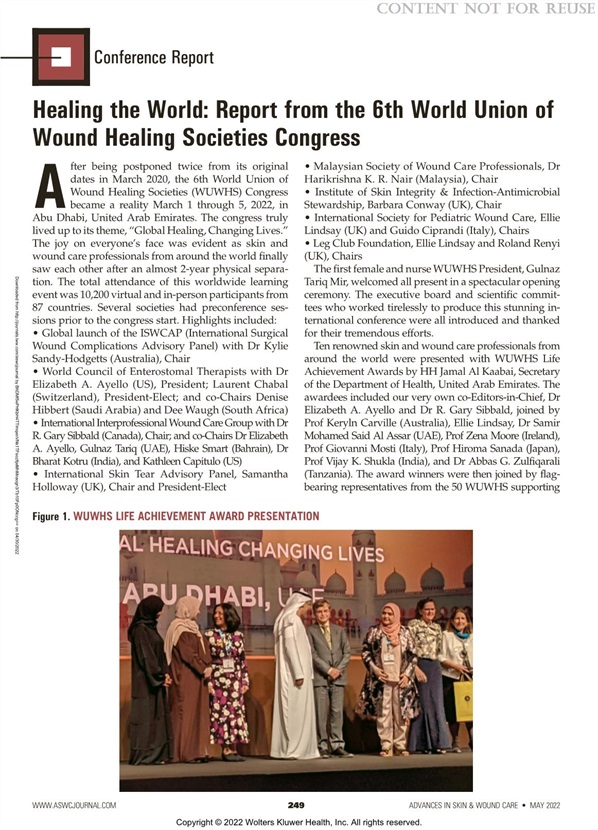
available for purchase
Armstrong keynotes international foot and ankle biomechanics symposium from Rancho Los Amigos
David G. Armstrong, Professor of Surgery at the Keck School of Medicine of University of Southern California joined physicians, surgeons, engineers and scientists from around the world for the International Foot and Ankle Biomechanics conference. Originally scheduled for Rio De Janiero, Brazil in April of 2020 and chaired by Prof. Isabelle Sacco, the symposium- known as iFAB- was rescheduled in a virtual format. Armstrong, who gave the lecture outside of the high-risk clinics at the National Rehabilitation Center at Rancho Los Amigos, gave a keynote to participants from 5 continents. It was particularly poignant that the lecture be given at Rancho … read more
Chlorhexidine Delays Wound Healing in Human Skin
Angela Gibson, MD, PhD, FACS, Aiping Liu, PhD, Collin L Tran, BS, Sameeha E Hassan, BS
Chlorhexidine (CHG) is ubiquitous in surgical perioperative care. In vivo studies of CHG cytotoxicity on human skin are lacking. Given the use of CHG for daily wound cares and as a presurgical scrub, including donor site preparation, we sought to identify if CHG cytotoxicity would persist in a clinically relevant in vivo human skin xenograft model … read more
Superior Antibacterial Hydrogel Showcases Benefits of MOP in Wound Healing
By Bhavna Kaveti
Biomaterials have an imperative role in biomedical applications. Hydrogels are one of the most promising classes of biomaterials for biomedical use. In the latest article published in the journal Carbohydrate Polymers, researchers from China developed a novel chitosan (CS)-based metal-organic polyhedrons (MOPs)/enzyme hybrid hydrogel and discussed its application as a superior antimicrobial agent in wound healing treatment … The alkaline polysaccharide CS has received considerable attention in the biomedical field. The amino group present on CS-based hydrogels destroys the bacterial membrane and disturbs the bacterial wall’s mass transport. Although CS-hydrogel has antibacterial properties, its antibacterial effect is limited to the cell wall … read more
A Narrative Review of Cadexomer Iodine Ointment Versus Povidone Iodine Ointment
Several iodine formulations have been used for wound care for ages, but still there exist a number of controversial issues regarding their uses in the present era. Many published studies are available for both povidone iodine (PI) and cadexomer iodine (CI) with conflicting outcomes due to different preparations used and different study types. PI has a broad spectrum of activity including antiseptic properties, anti-inflammatory properties, low cytotoxicity, and good tolerability with the absence of associated resistance. CI is an immobilized iodine molecule in a hydrophilic modified-starch polymer bead with the dual property of cleansing the wound by absorbing the exudate and bactericidal effect by sustained release of iodine molecules over the infected wound. The preparations comprising PI and CI improve wound healing and minimize the bacterial infestation or contamination in various chronic wounds, burns, and ulcers. This review narrates the comparison of CI and PI for the management of wounds in the context of biofilm reduction, wound size reduction, and granulation tissue promotion … read more